Los Angeles, 2020
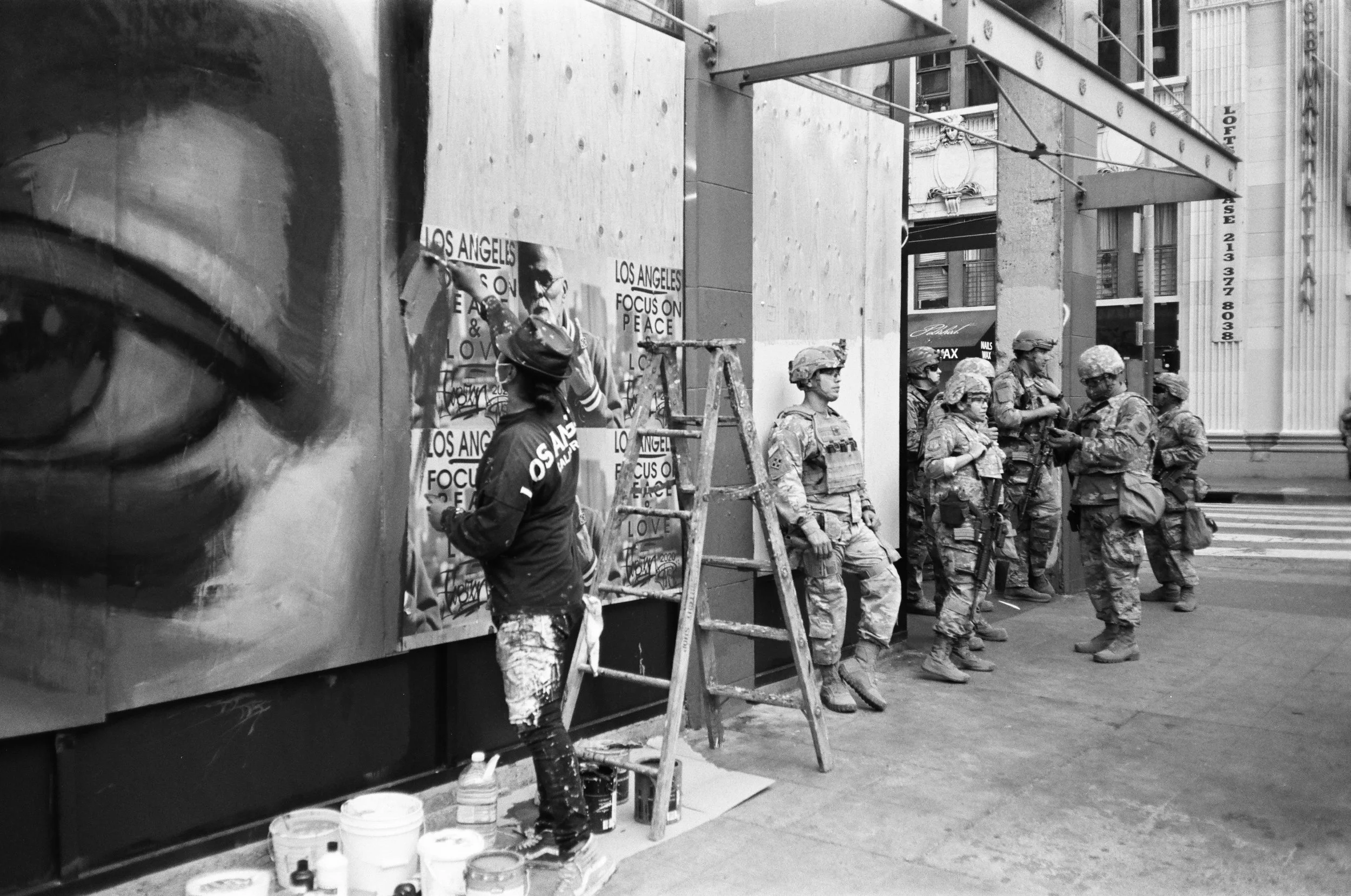
All day long the saws run downtown as the men cut boards to fit the street level windows of the shops and businesses along the riot routes. They start early in the morning when the curfews are lifted and the helicopters have flown back to the station. They work through lunch and the noise is incessant. It’s a sound of nuanced terror, the blades grinding their teeth as the workers draw slow curves into the wood. The streets smell like fresh plywood, and pedestrians step off the sidewalk to avoid the piles of sawdust.
When the saws are done, the news helicopters take off and hover over our apartment. Sometimes as many as three of them, all within a block or two of us, and a police helicopter too. We can always find protests by following the throb of the blades beating against the sky and following the spotlights of police helicopters at night. There’s a heatwave squeezing all the air out of the city, and the pandemic has halted the installation of A/C in our apartment. In the afternoons we fight over the fan, our eyes bloodshot and sleepless.
At home we are at war with the dust. It gathers on every surface and oppresses our two little rooms. One night the wind grabs our windows by the frame and gives them a shake. Lottie, half asleep, asks why it’s so spooky. I tell her it’s almost Halloween. It’s only June, but we’ve been inside these two little rooms more than half the year. Time passes differently. I sometimes fantasize about houses with many places to sit. How nice it would be to have more than the bed and the couch and the windowsill.
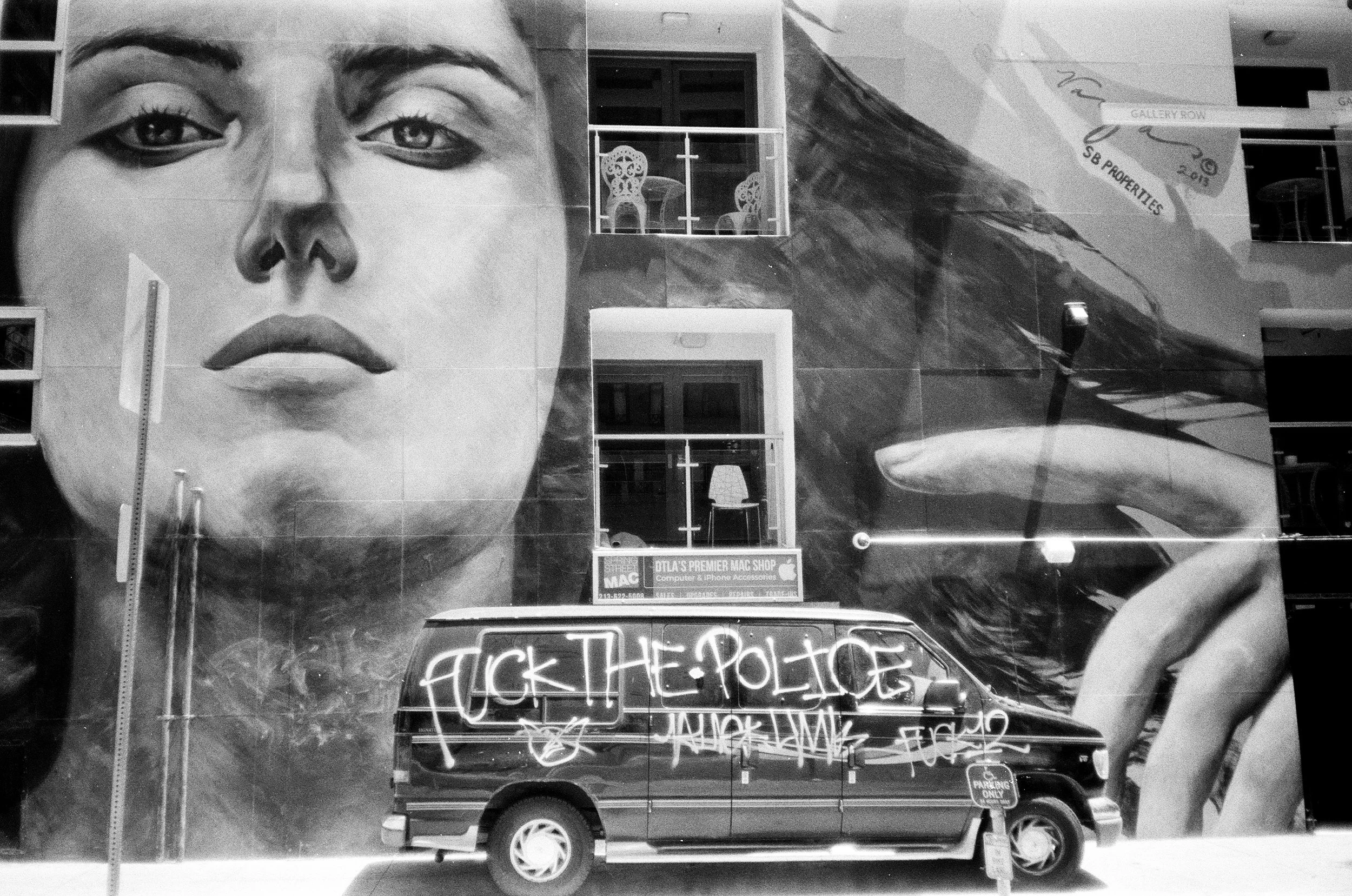
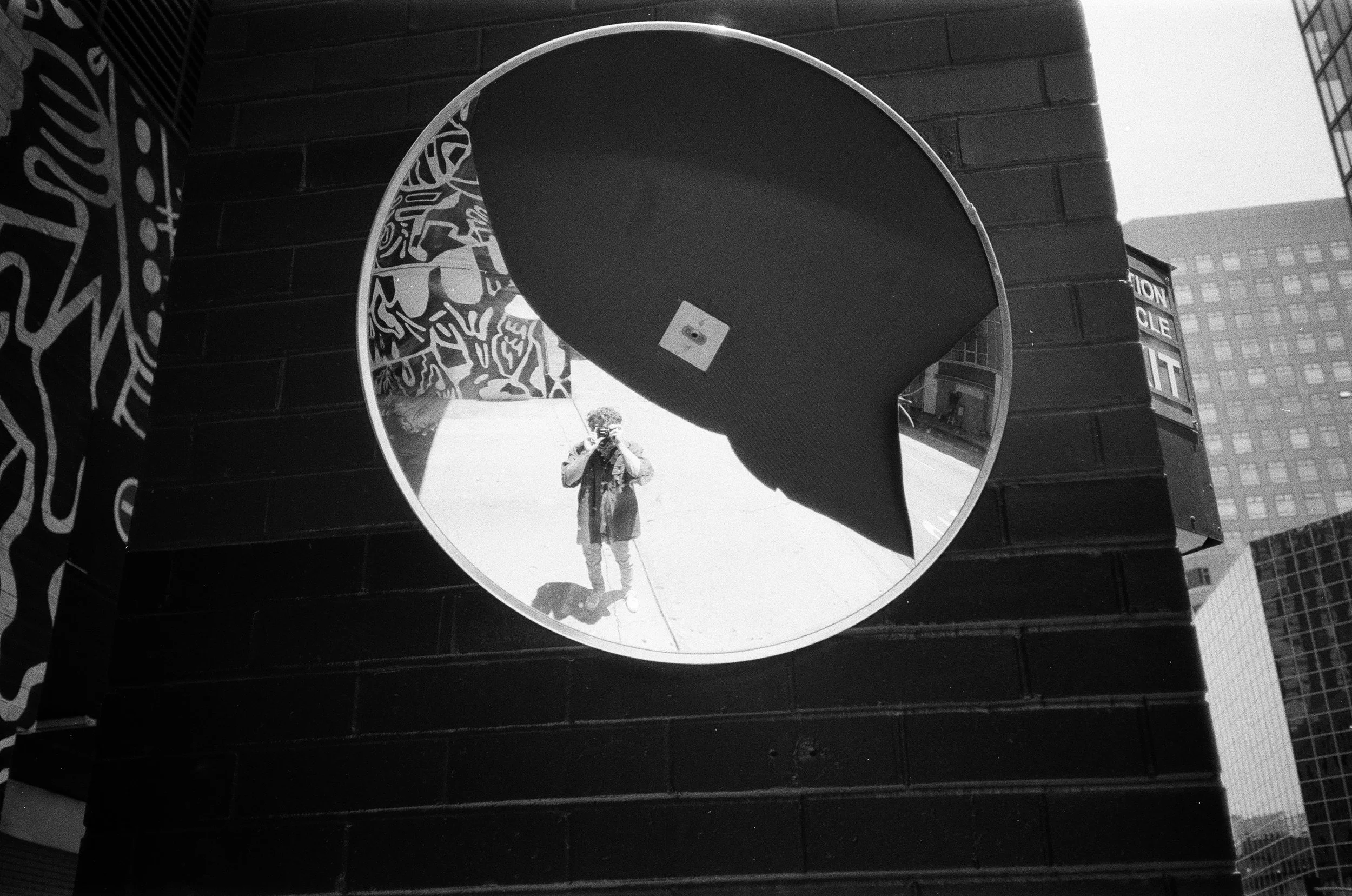
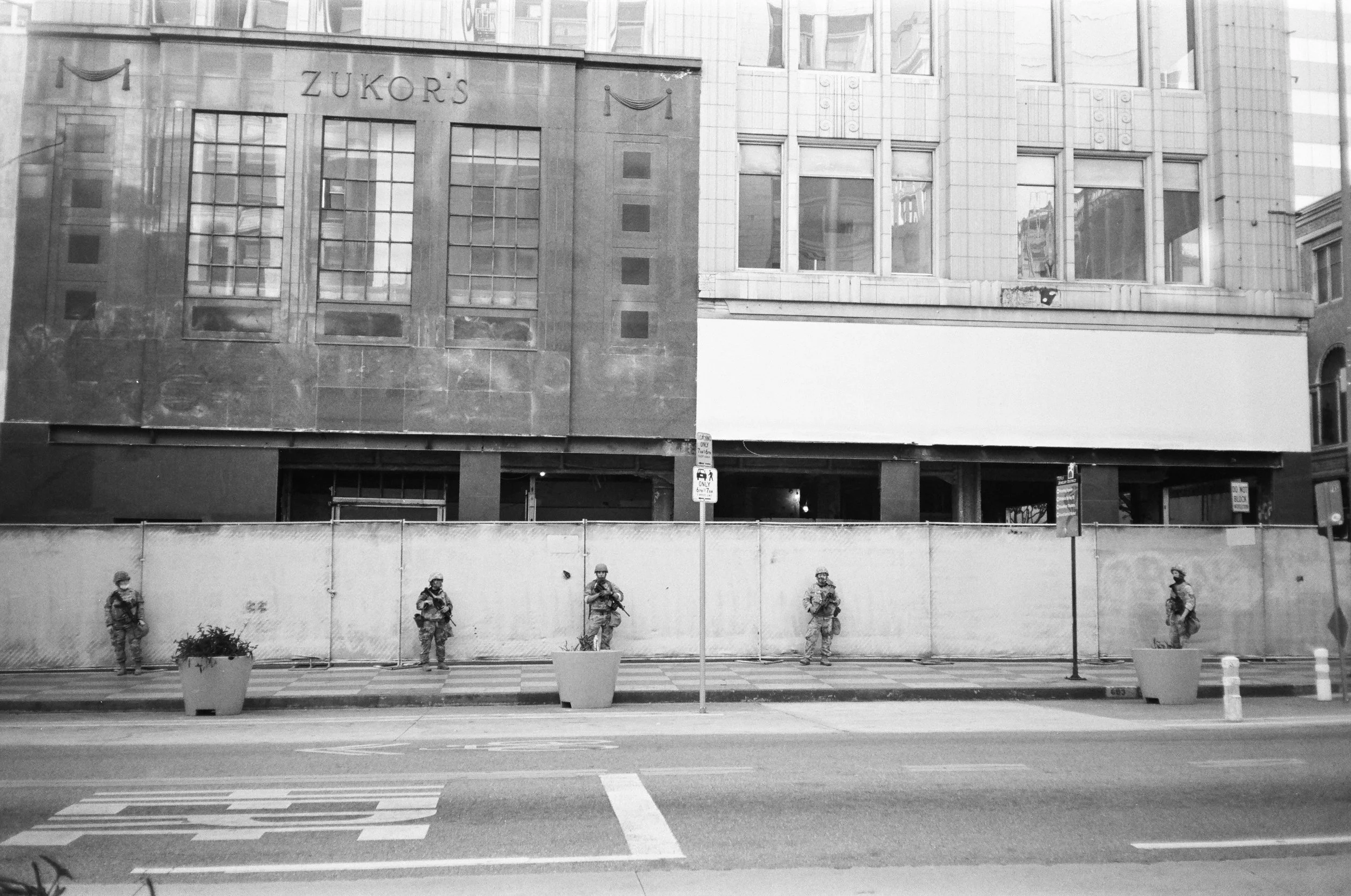
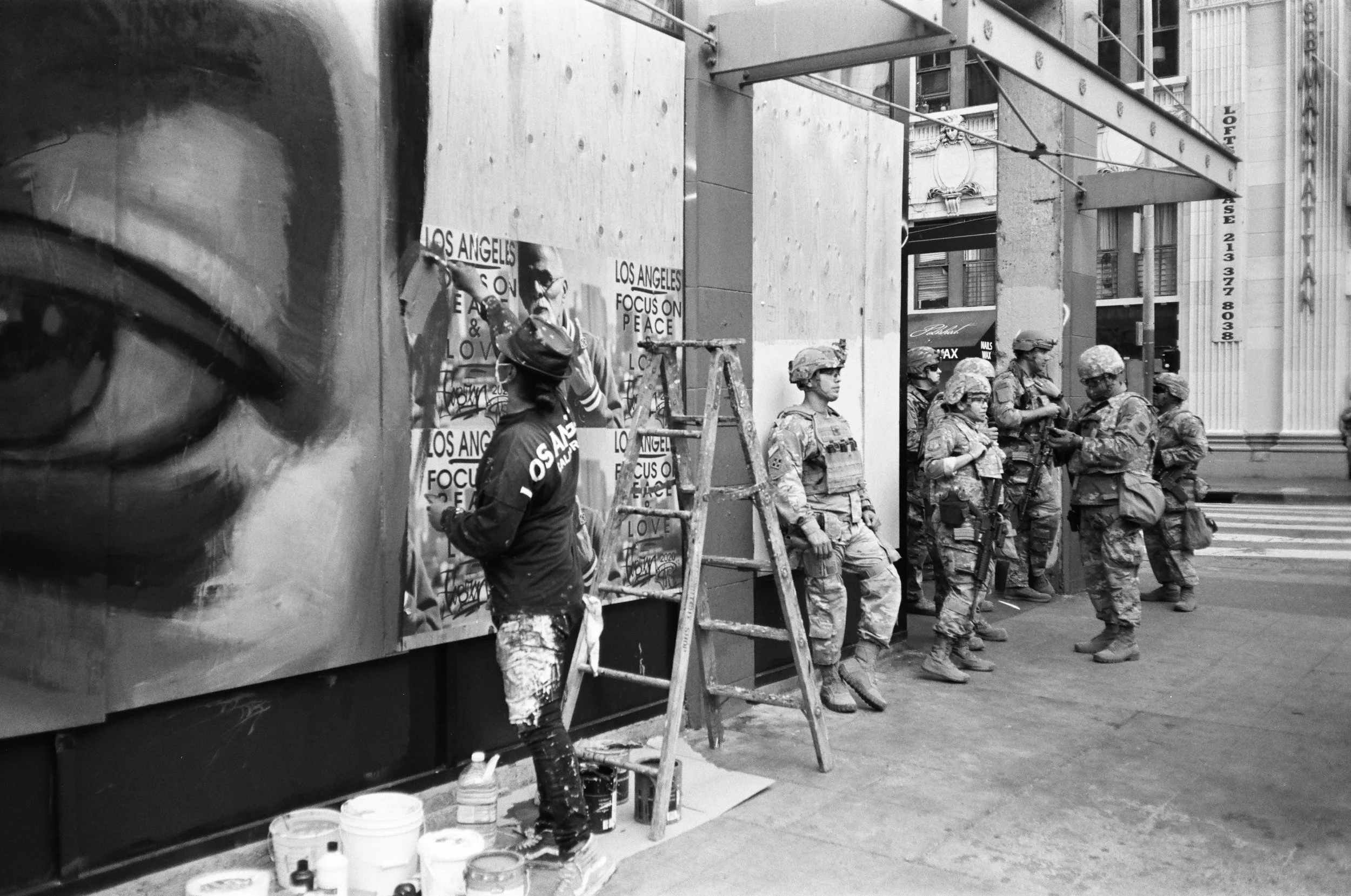
When the weather is tolerable we take a walk downtown to see the army. Downtown, there are no more reflections. The brightly colored retail stores, the matte black bank windows, the restaurants and coffee shops, they’re all boarded up. The mirrors on the walls at the parking structures are broken, and everybody wears a mask. By the end of the year I’ve given as many haircuts as I’ve received, two each, one of them by a professional barber, the rest of them shirtless in empty fields in Northern California. Walking past boarded up windows and broken mirrors, I never know how I look. My beard is itchy beneath my mask.
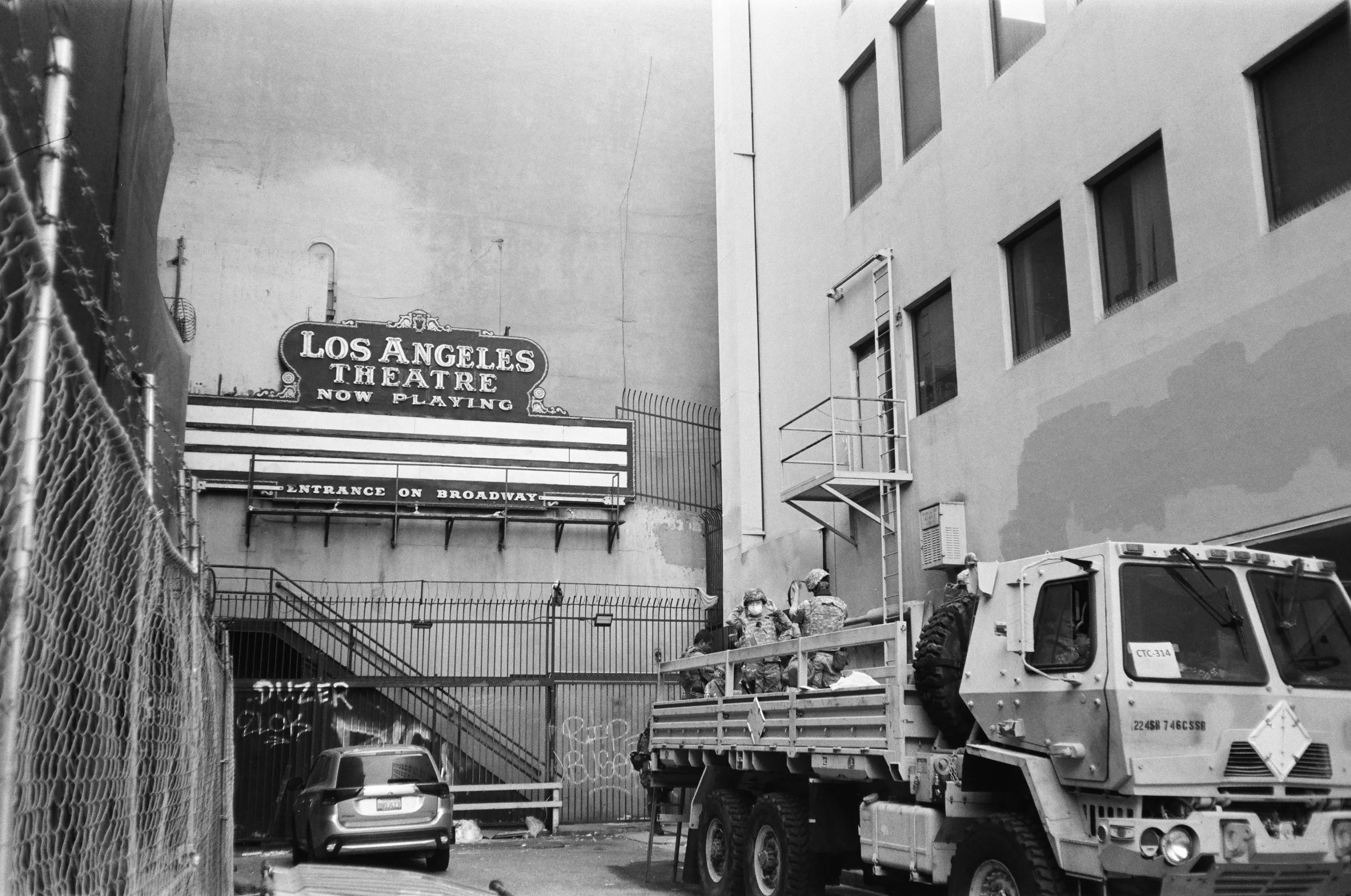
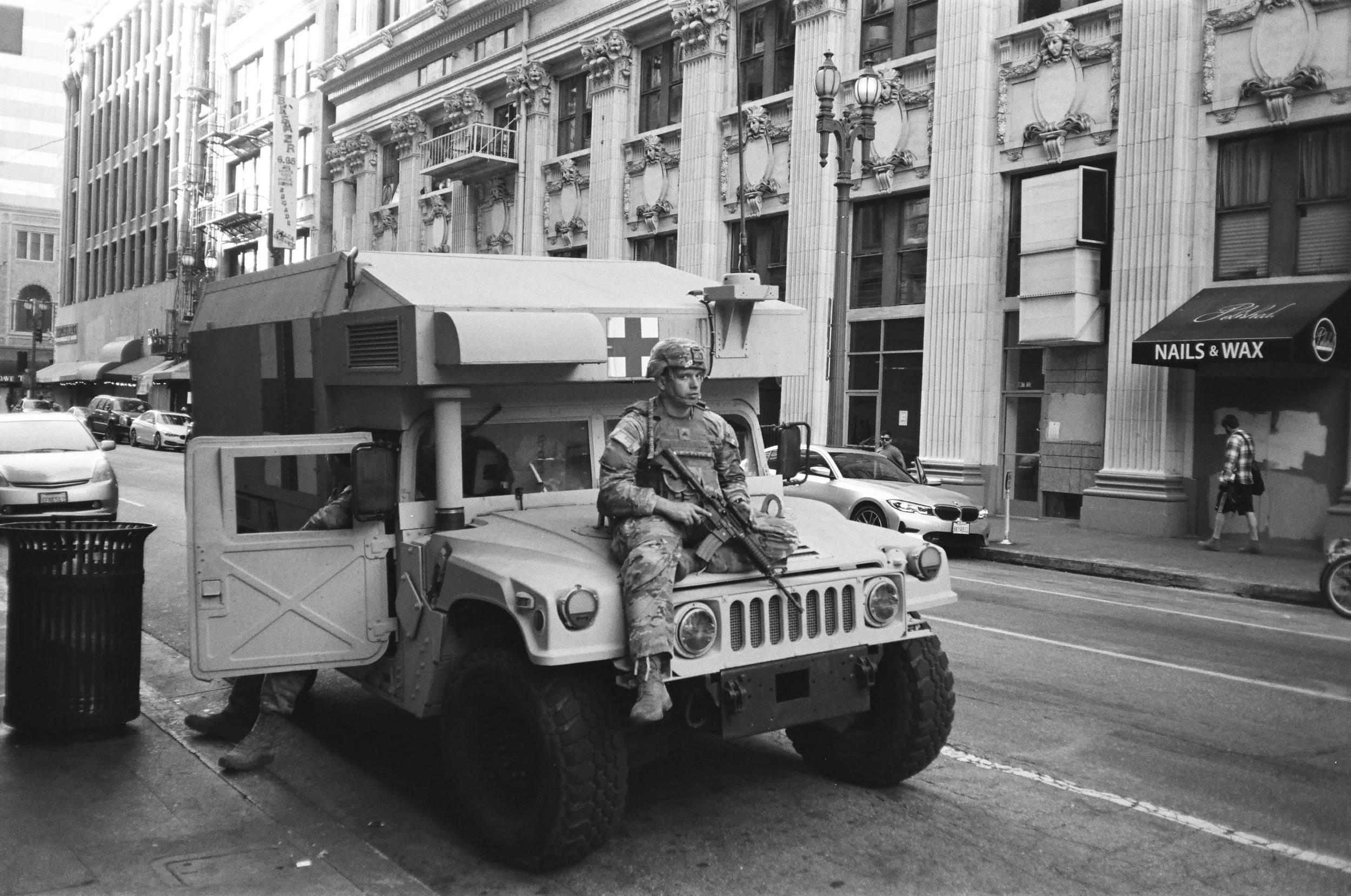
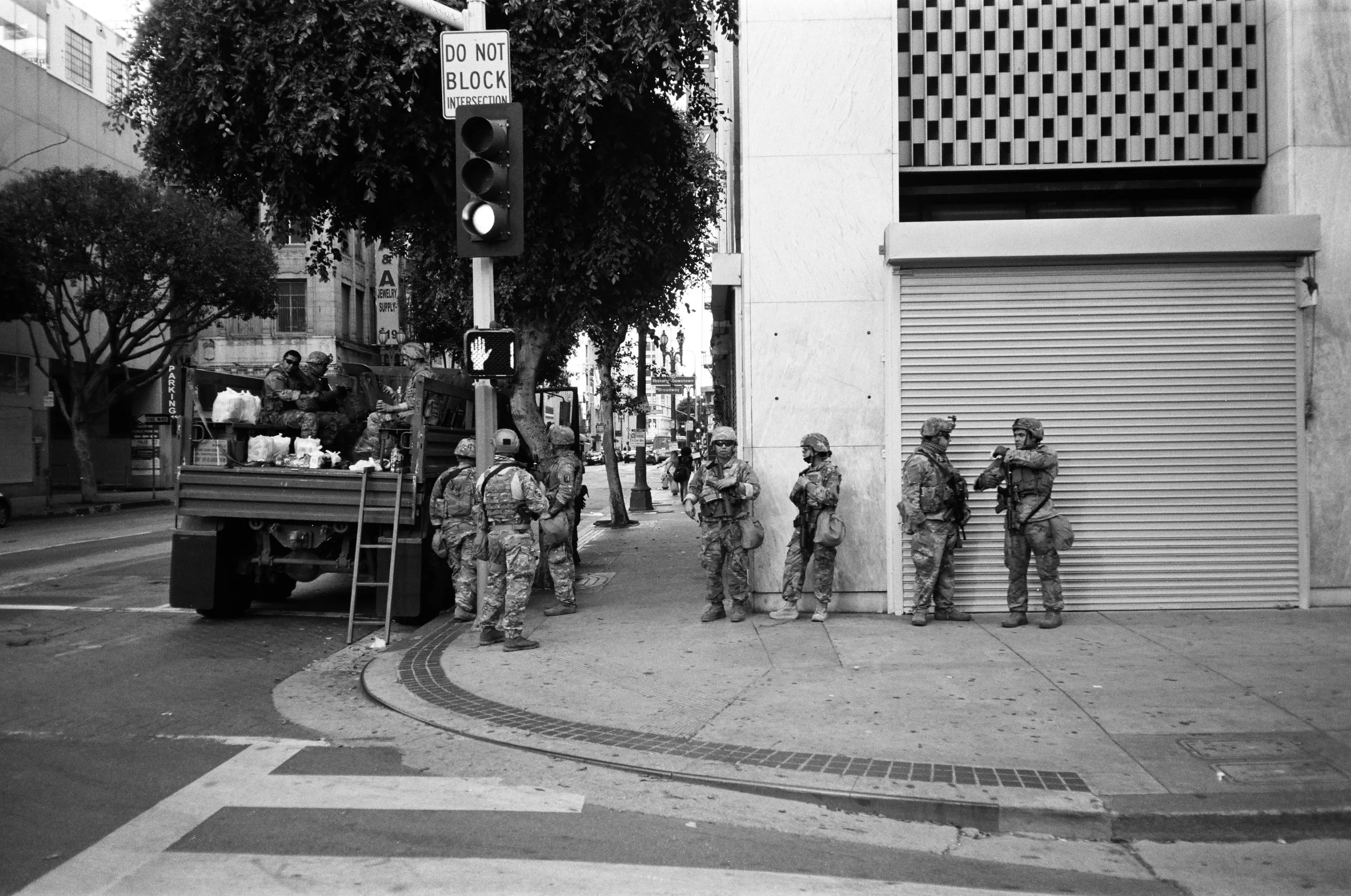
In Downtown LA, the army carries automatic weapons and they drive military vehicles. They wear high desert camouflage and sit in the open beds of their transports eating their lunch. They call themselves the National Guard, though they’re dressed for foreign architecture and carry packs like they don’t expect to see any running water in the coming days. They’re not occupying Fallujah but Los Angeles, where it’s summer year round and the heart of the American entertainment industry perches high up in the hills. They wave to the people and the people wave back, as at an invading army. Los Angeles is occupied until further notice.
As in many cities around the country, the police and the National Guard have come to keep the peace. What that means, practically, is they are here to enforce a curfew. At a certain time of day, they begin to arrest anybody out in the streets. Sometimes, that means arresting looters and vandals with the additional charge of breaking curfew. Videos surface of police vans arriving at intersections and policemen pouring out, breaking the windows of stopped cars with their batons and dragging the passengers into the street.
They put curfews in place that start in the early evening. It’s almost summertime, and the petals on the jacaranda trees are beginning to droop. By Pershing Square the streets are carpeted in purple flowers, so that when a police SUV drives into a crowd and runs over the protesters, they land softly in beds of petals. In New York two police cars drive into a crowd and I know the civilians must be hurt, because they have no Jacaranda trees, and no petals to carpet the cement. When the curfew goes into effect there are still hours of daylight, and the heatwave oppressing the city makes the air inside sticky. Unemployment is the highest it’s been in a century, and a question hangs in the air of what it is we’re all supposed to be doing inside on a hot summer evening.
We watch the news.
On the news there’s a man in an intersection kneeling in front of a line of police officers. He has his hands up. The camera pans out and we see that the police are practicing a new technique called ‘kettling.’ In kettling, one troop of officers will set a skirmish line in an intersection as the protesters arrive, and another line of officers will come to block the exit from the other side of the block. The idea is that protestors will escape in a narrow stream, like steam from a kettle, and the protest will lose all of its energy as it disperses. The mechanism operates like a raccoon trap, the door closing behind the animal as soon as it enters the cage. Many will fight like cornered animals. The man kneeling on the street is calm. A large crowd of protesters mill around behind him.
The crowd has been cornered on this block for some time, but now that the curfew is beginning, their gathering has become unlawful. A young woman kneels beside the man and raises her hands above her head. In front of them, the skirmish line seems to see this as a provocation, and they spray the couple with rubber bullets. The news anchors, watching the events unfold, murmur their disappointment, that the peaceful protests are so overshadowed by bad actors and looting. The camera pushes to a different scene as officers run to the pair and drag them back across the cement.
In another neighborhood a men’s suit shop is burning, though the anchors admit they don’t know if this scene is related to the protests a few towns over. They continue to discuss the injustice that rioters and looters have hijacked the discussion of civil rights. The anchors do not discuss civil rights, but they do say their hearts are breaking over the destruction of the suit shop, and they wonder if the swelling fire and the billowing smoke are related to the riots across town. When the building is exhausted and the firefighters drive off, the anchors start the footage over and repeat their heartbroken distress over the loss of the suits.
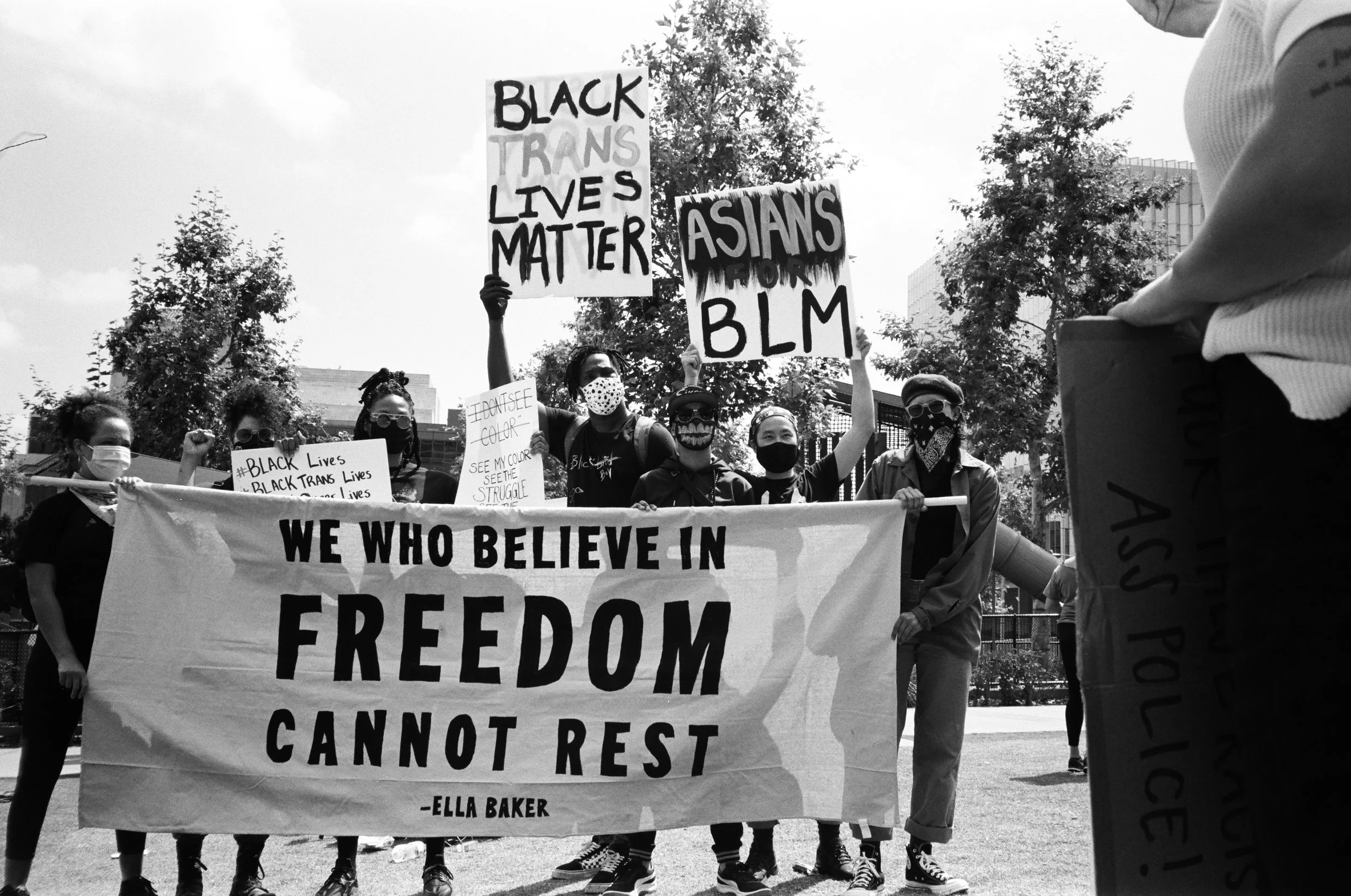
When we protest people ask us if we’re going to the riots. I’m wearing a backpack filled with water bottles and baking soda, for the heat and the tear gas, but anybody watching the news would say we’re going to steal from whatever shops haven’t had their windows kicked in yet. A man sees our signs and stops us to ask if we’re leaving the area. We say no, we’re on our way now, and he tells us he hoped we were leaving. On the next block two parking attendants in navy suits hold their fists to their chests and seek our eyes to thank us.
In the White House it is generally agreed that there must be something strange going on to bring thousands of young people to their front lawn, waving signs and shooting off fireworks. The president has seen the murders, the swelling heat, the way people are trapped in their homes without work, and he has decided there must be a secret anarchist organization pulling the strings from behind the scenes. This organization is believed to be responsible not only for the looting and the burning of the Walgreens and the Targets in civic areas, but for organizing and mobilizing tens of thousands of people across the country. In Idaho, armed white militia show up to protests with automatic weapons to fight this organization head on, and they are greeted by young blonde women with sweaters tied around their waists. It will be months before we see Antifa, the anti-fascist organization the president claims is responsible for all of the unrest. Still, the president threatens to send in the military.
For anyone on the ground, it’s clear that the military is already here. The police are dealing with looting and riots. That’s why they’re pulling people off bicycles and beating them with their batons, why they’re tasing college students through their broken car windows, why they’re flying Blackhawk helicopters low over crowds. They are armed with guns, gas, riot gear, helicopters, armored cars, batons, body shields, bulletproof vests, rubber bullets, beanbags, skirmish lines, and pepper spray. They are armed with the same equipment as the army.
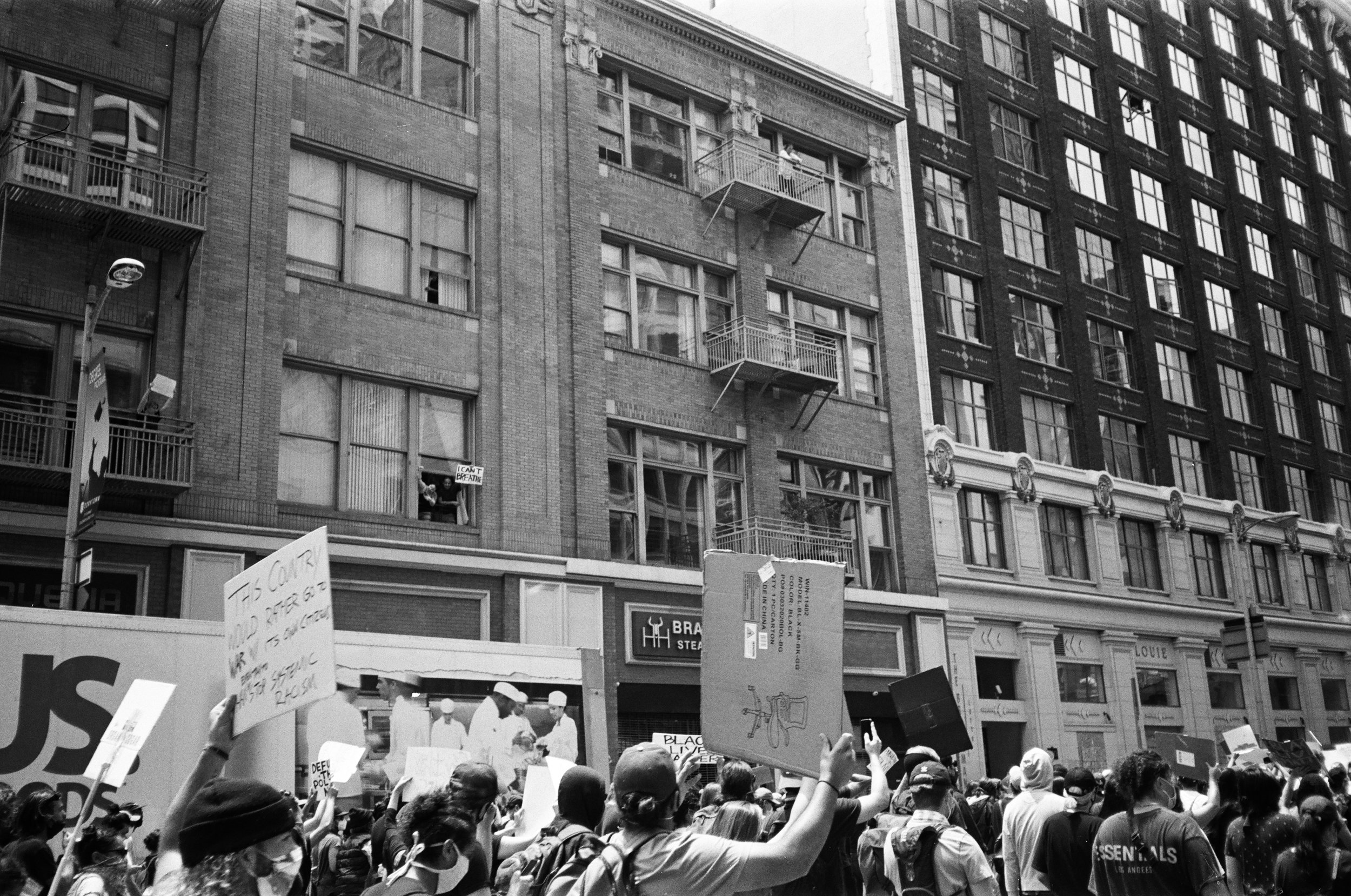
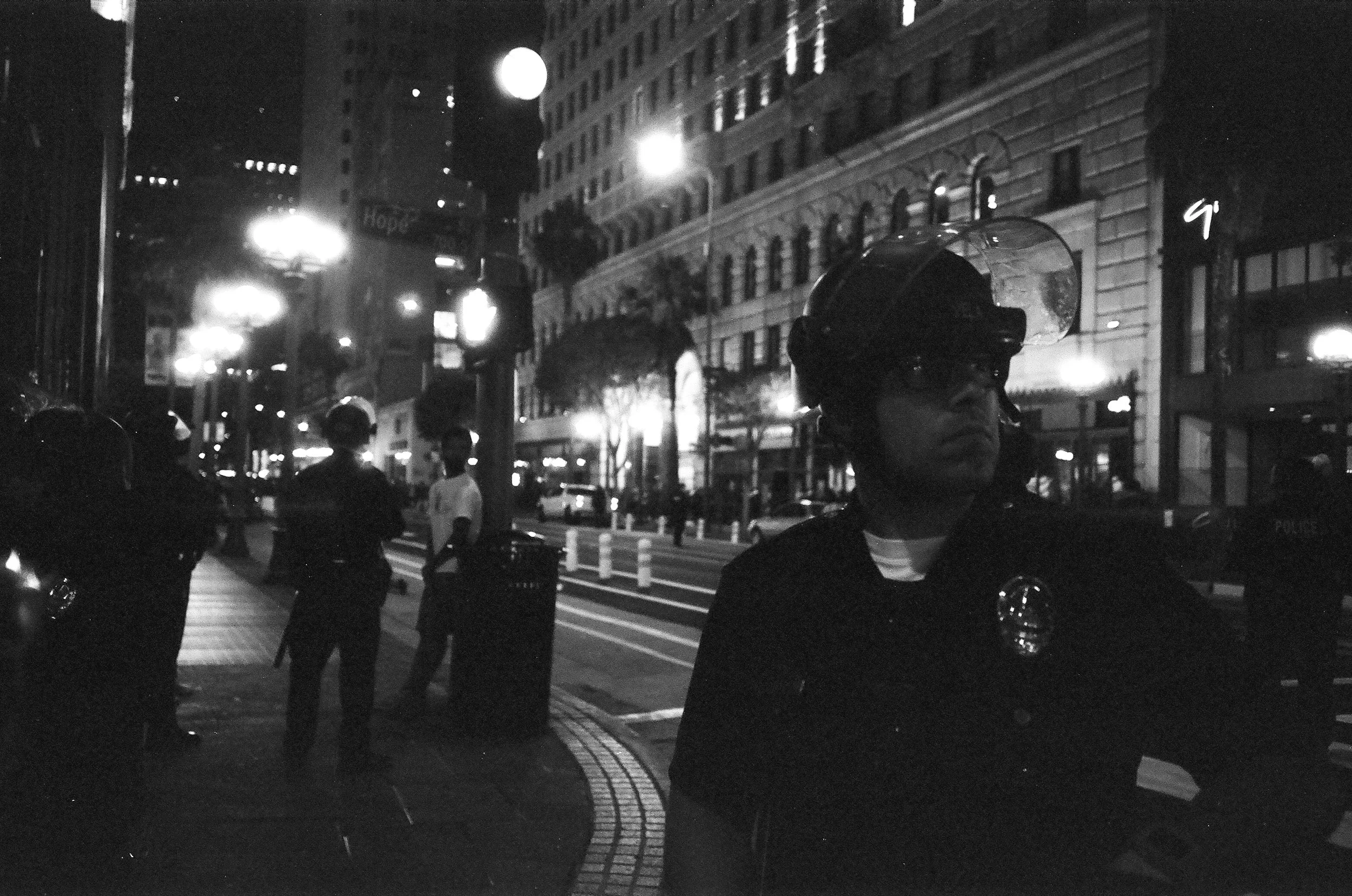
The protesters, on the other hand, are dealing with the police, so they carry cardboard signs and gallons of milk to wash tear gas out of their eyes. They carry camera phones to prove any of it happened. The men in blue clutch at their batons like good luck totems. Their faces, when you can see them behind the armor, are frightened. The president tweets that kneeling during the national anthem will ruin football. Everyone has something to be nervous about.
In the evening I turn on the oven to make a frozen pizza. While it’s preheating a firework explodes near the house and car alarms start wailing down the street. I go into the bedroom to check on Lottie because the TV has just flashed white and I think the light is from the fireworks. I’ve been crying and my body feels heavy so I lay down beside her and she holds me for a minute. When the smoke alarm goes off in the next room I think the apartment building has caught fire and I start for the front door. There’s food debris in the oven that baked into ash when the oven preheated. We open the window and run the fans and eat fried rice instead.
On the news they are showing footage of police knocking down an old man in Buffalo, and his head cracks against the pavement. They are saying protesters often don’t see the cause of police retaliation. It’s somewhere else in the crowd where the plastic water bottle was thrown, so protesters are unable to identify it. The anchors on the street have spent much of their time behind police lines, so they may be the authorities on this. Even so, it isn’t typical to see the causes for the retaliations broadcast on the air.
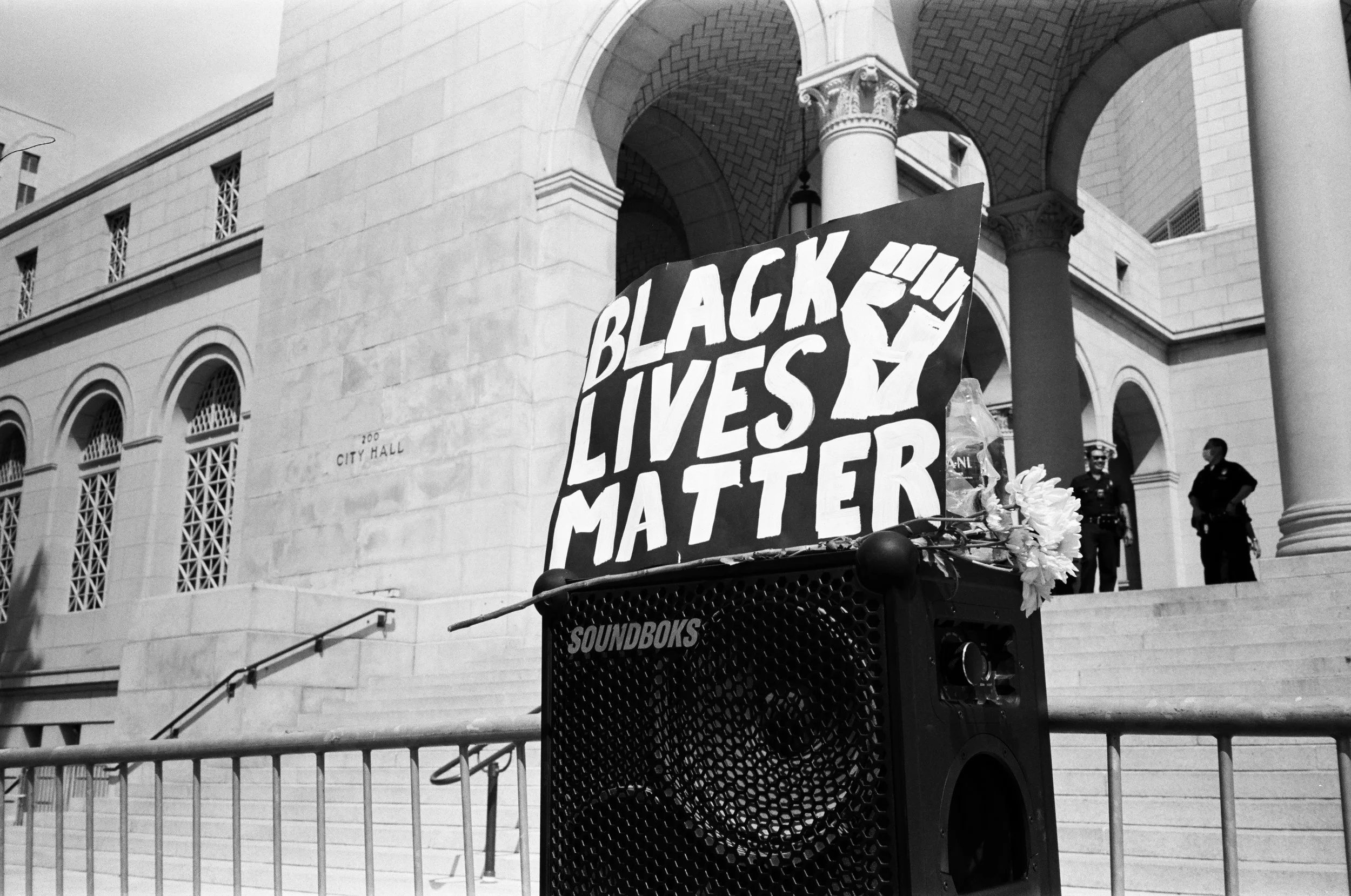
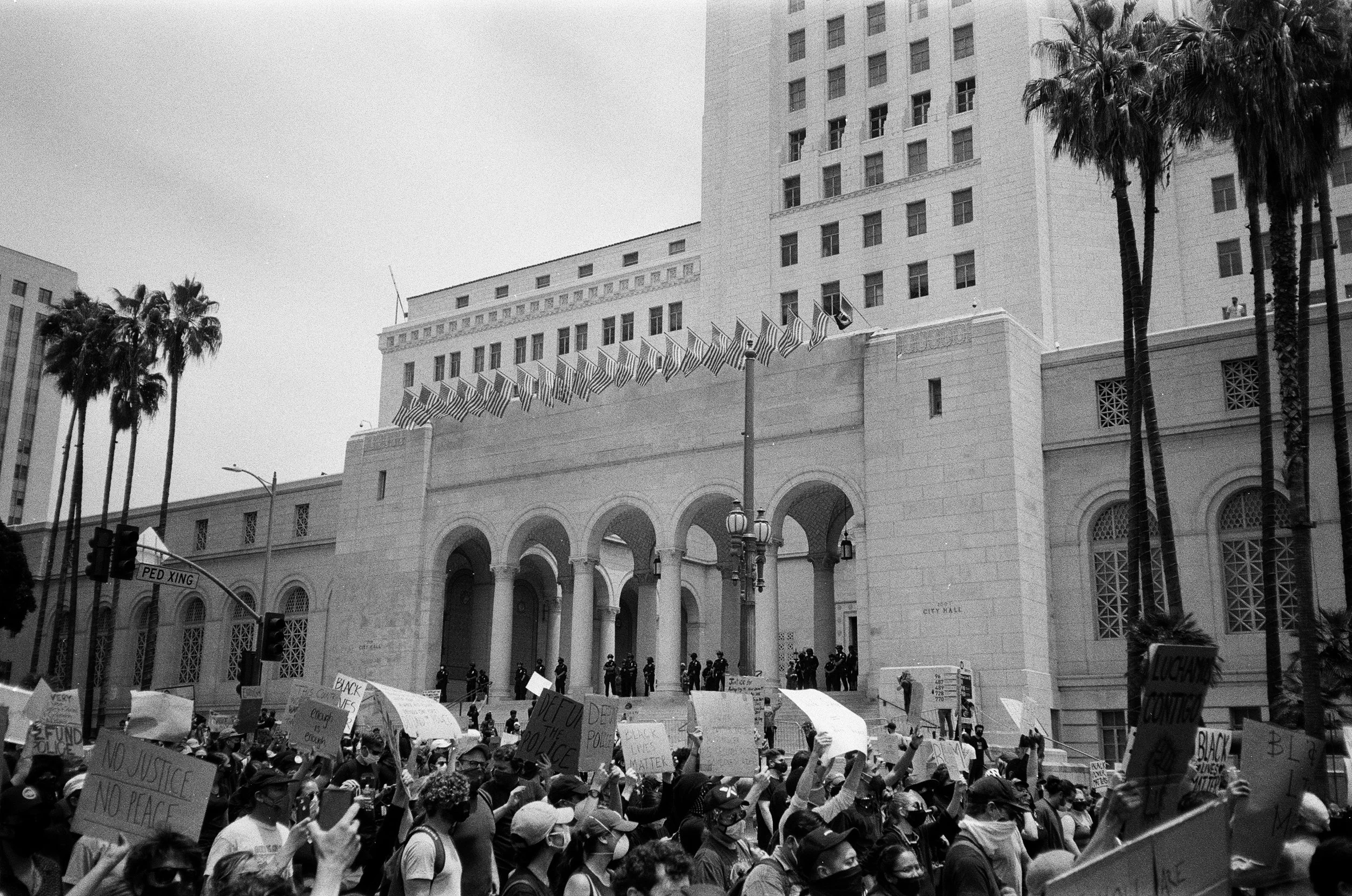
Days when the police let you get close, there is music playing at City Hall. Tall speakers there thrum with deep bass, and the words of Martin Luther King echo from the steps, intoning that, “our nation's summers of riots are caused by our nation's winters of delay.” Nearby the bars are opening again and the sun drapes dappled light over the trees on the patios. A hundred thousand roses are dying on the sidewalks in front of the halls of justice, a memorial for Breonna Taylor. The sun bakes the flowers dry and their perfume drifts through the streets. She never knew who killed her.
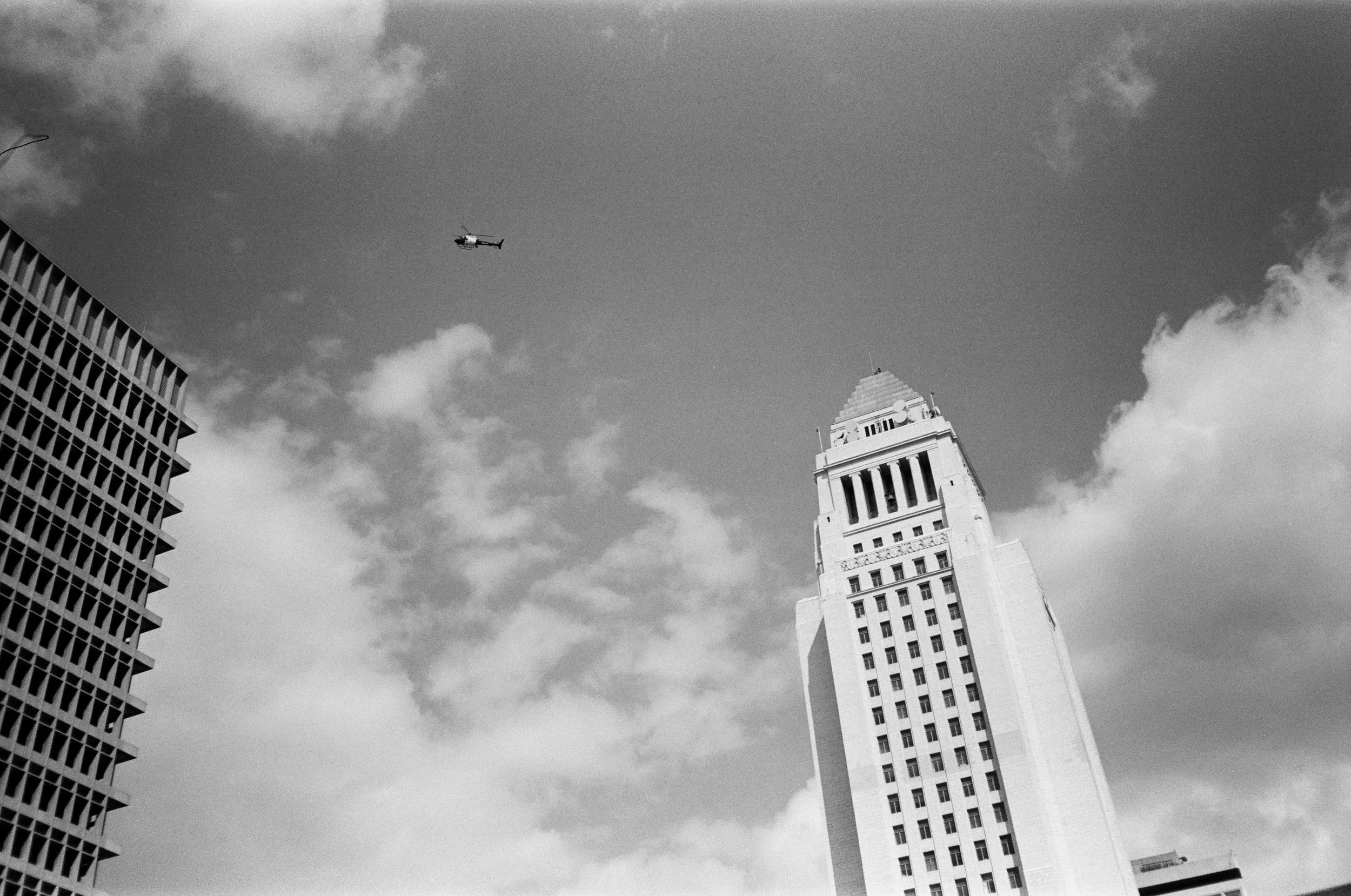
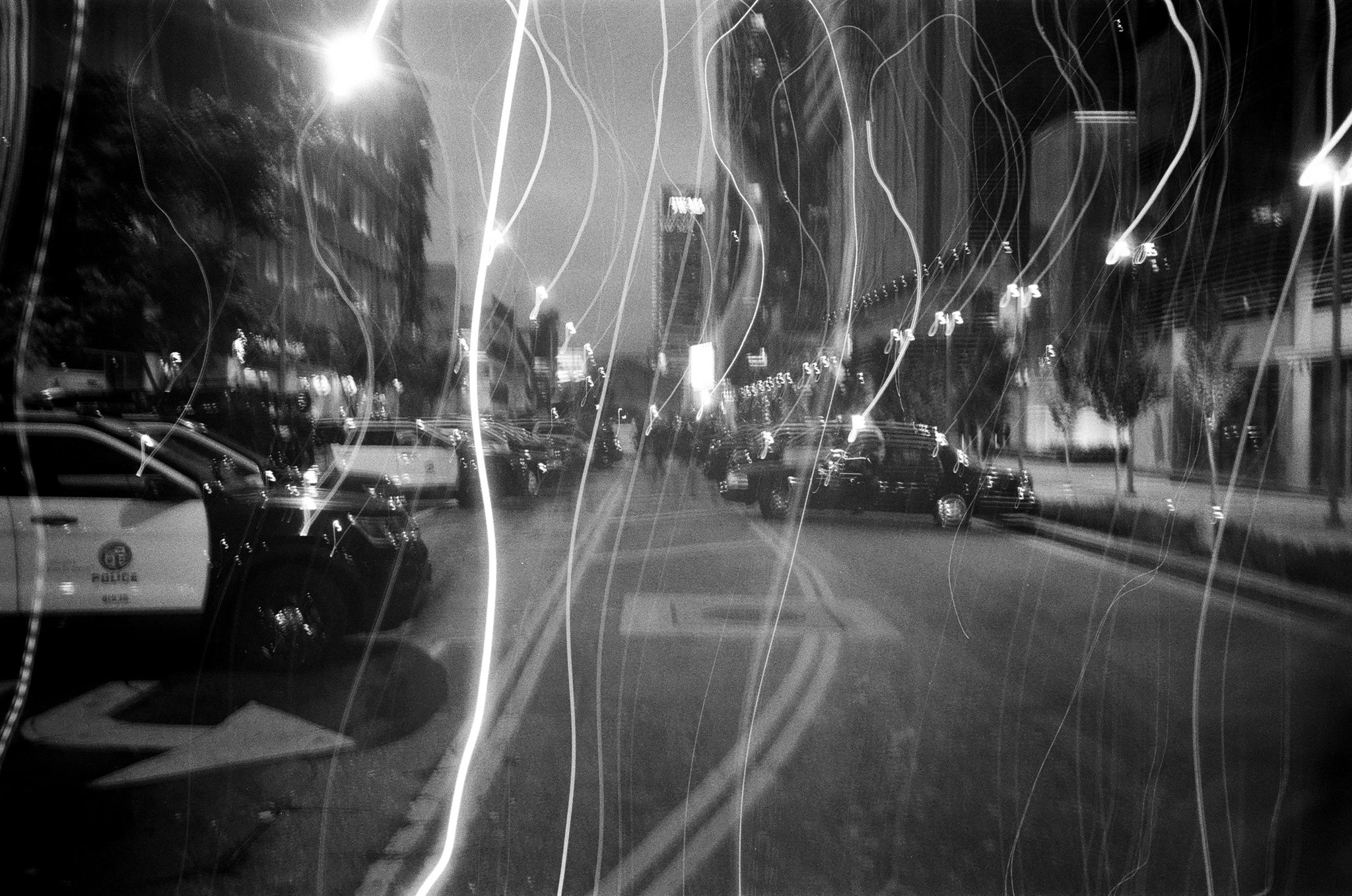
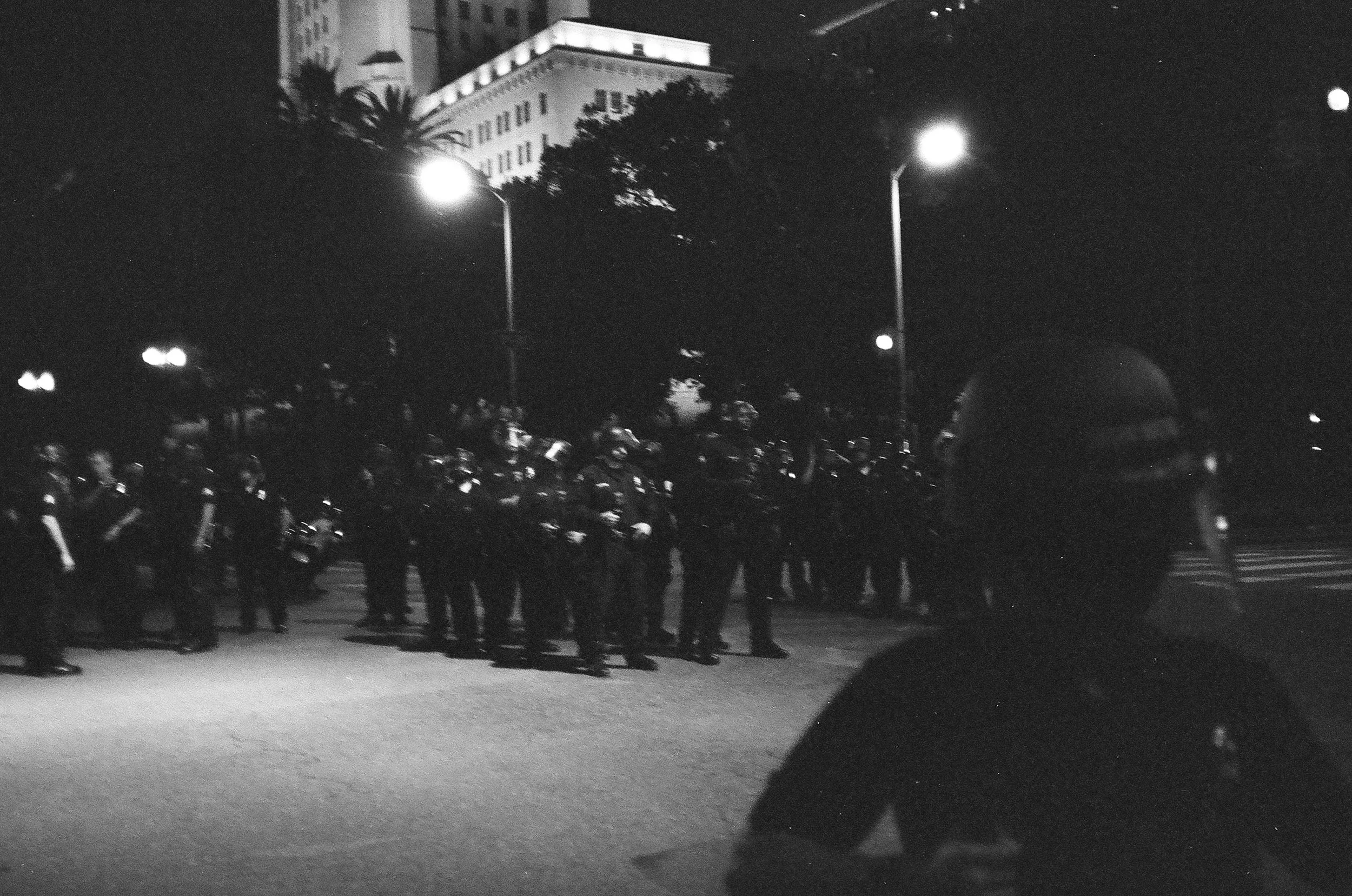
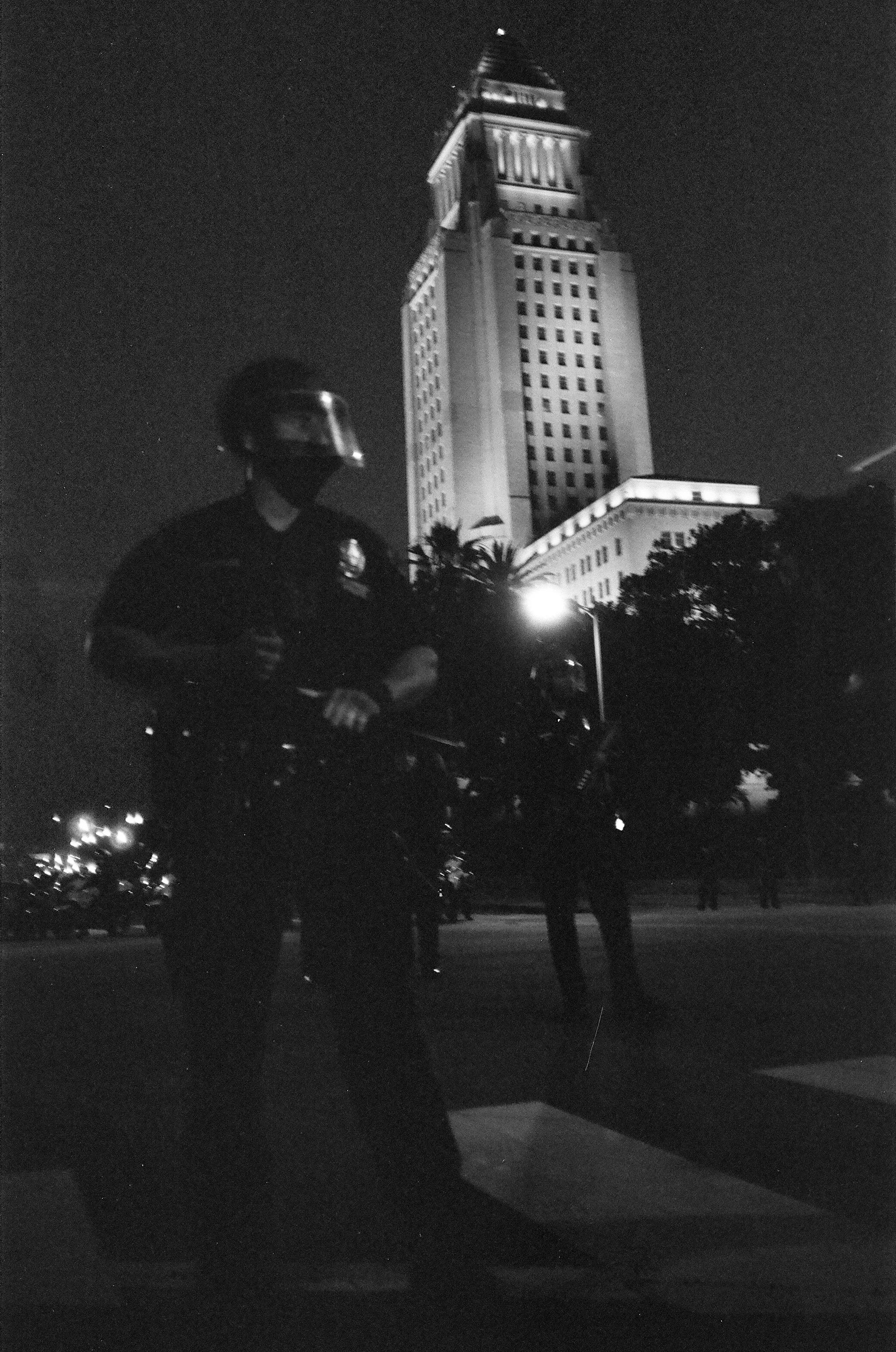
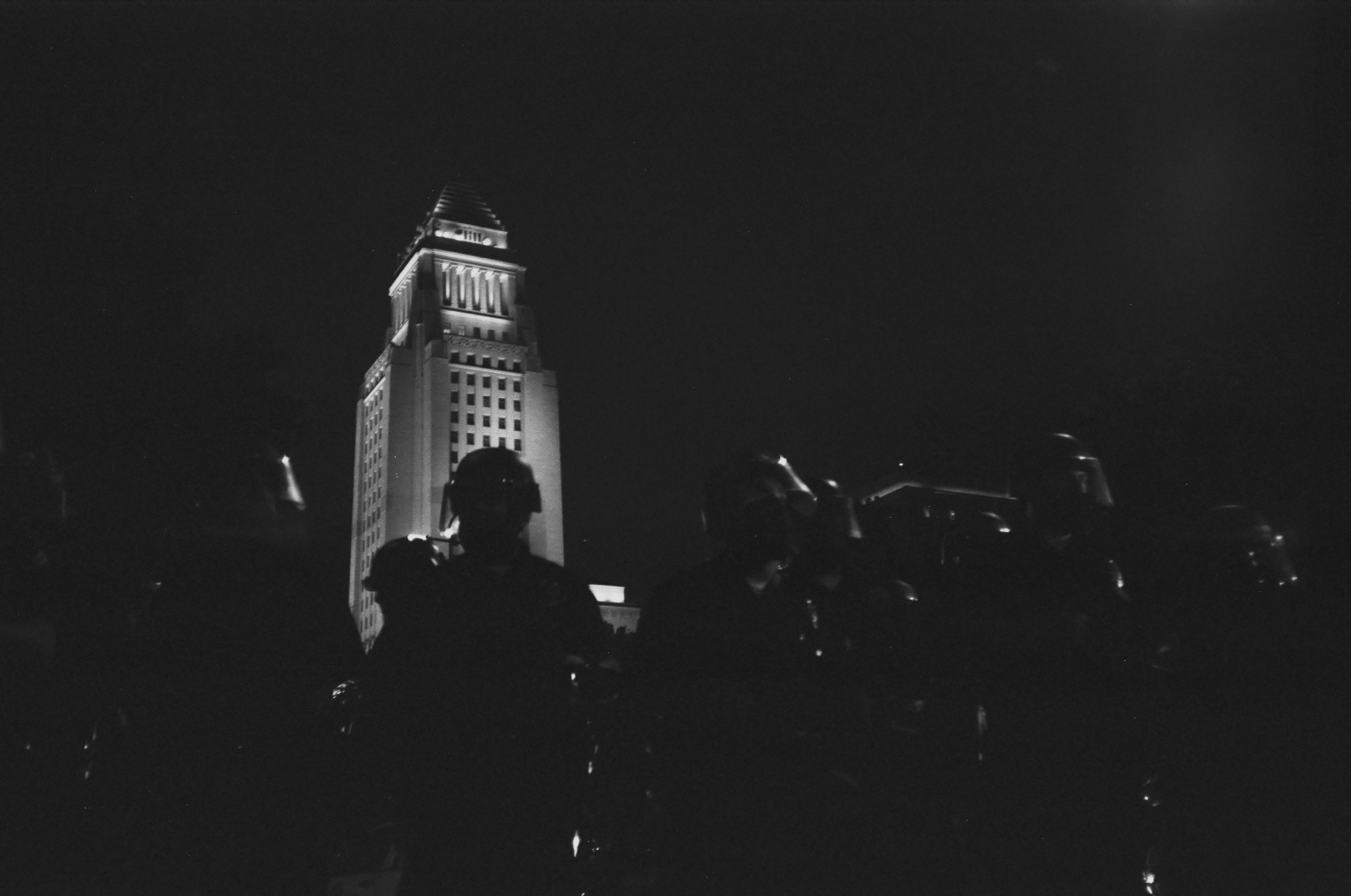
Nights when they don’t let you near it, helicopters spin in frantic circles over City Hall, and the crowds look up at them as at the underbelly of a killer whale. They shine their spotlights on police troops standing in formation, readying themselves for an attack. An officer pushes into the crowd alone, and is surrounded by cameras: why did you hit me, sir? He scoffs, embarrassed at such sudden celebrity, and shakes his head and smiles. Why did you hit me? The interview ends when the police line locks arms and pushes into the crowd together. They lead with their batons and the crowd compresses into itself. From the back, those that can move throw traffic cones and water bottles. Someone lights off a firework and the sparks spray around everyone’s ears. The police seize on the chaos to push the crowd towards the explosion, and the moment is a betrayal - they are pushing us into the danger. A can of teargas lands somewhere to our right, and as we run a man breaks through the window of a store.
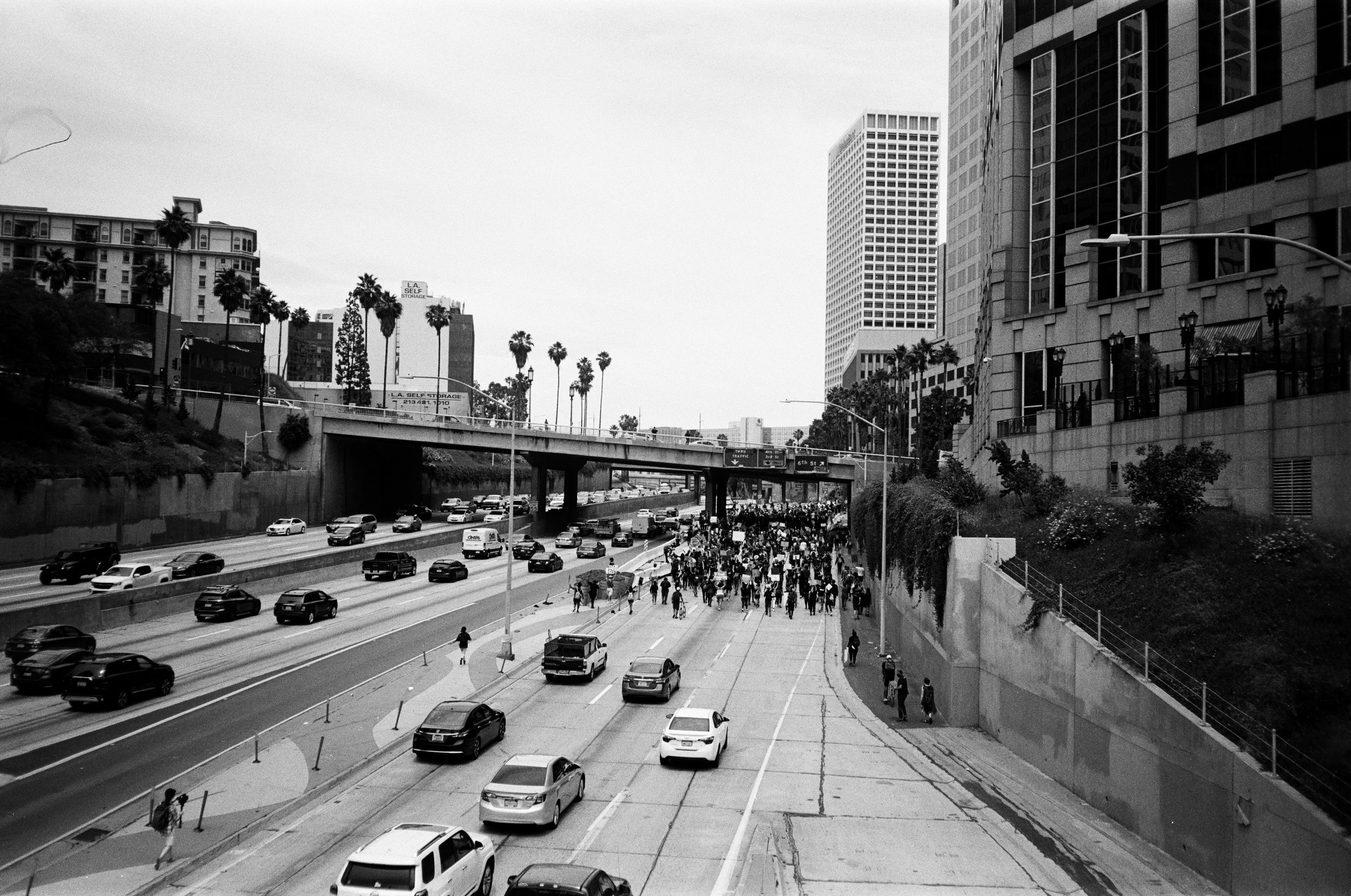
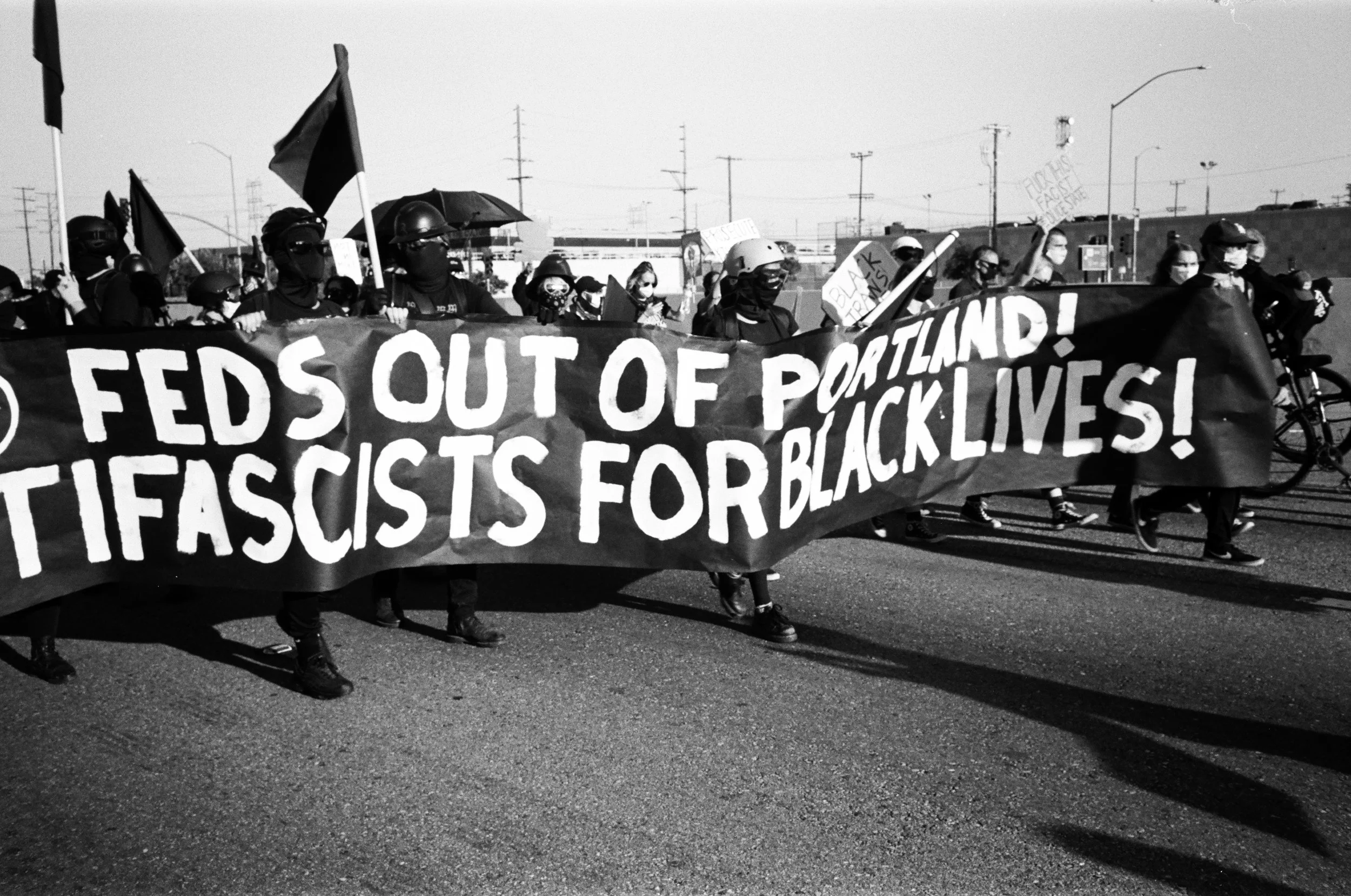
Later we see Antifa at a march for Portland. Young kids in black, faces hidden behind ski masks and motorcycle helmets, waving flags that say “Feds Out of Portland.” They are a mystery, young faceless people who have not appeared at any protest until this one, when the president has declared he will send in the army to fight vandals and window breakers. They march to a federal detention center where a woman gives a speech beneath a hovering police helicopter. The masked kids start to kick in the windows while the speaker stands on the other side of the crowd. “I am a black queen,” she says, “and I demand your full attention.” The crowd marches along the freeway to the federal courthouse.
At the federal courthouse the police come rushing from inside the glass building but can’t get through the locked entrance. They shatter the glass doors with their nightsticks and run outside to protect the front of the building from the protestors, who had come to shatter the glass doors with their skateboards. Now they have nothing to shatter, and everyone mills about in confusion. Teenagers throw fastballs of unopened soda cans at the police and pull their cell phones out to film what happens next. Antifa members open black umbrellas and set up paper-thin barricades to block any rounds of tear gas and rubber bullets. The police don’t fire a shot, but their heads jerk left and right, trying to look at every face in the crowd at once. They are not sure what it is they are up against, and neither is anybody else in attendance. Everyone is fighting nonetheless, beating at steam as it escapes the kettle, and hoping the fire goes out.
We find a restaurant we can walk to, serves oysters on ice in the hot summer evenings, a bottle of white wine. The waiters wear face shields and gloves and get to know us, or at least to recognize the top halves of our faces. One night we sit and watch the cars go by on the street beside us. A roar comes from far away, swelling sounds of honking horns and white noise, and then the traffic clears. A few hundred people walk by waving signs. It seems so pure, and so right, and we are upset that we’re on the wrong side of the street, but we stay to pay our bill, and by then they’ve gone. We talk about history, and the people we want to say we were. We talk about time, and how years can pass by all at once and some moments seem infinite. We agree that this is a time that carries more weight than everything that has led up to it, and that it is important be ready, to make sure the moments that matter don’t pass you by with one hundred signs telling you now is the time.
Another night we drink too much and buy a blender at Macy’s. Anything to let the steam out.