Superblooms
Death Valley, March 2026
I like to watch people's faces when I tell them I'm going to Death Valley again. There’s some part of me that enjoys their furrowing brows, the concern that overtakes their expression. Their eyes wander over my face, checking the wrinkles around my eyes, watching my fading smile, looking for signs of failing mental health or acuity. Some are outright afraid, as though I’ve told them I’m planning to spend some time sitting in a ceramic kiln watching the pottery bake up close. Sometimes they shake their heads and look away and give me an “okay." They’ve heard stories of cave divers with newborn children at home, doing something they don’t understand and don’t like, and, even if they are unattached to the outcome, they wish I wouldn’t.
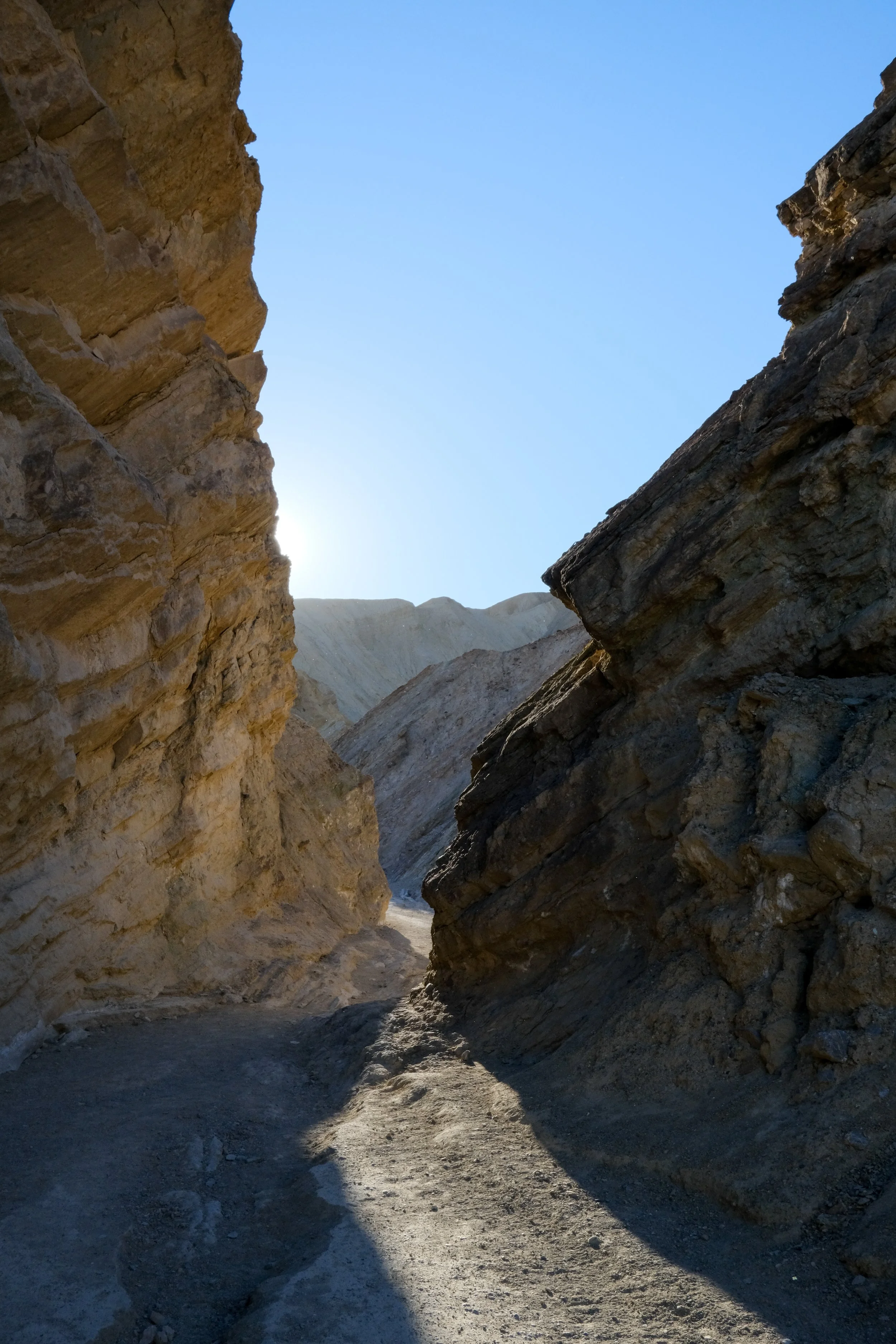
The first time I went, I understood. Walking through the campsite, confronting great cliffsides and impossible rocks, I thought only of water. In the hot afternoons by the tent I knocked on the side of my metal water bottle to make sure some liquid was still contained within. When a companion drove his car too close to empty, I thought of strandings in the desert, of leathery skin dried over skeletons and vultures finally finding a meal. This feeling was exacerbated by the near total absence of life we encountered upon arriving. Great sand dunes that never reached a shore, bleak mountains every shade of mineral, little photos of bighorned rams in the humid gift shops that seemed as mythical here as a hammerhead shark.
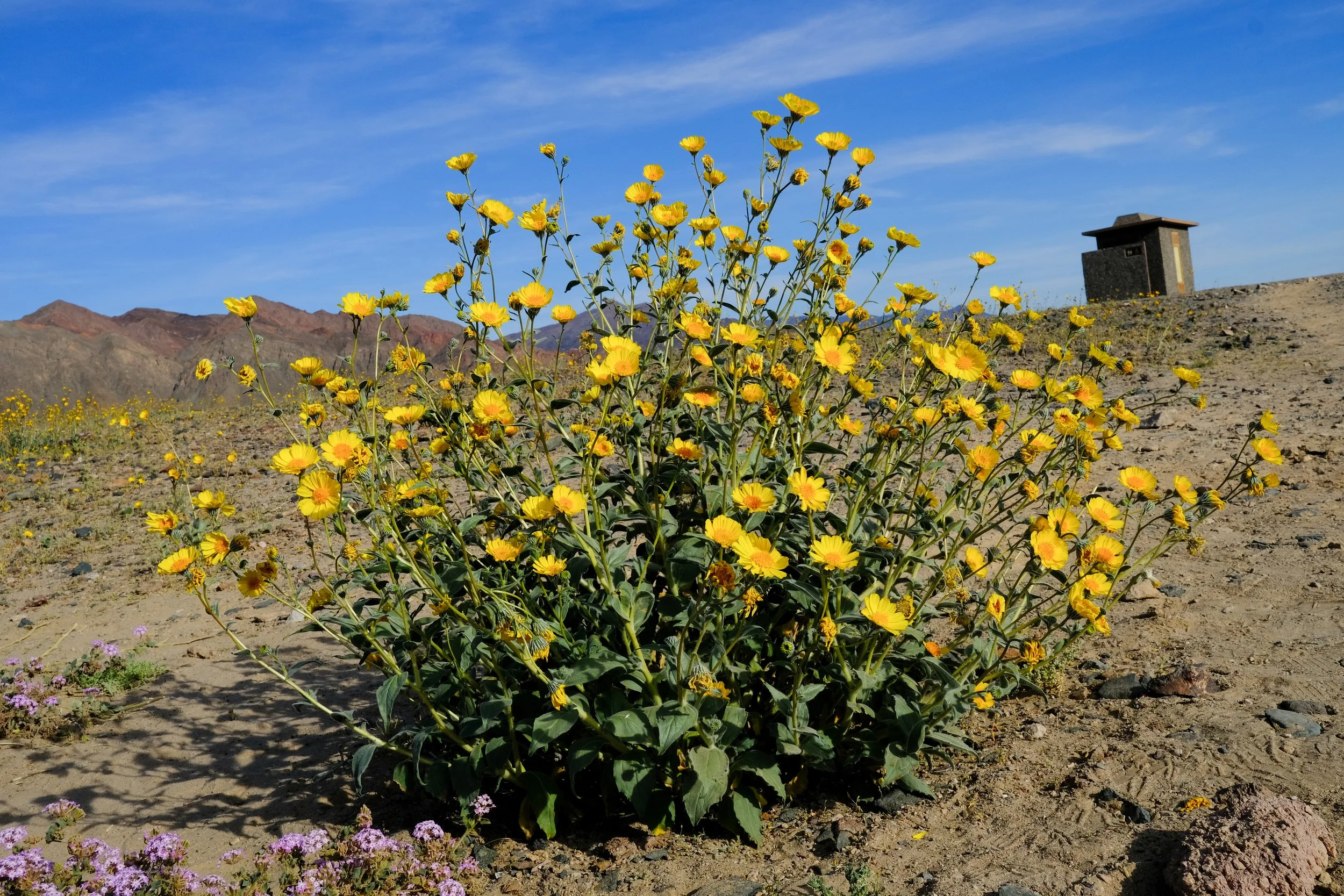
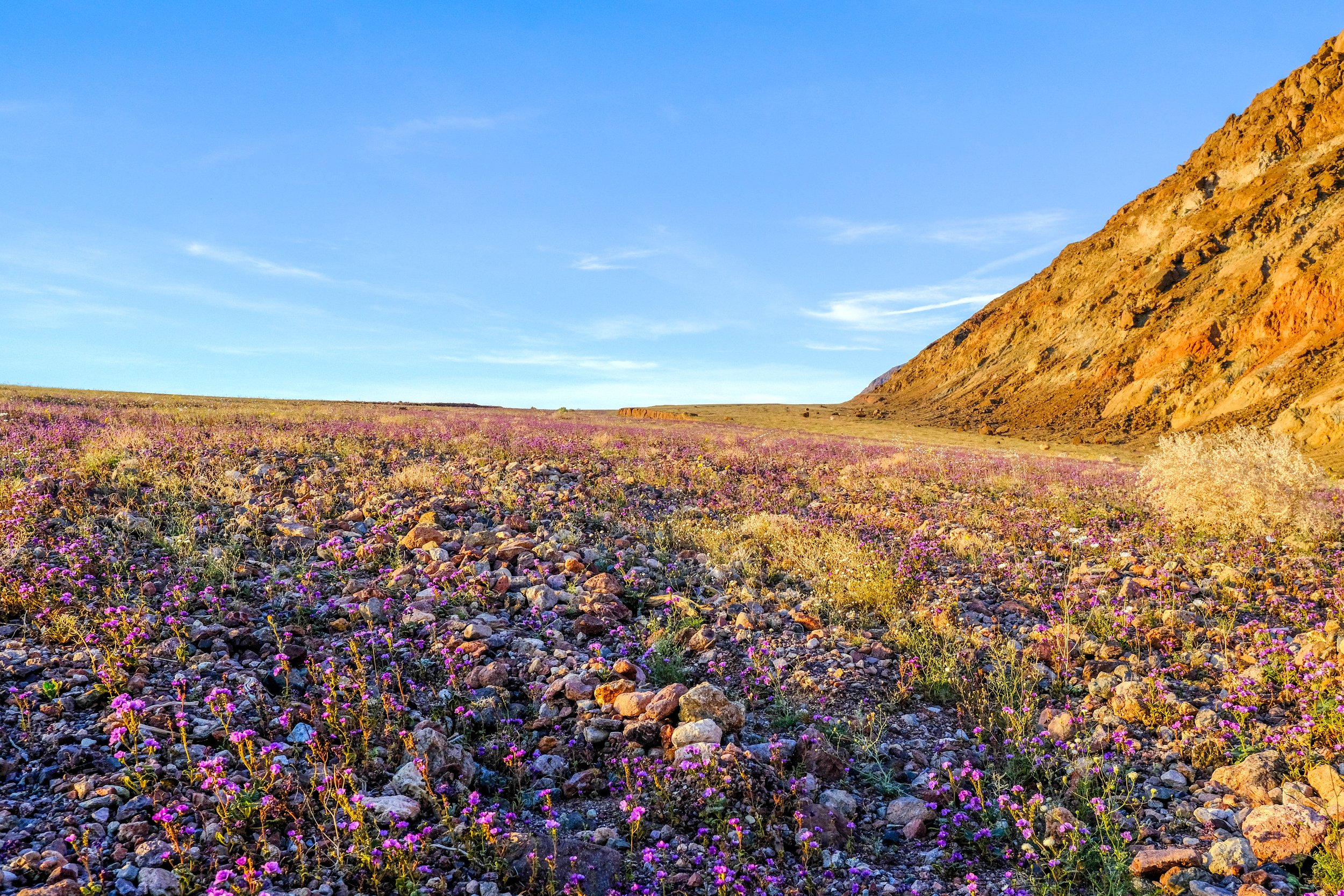
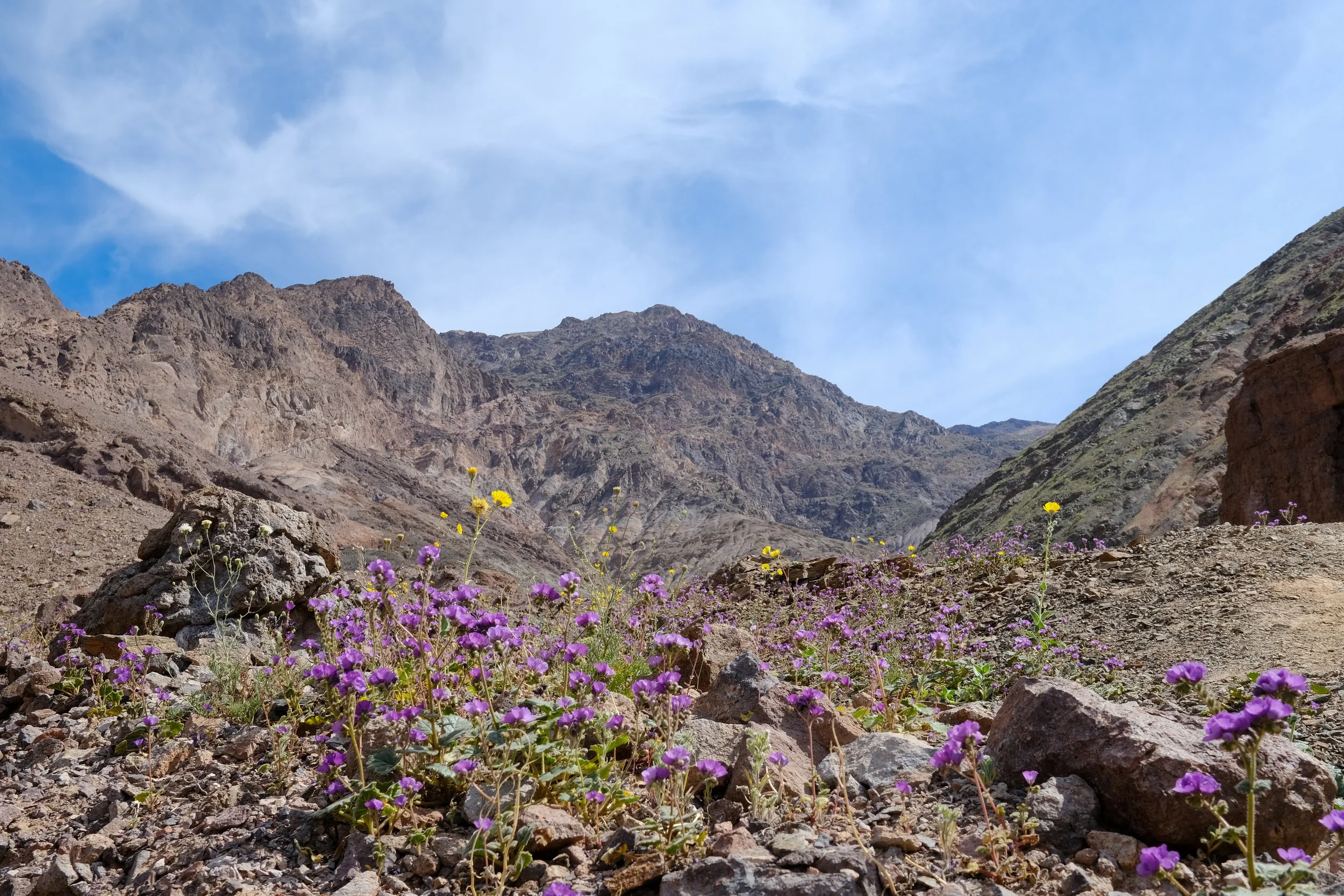
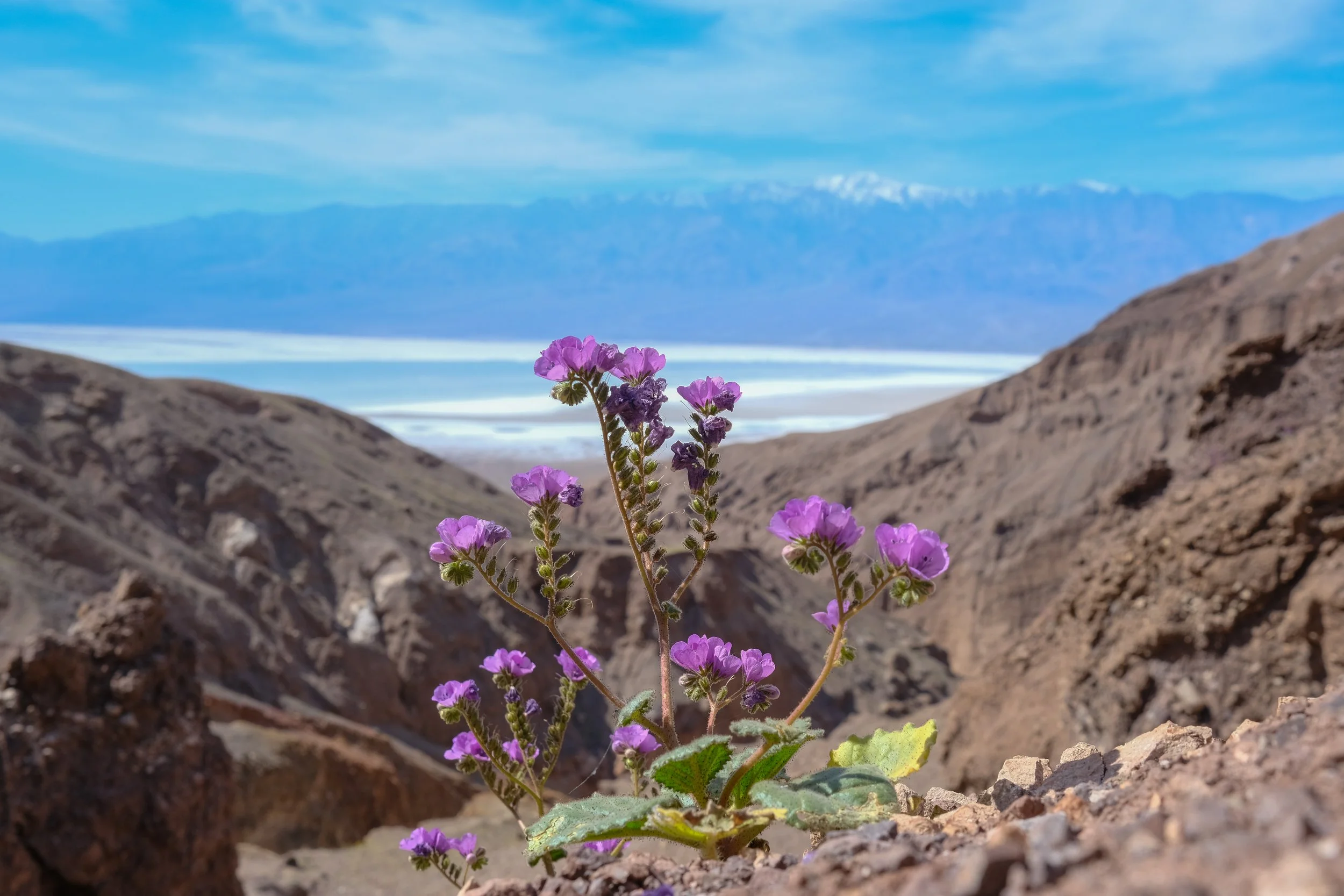
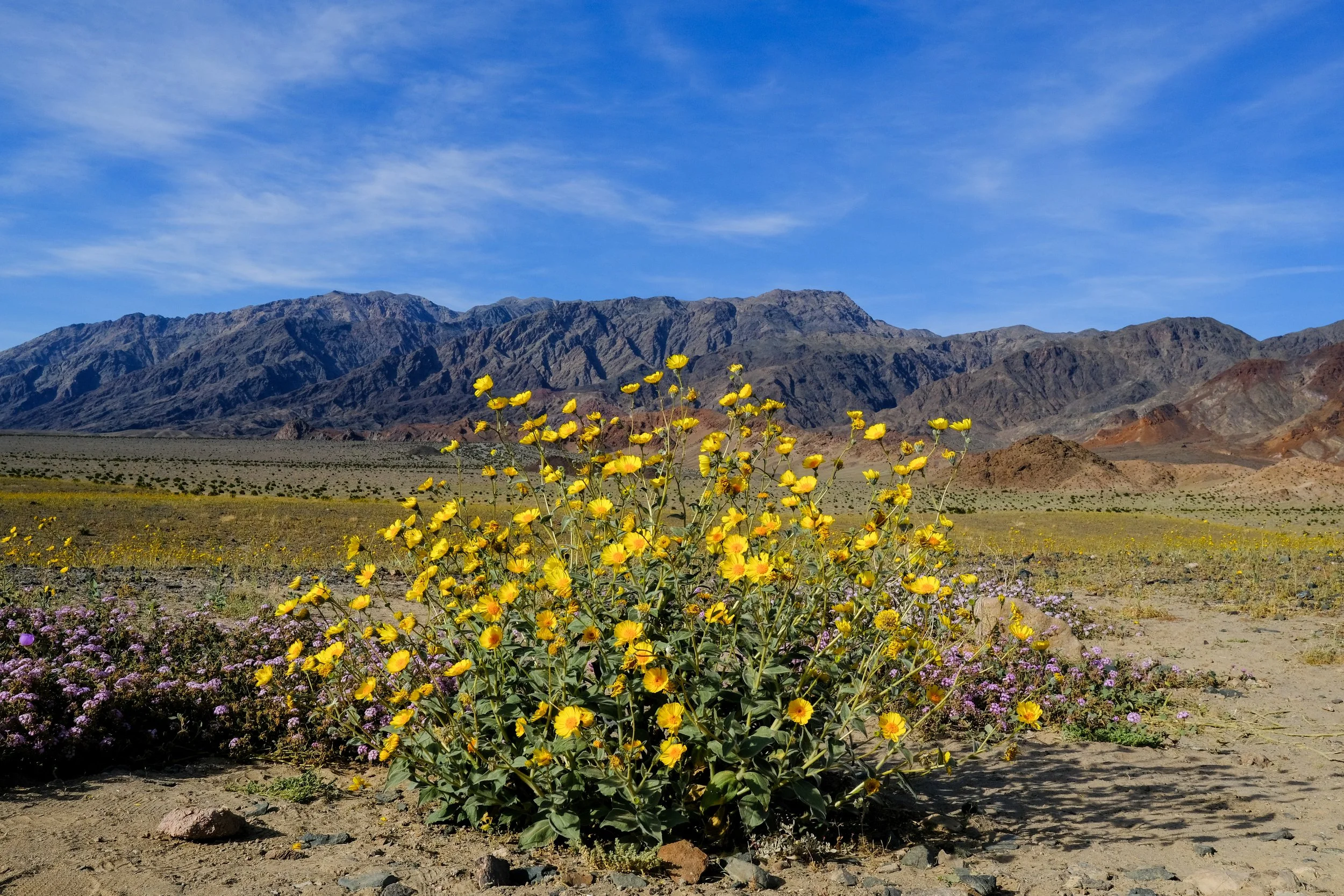
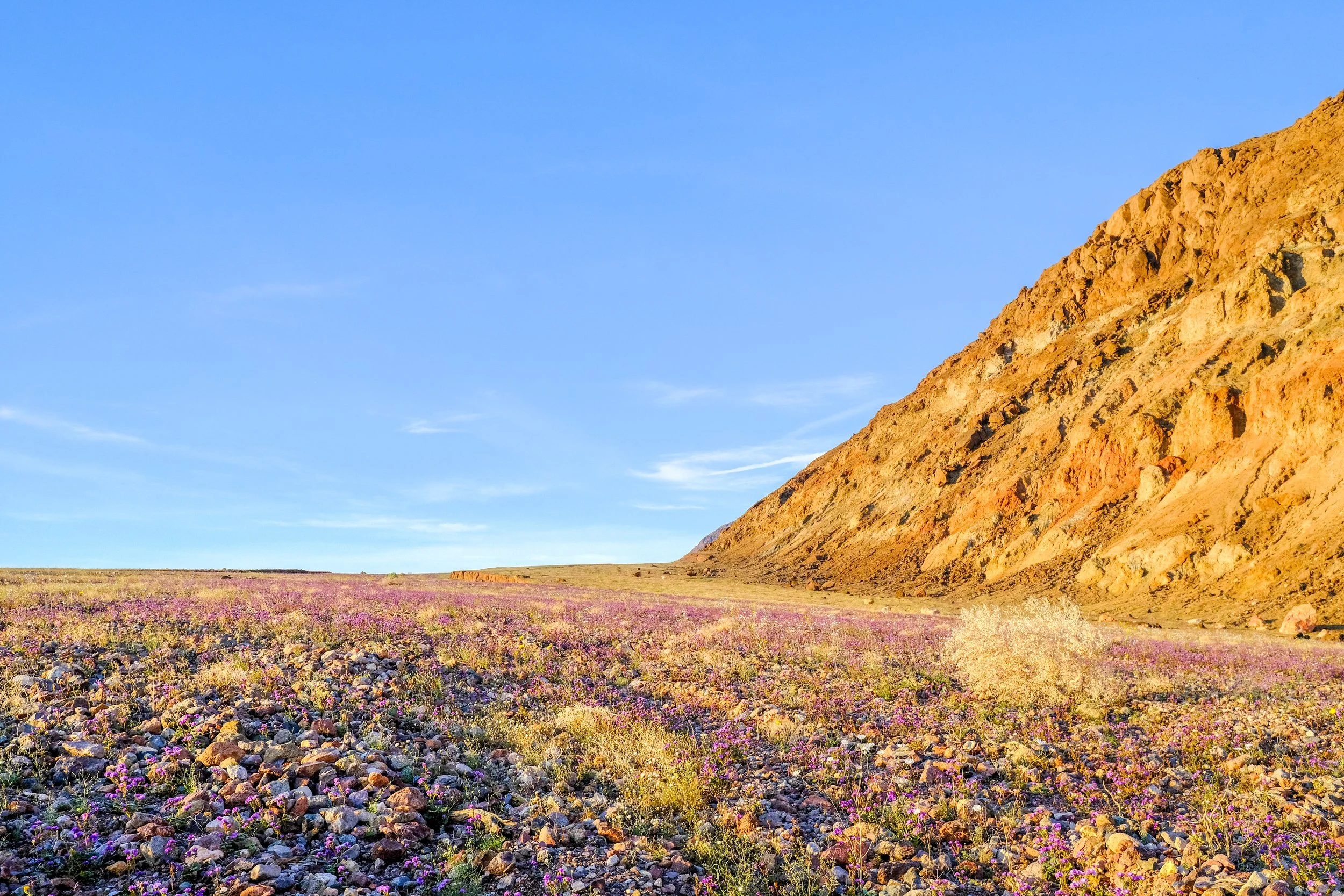
I went to Death Valley for the wildflowers. The valley blooms in abundance only once a decade, when unusual amounts of rain find wildflower seeds buried deep beneath the soil and cause them to spring to life. Flowers of purple, white, and yellow - desert gold, white gravel ghost, pink verbena, desert five spot, desert tobacco, and more, all spring up in the rocky earth. Having seen Death Valley as a place appropriately named so far, I wanted to see how it would look filled with life.
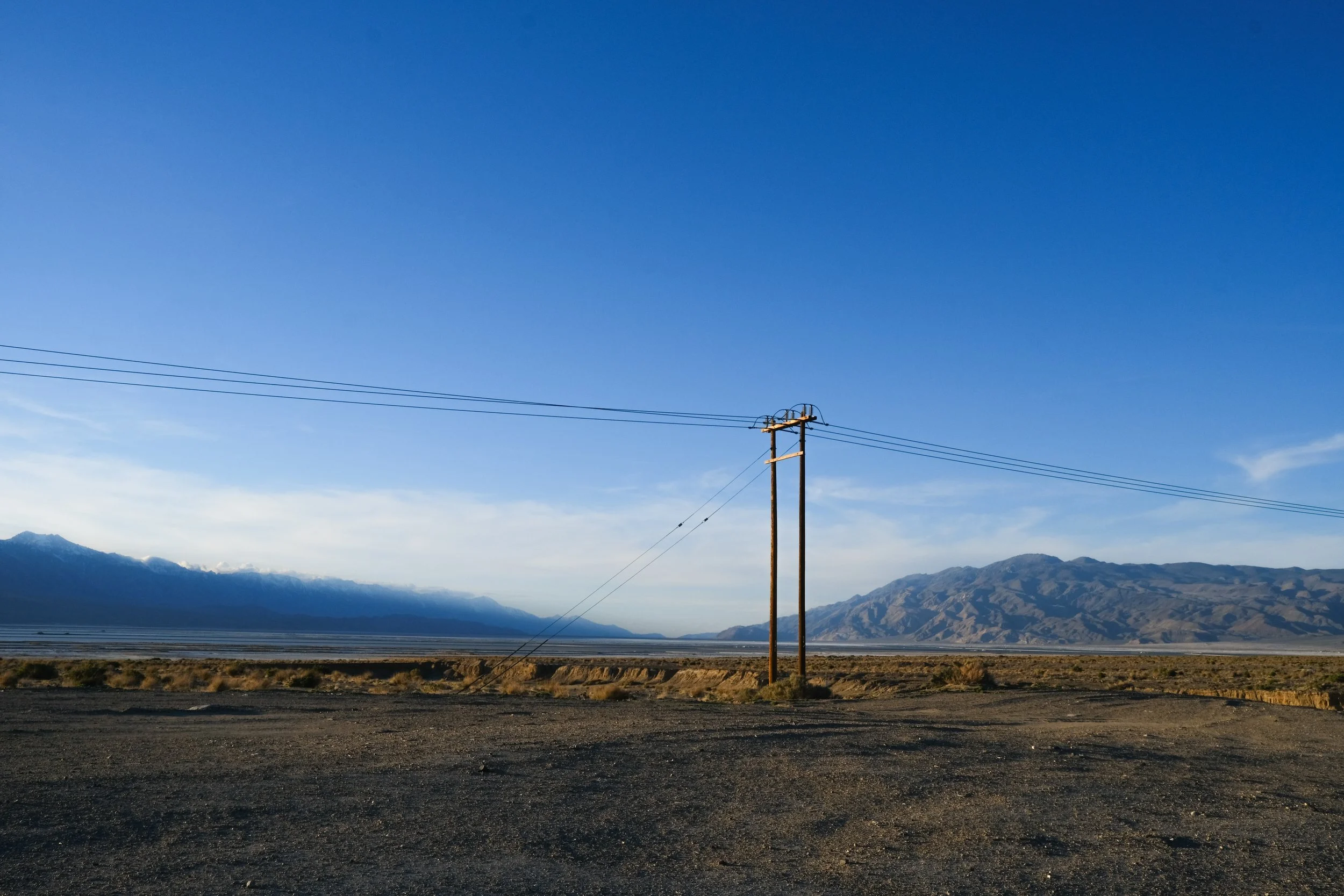
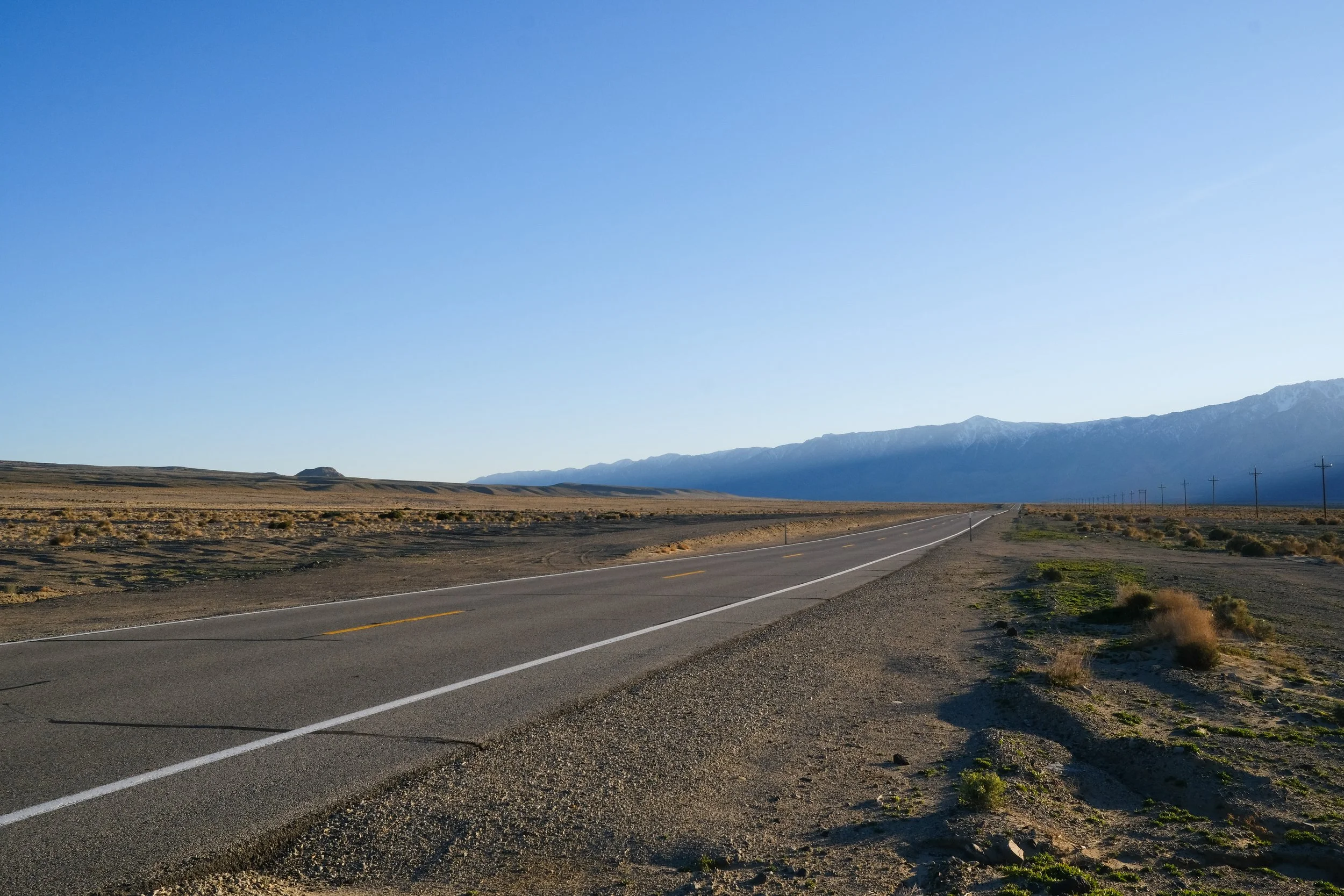
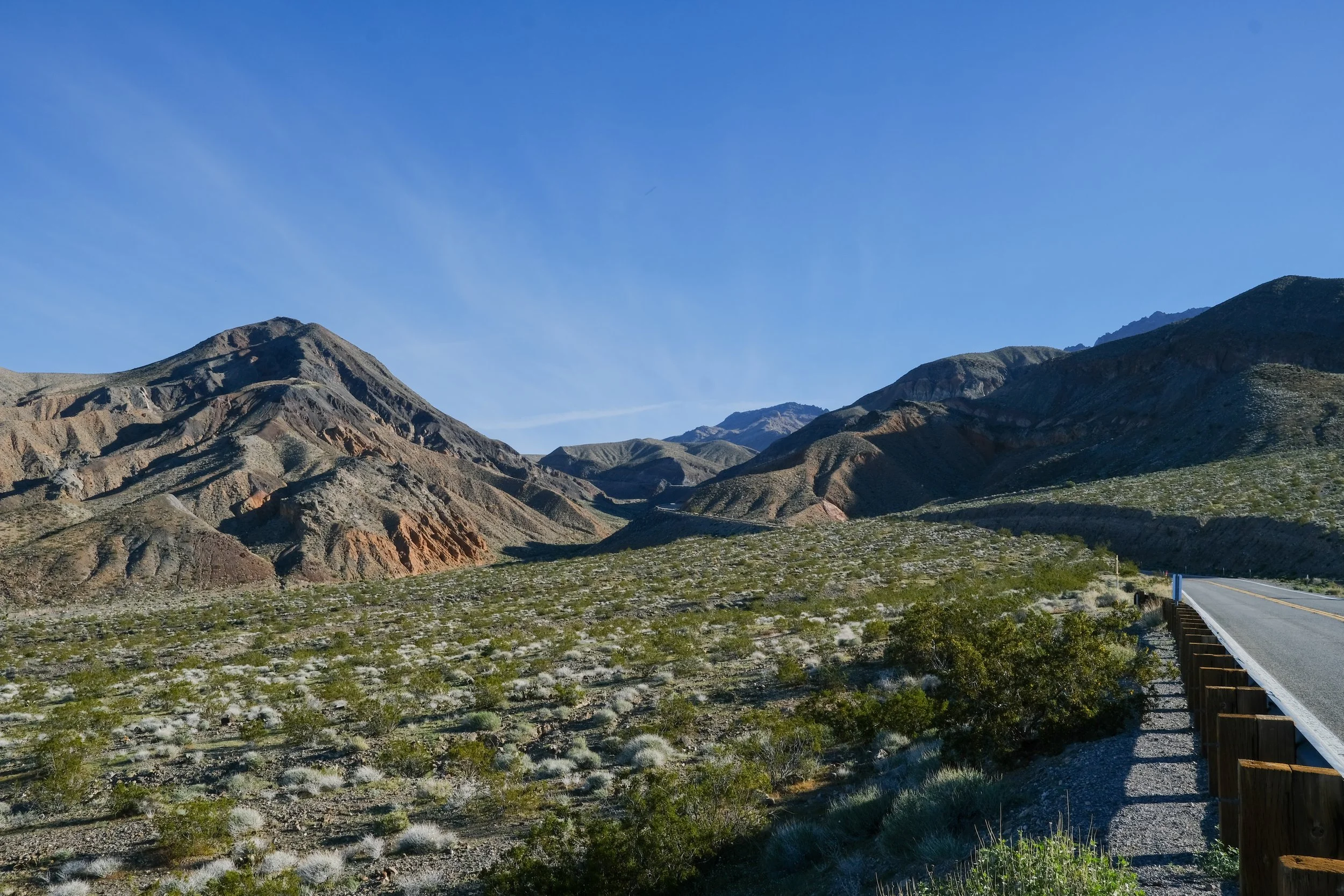
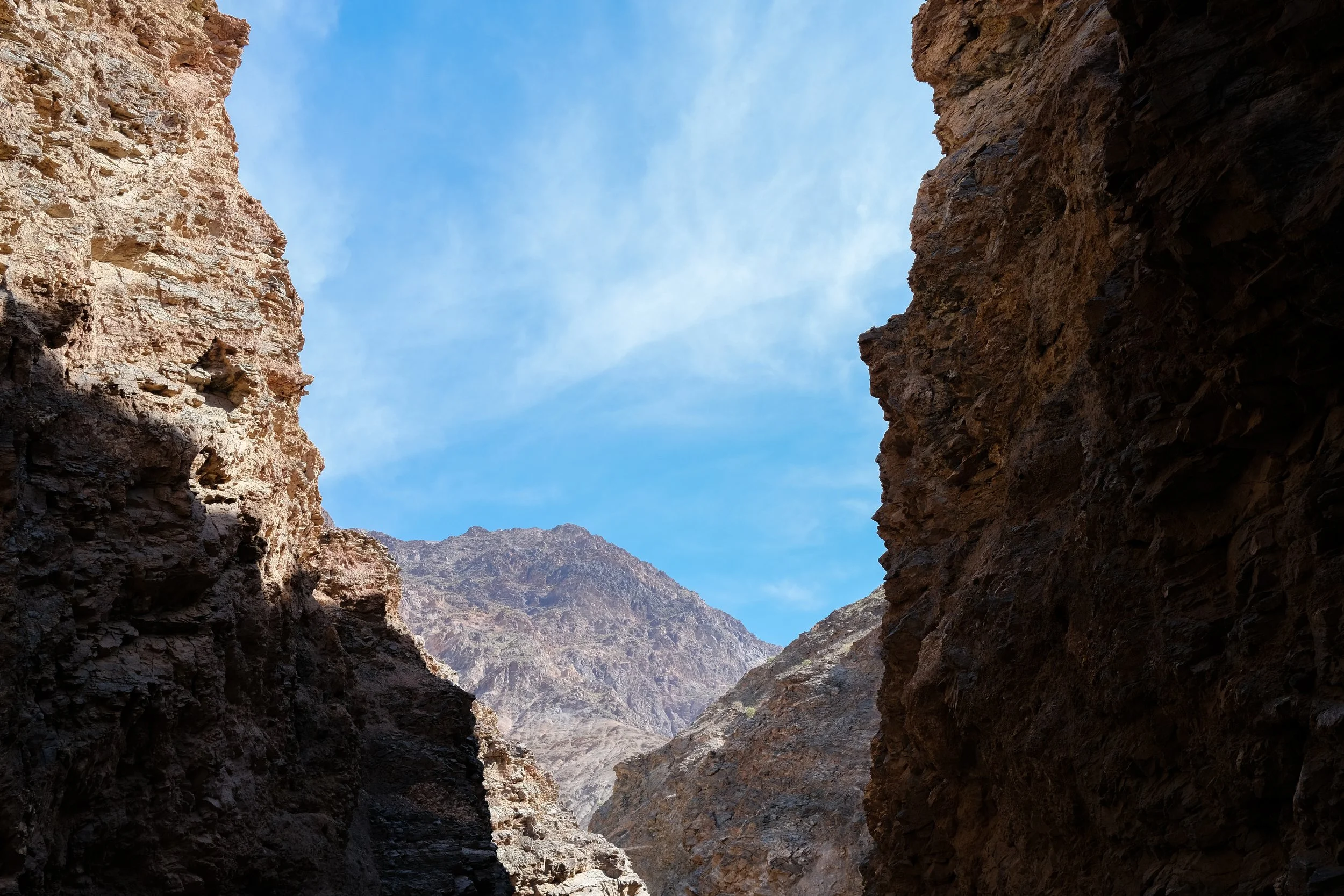
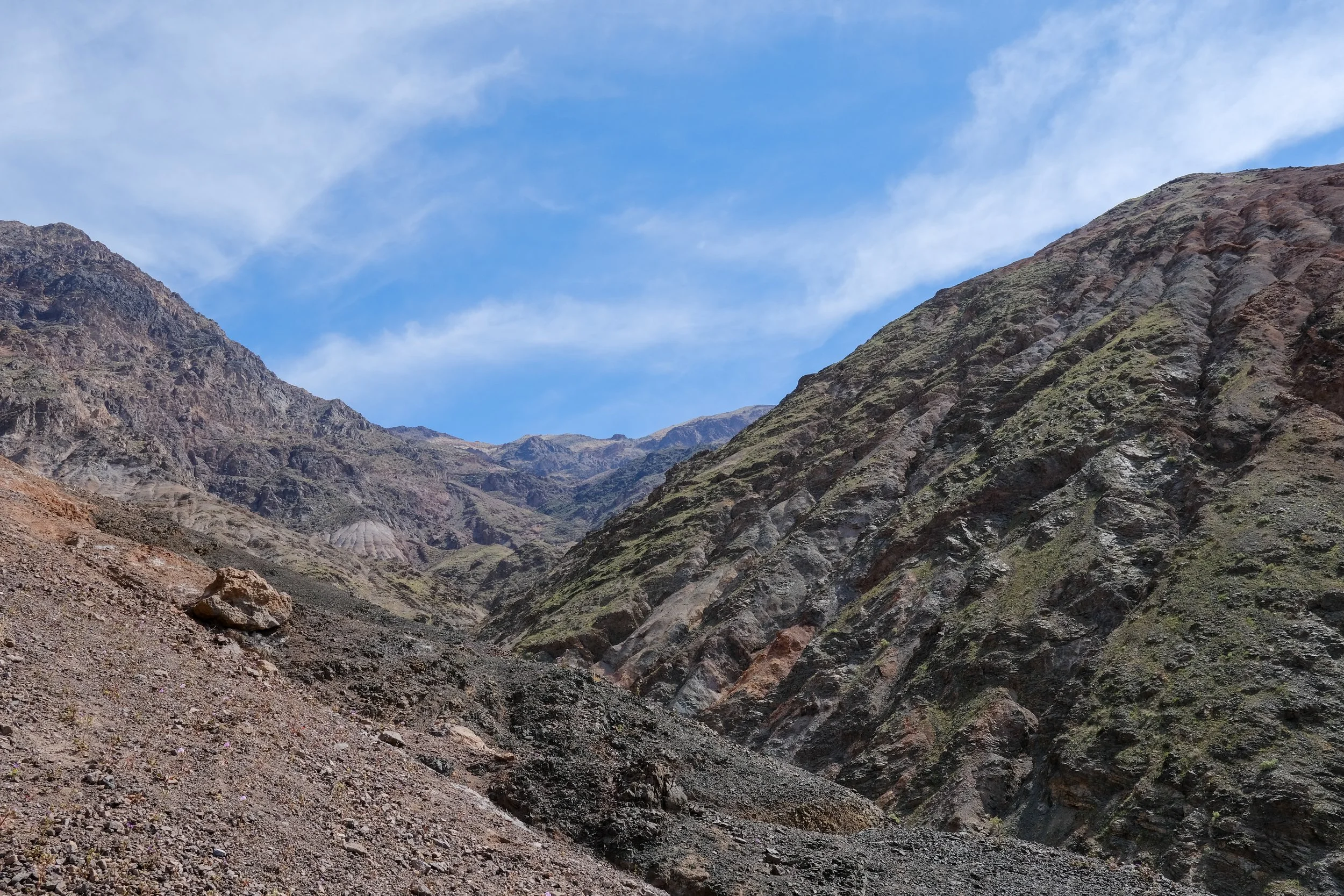
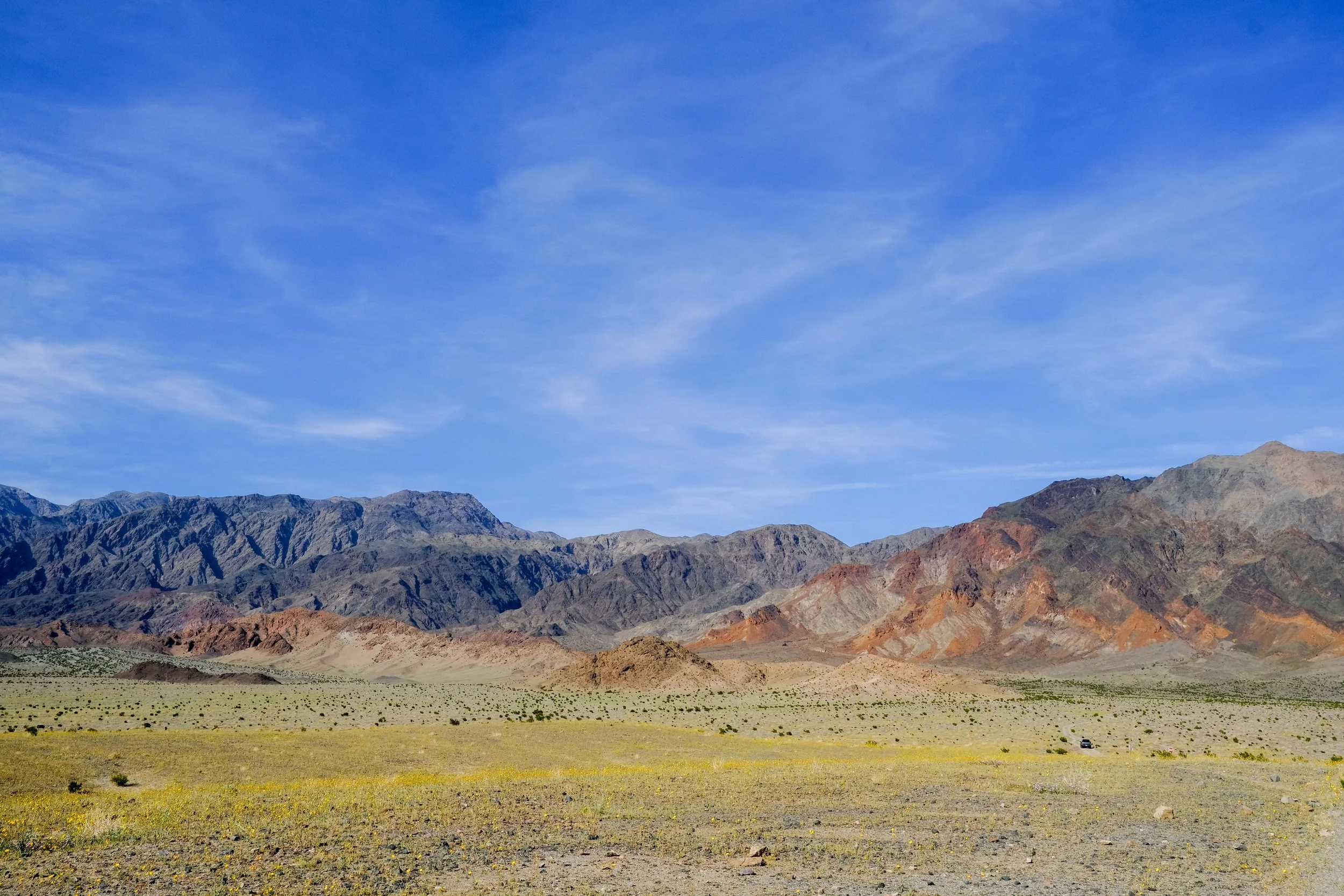
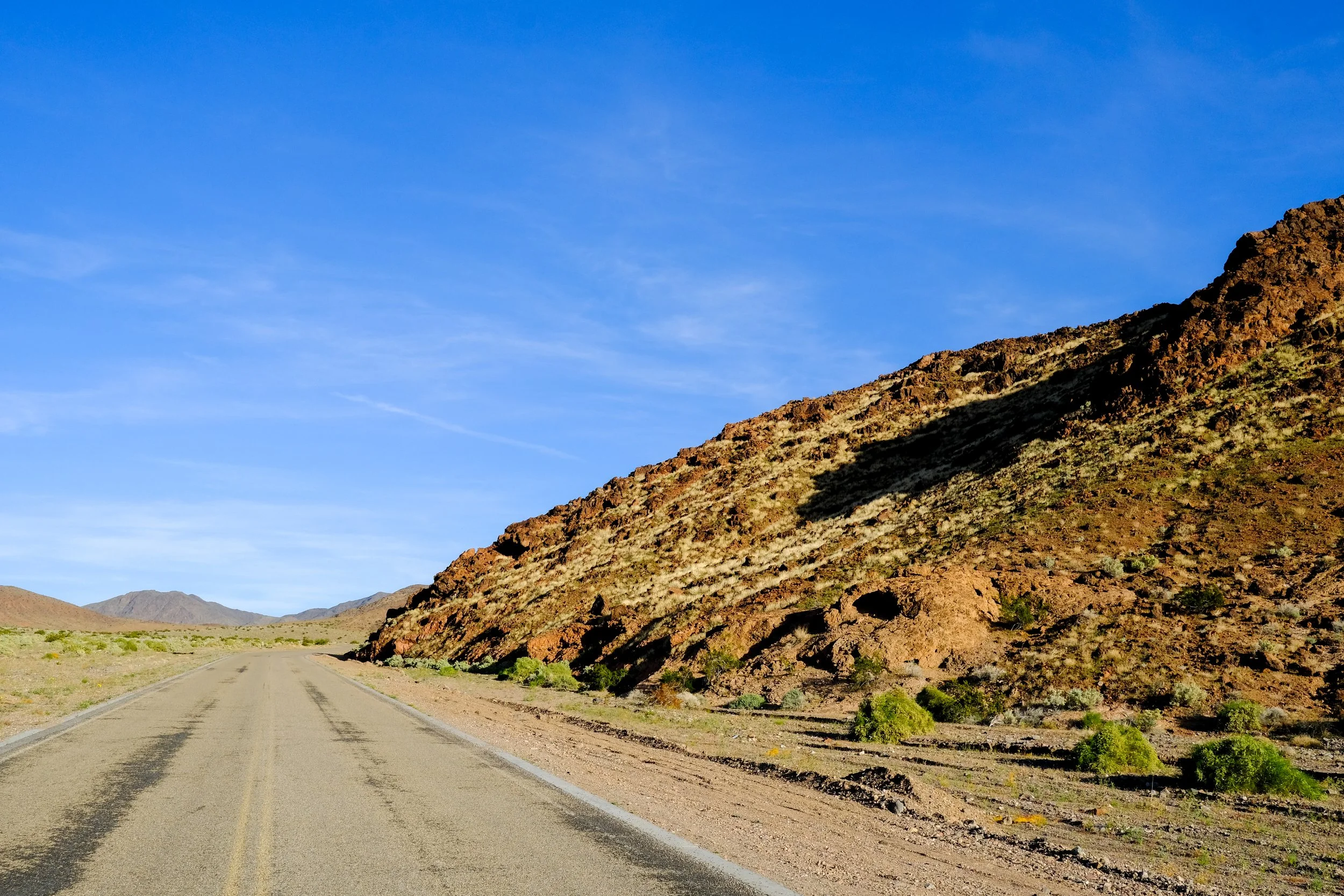
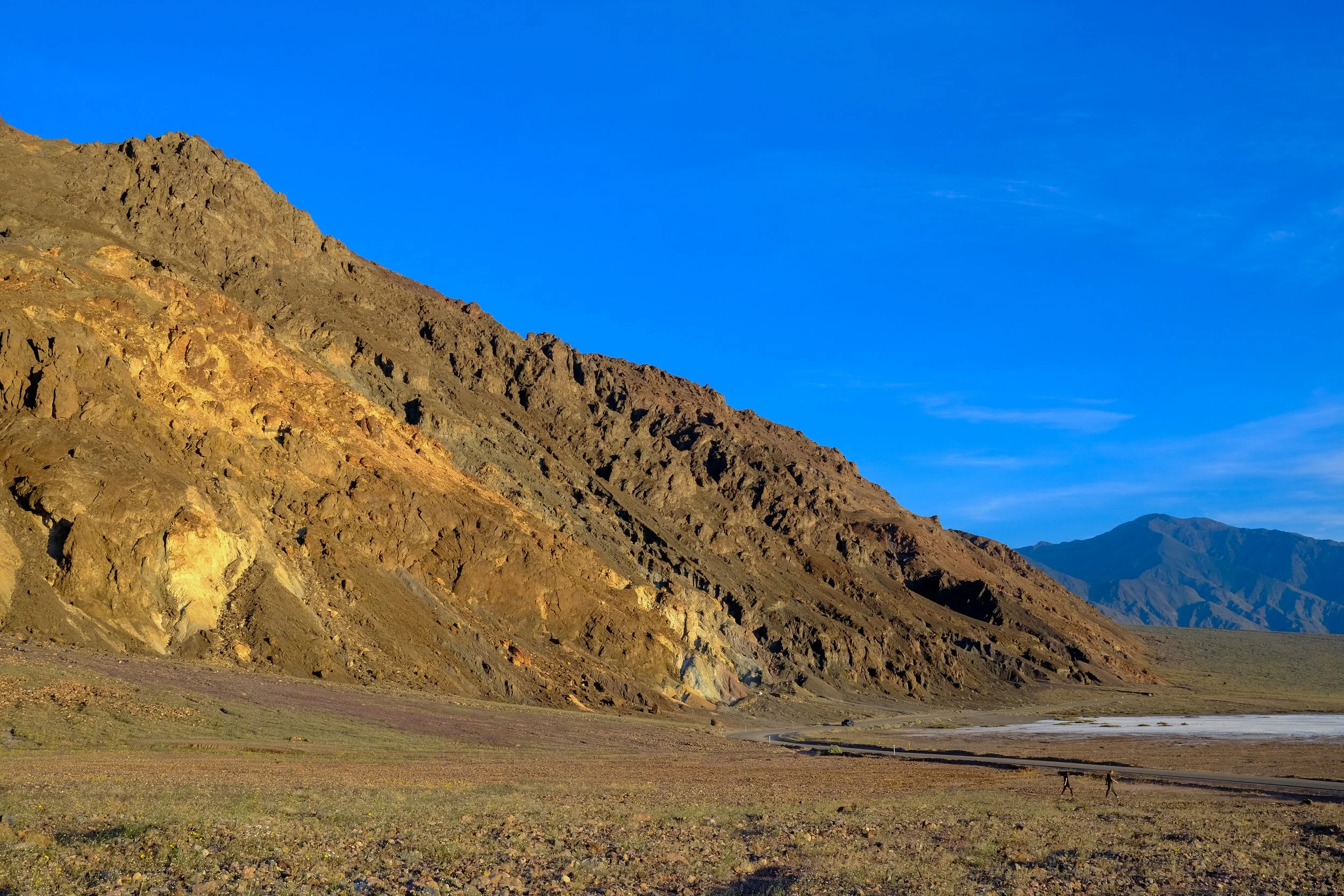
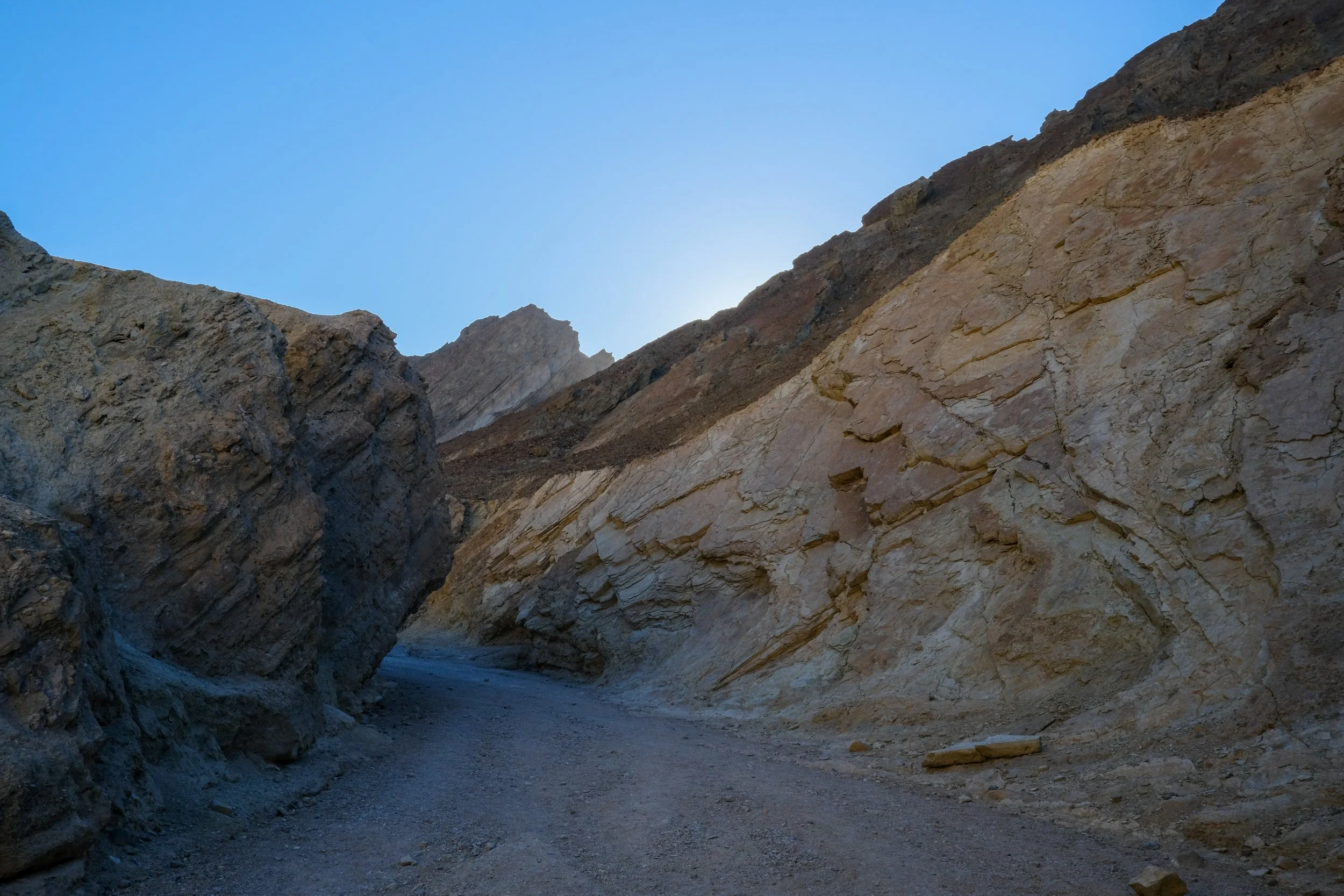
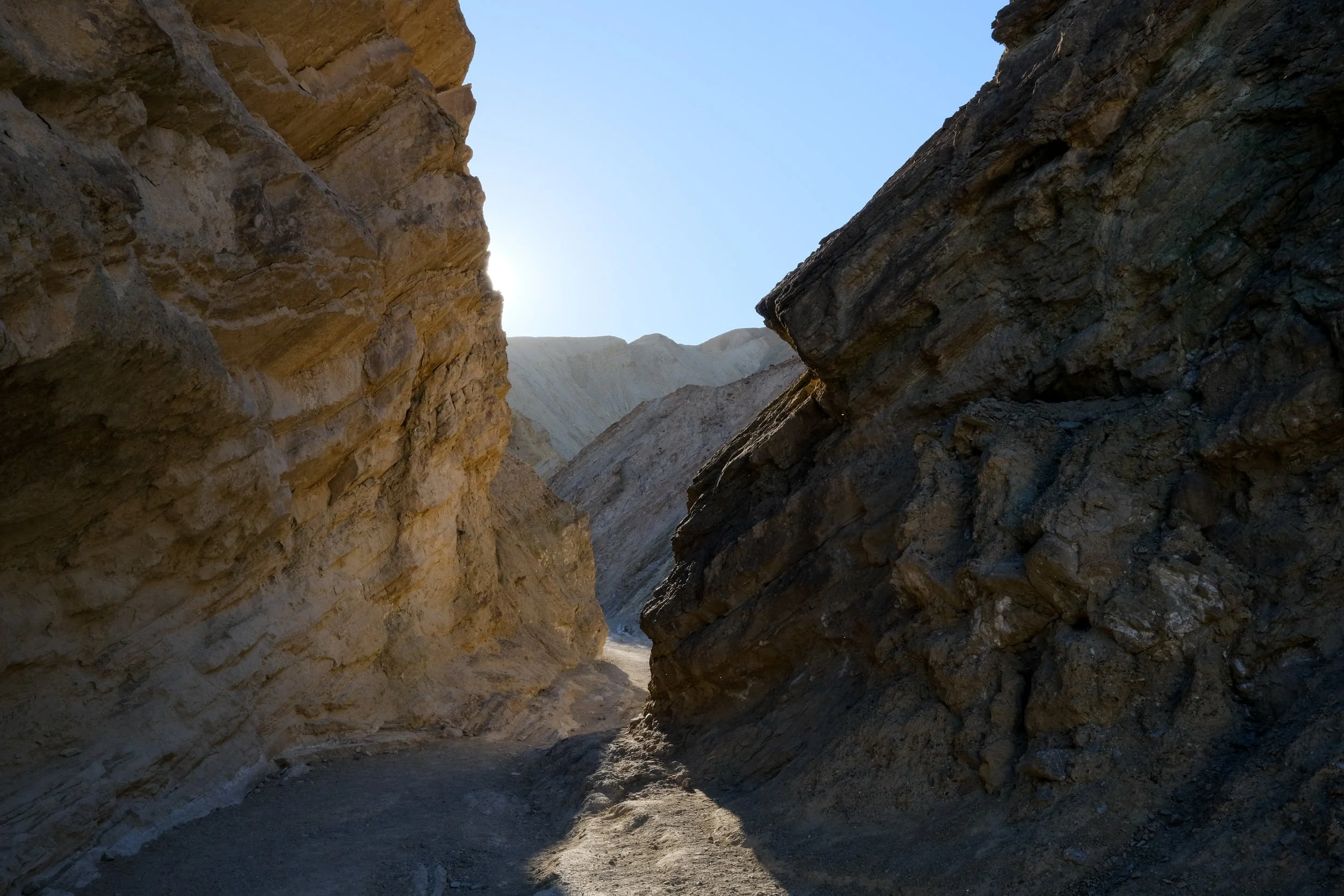
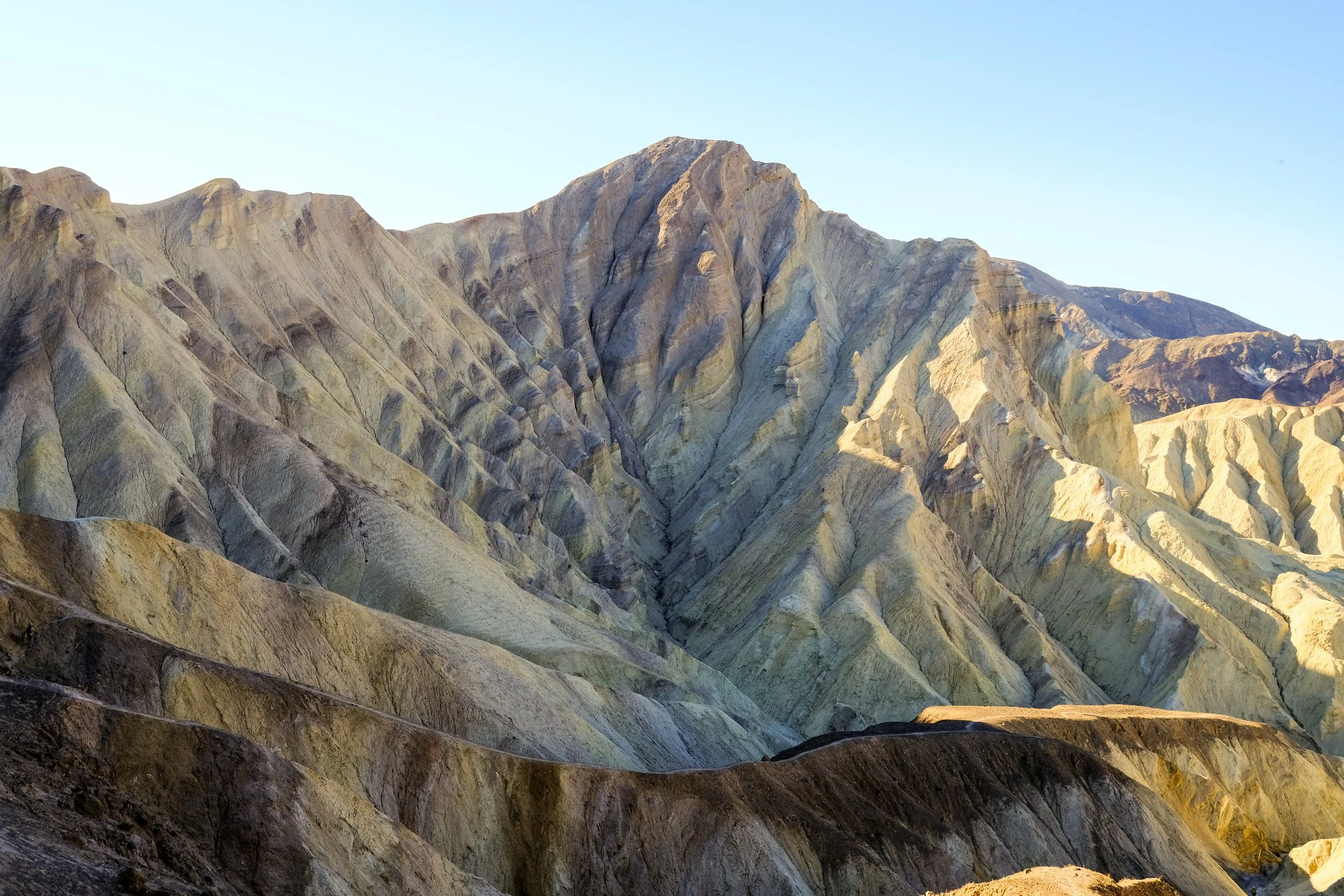
We drive in through long valleys with lonely gas stations in front of steep mountainsides, faded billboards along desert roads that trail off to a vanishing point in front of jagged horizons, and, turning right at a burned-out white building with a fresh-painted sign for “all kinds of jerky,” we finally make the long climb over the Coso range. From high up in the mountains, the thin layers of true lake below look like mirage. The mountains are severe, strict and rugged, though flowers are visible in many places. We pause here and there to look out at the great striations in the rock, the evidence of water pouring down mountainsides, millenia of flash floods changing the landscape.
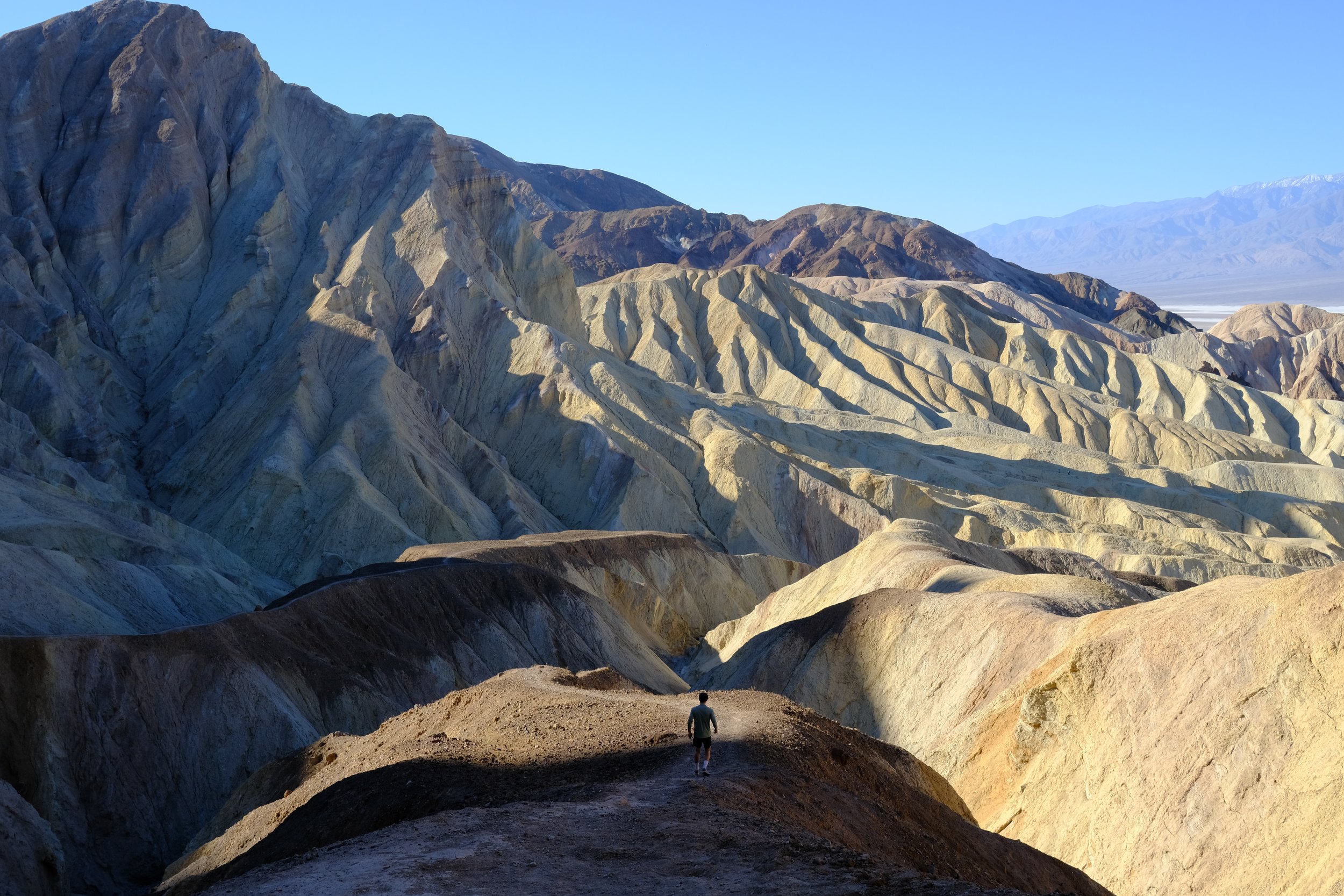
The scale of these places is not human. The mountains are large, sure, but the dryness of the climate, the visibility of all changes over time - it’s the time scale that is inaccessible more than anything. These mountains have known ages long before man, have known floods and ice and boiled them all to salt, have witnessed the speeding collisions of tectonic plates thrusting jagged spires through the crust of the earth. These mountains predate man and predate any gods we have invented, and to them we must seem no more than a nuisance, ants on a picnic blanket, easily brushed away with the narrow side of a hand, dusted off and forgotten about.
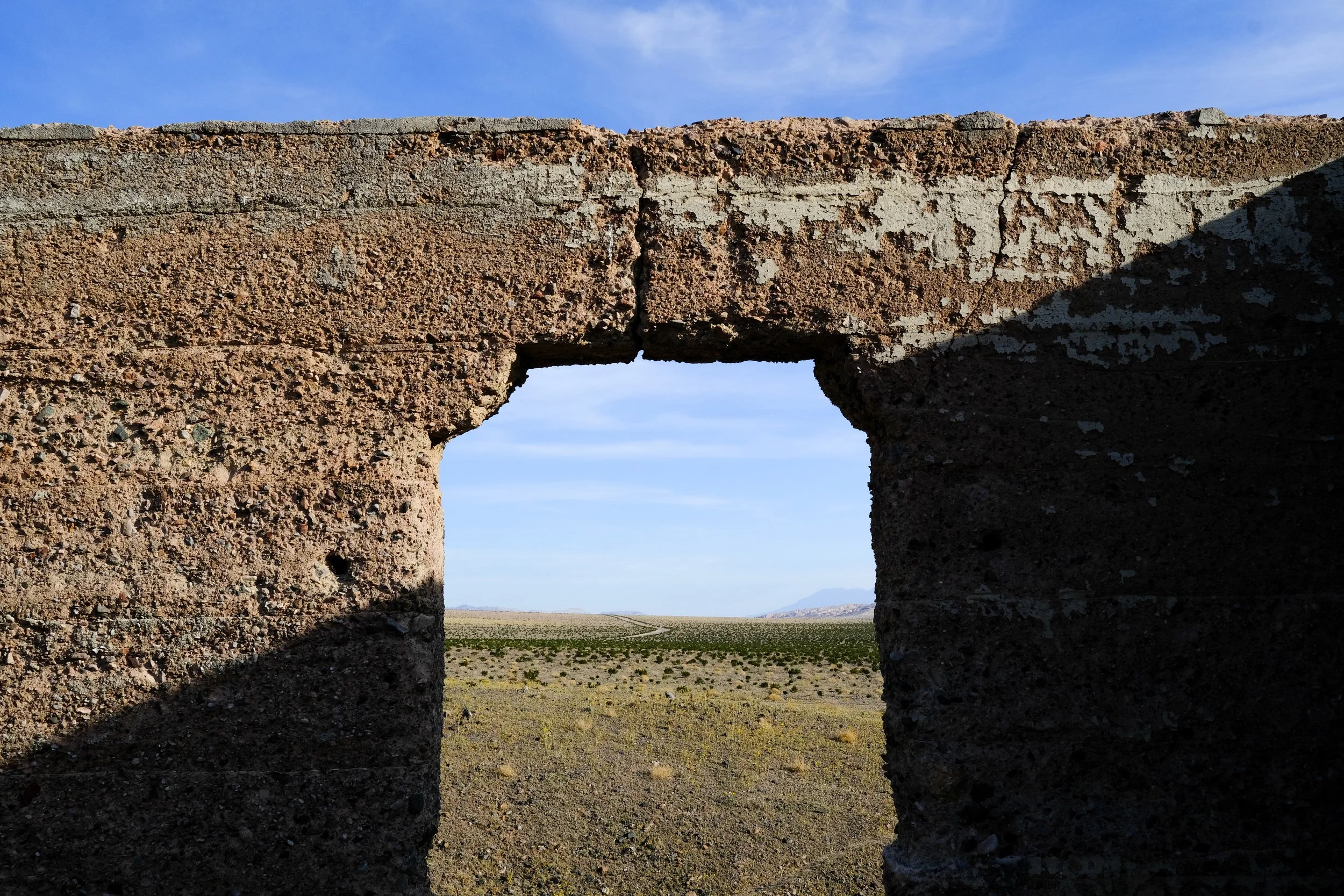
There are ruins here to visit, abandoned mines, broken structures sitting in empty valleys, and they’re none of them very old. They stand like little abscesses on the land, marks of man that seem unlikely to leave any permanent scars. Pushing against a wooden beam at an abandoned building I am surprised at how sturdy it seems. This is not the kind of place that bends to man, but bends whatever enters it into shapes that resemble itself. Each of these places is a testament to the inhospitability of the area for long term habitation.
Truth be told, I held this hope somewhere deep in me that the scenes we would see would not be desert at all, but lush fields, grassy heavens, blooming plains, rivers and waterfalls. Mountain lions and wild bison would wander through the fields of flowers I imagined, lounging and grazing in the rare perfumes of the unusual Spring.
But this is the desert - a rare scene within it, sure, but always the desert.
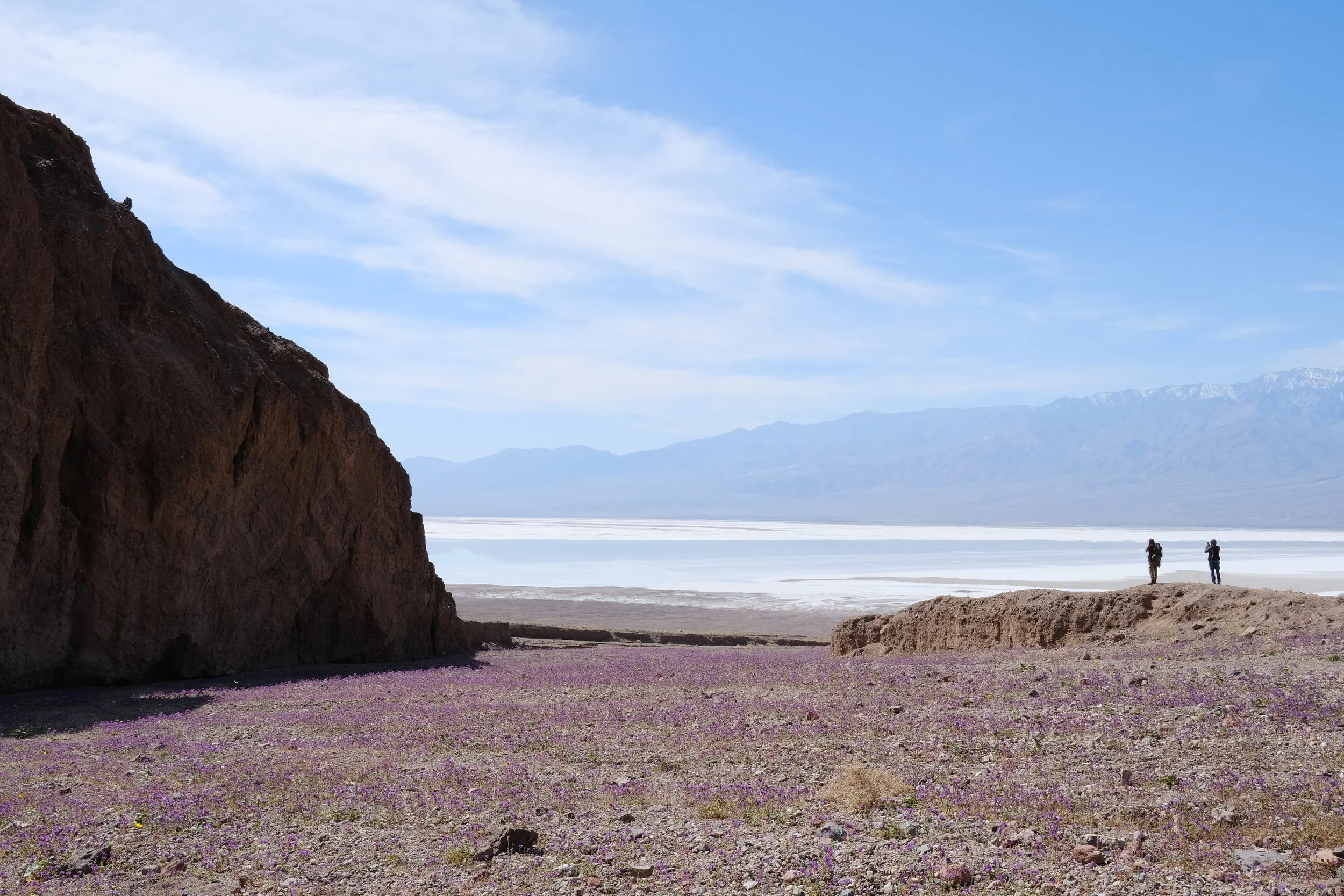
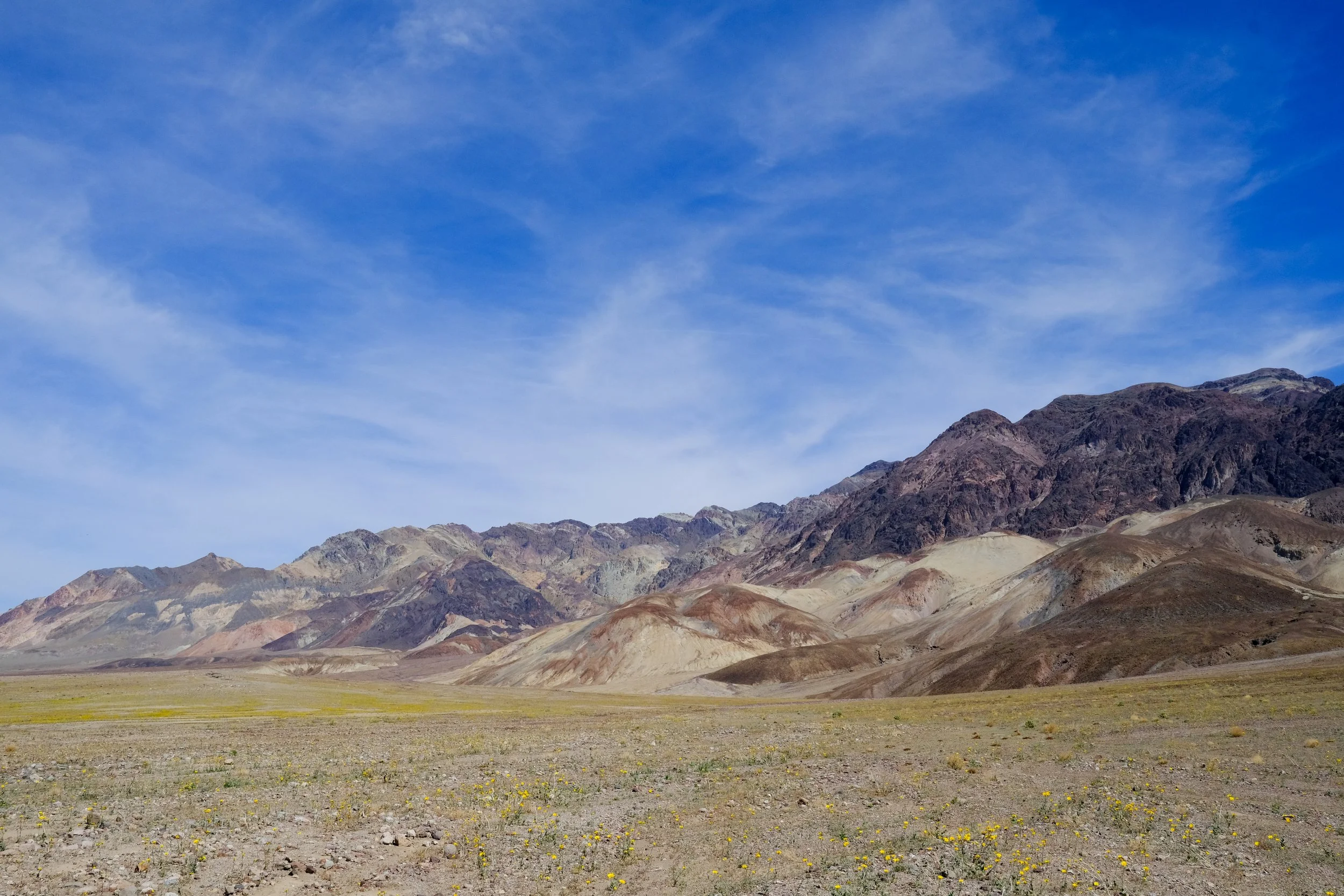
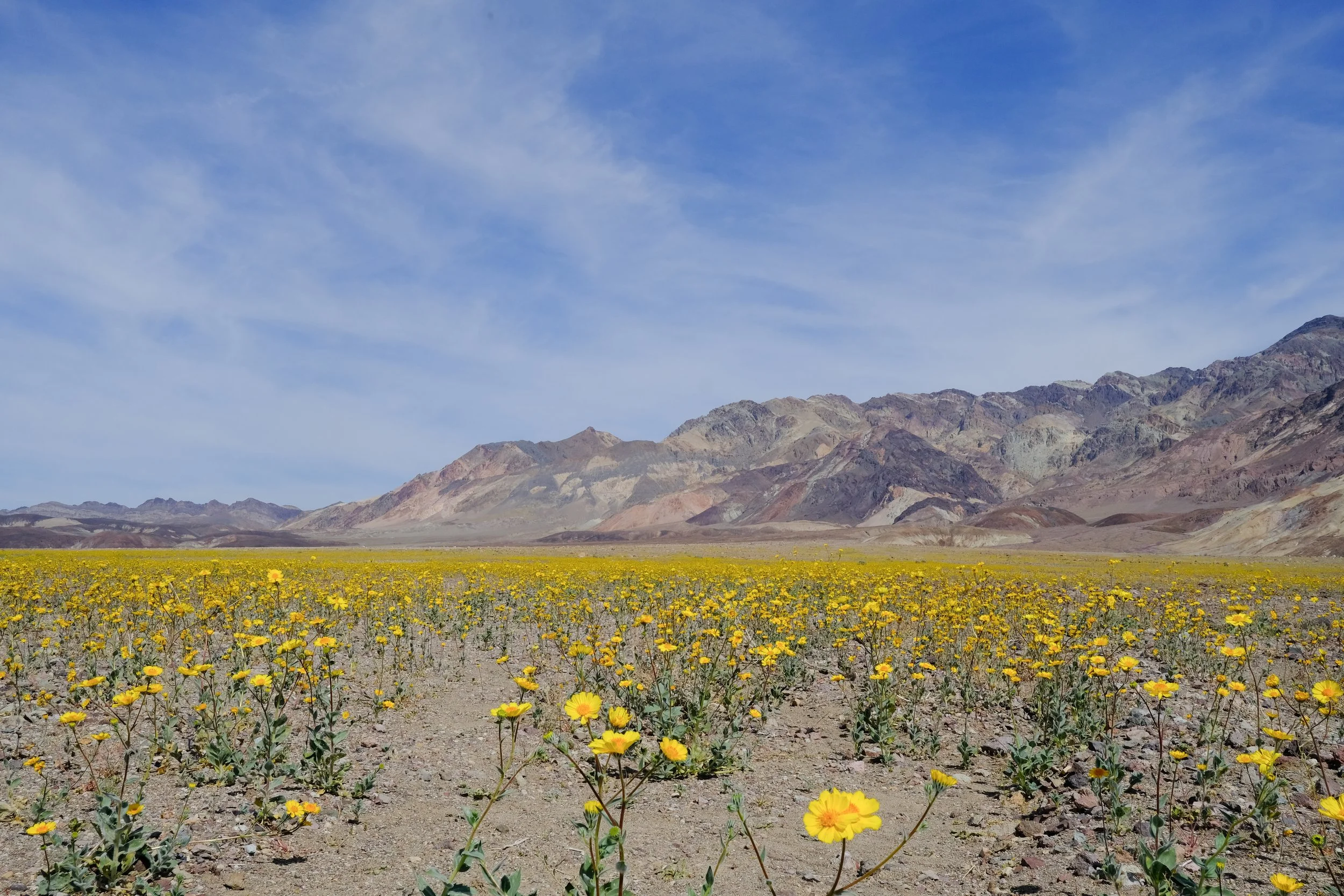
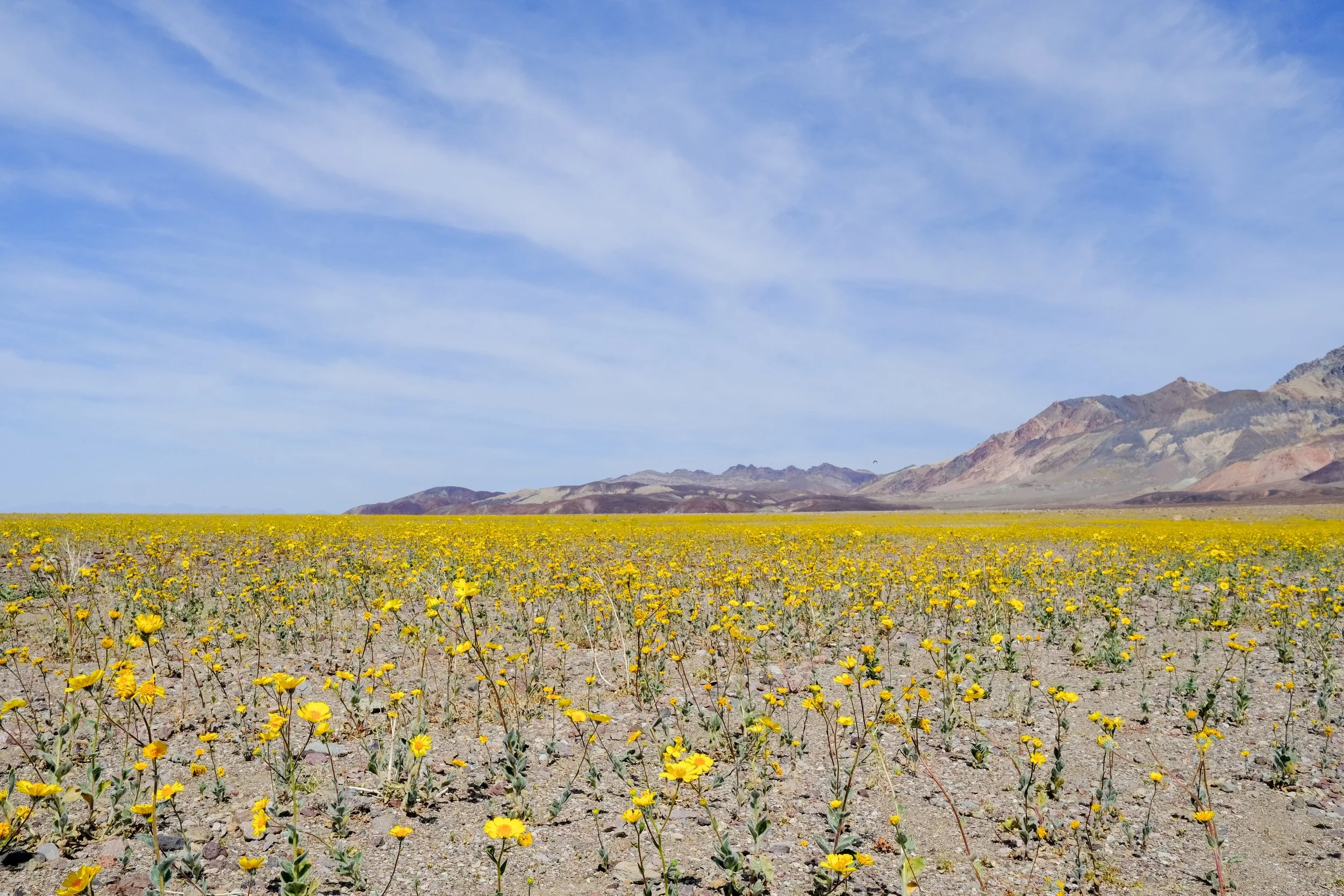
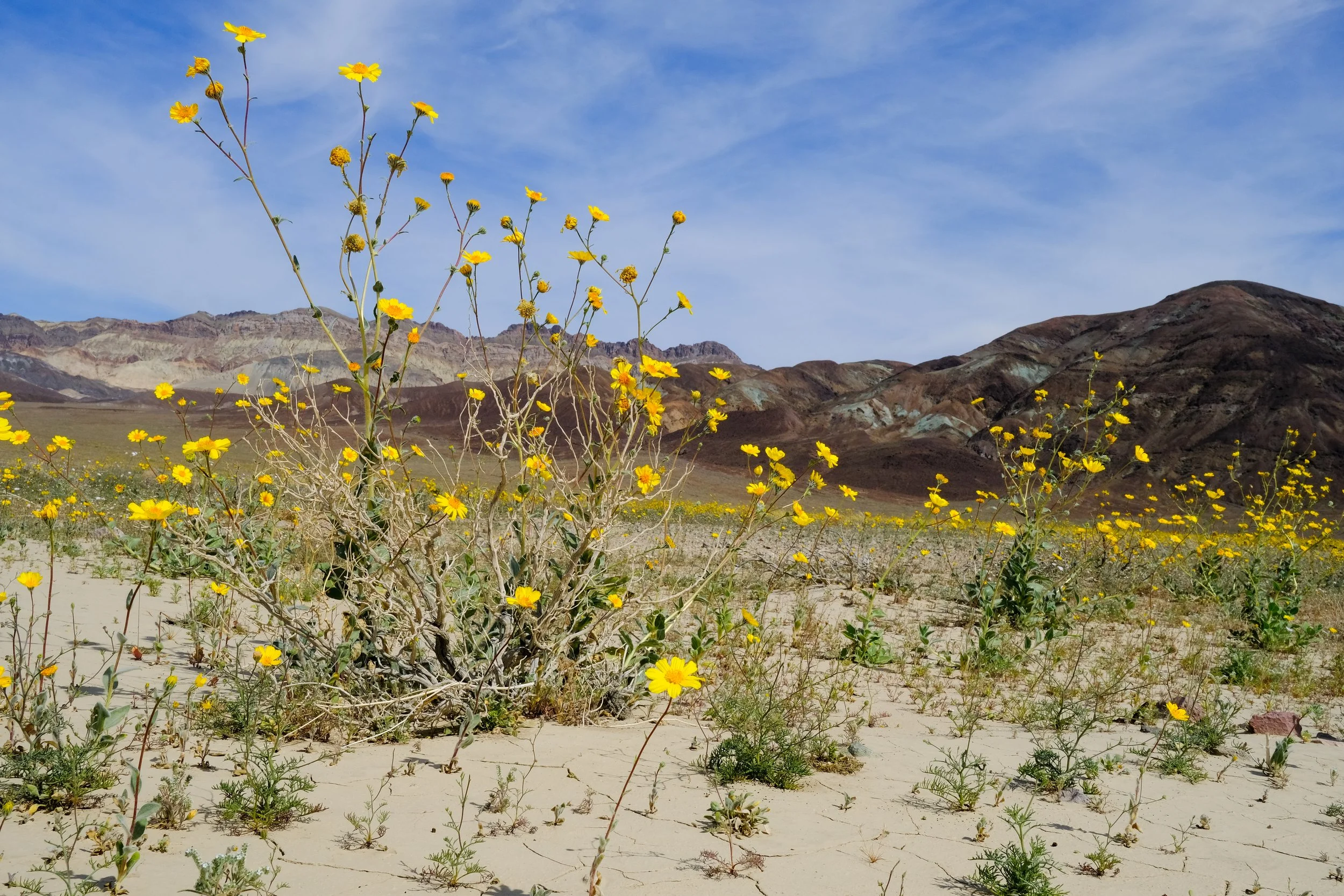
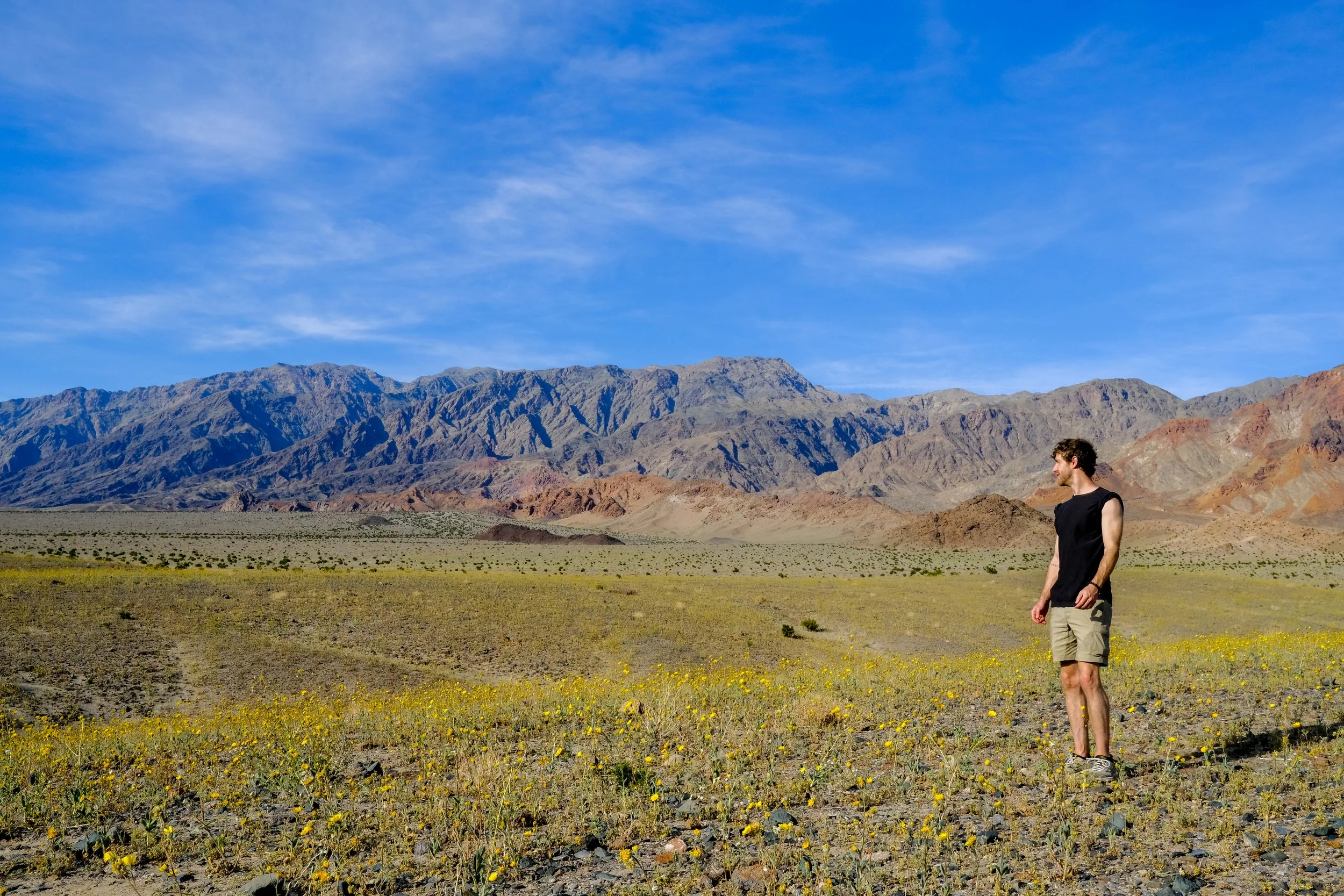
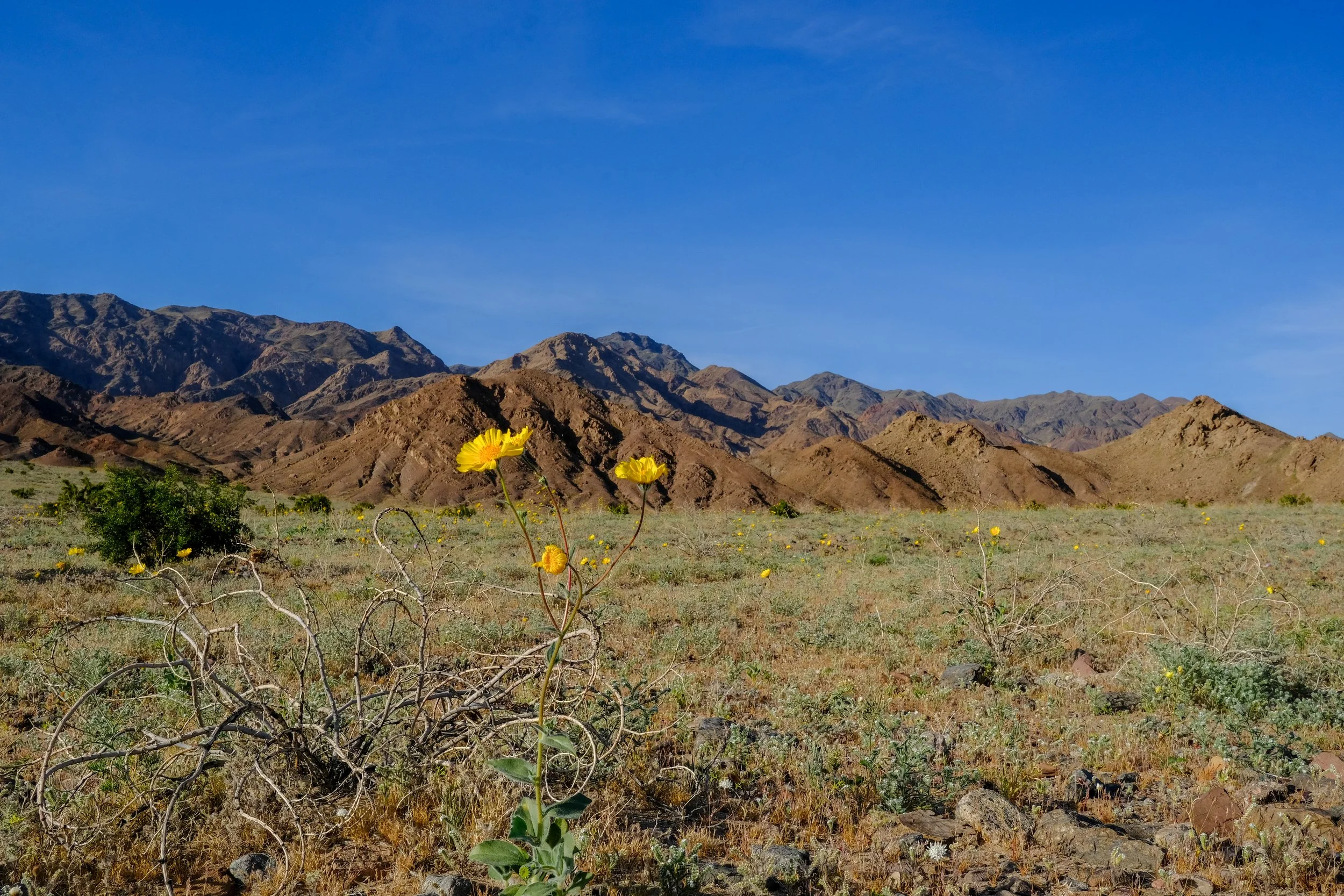
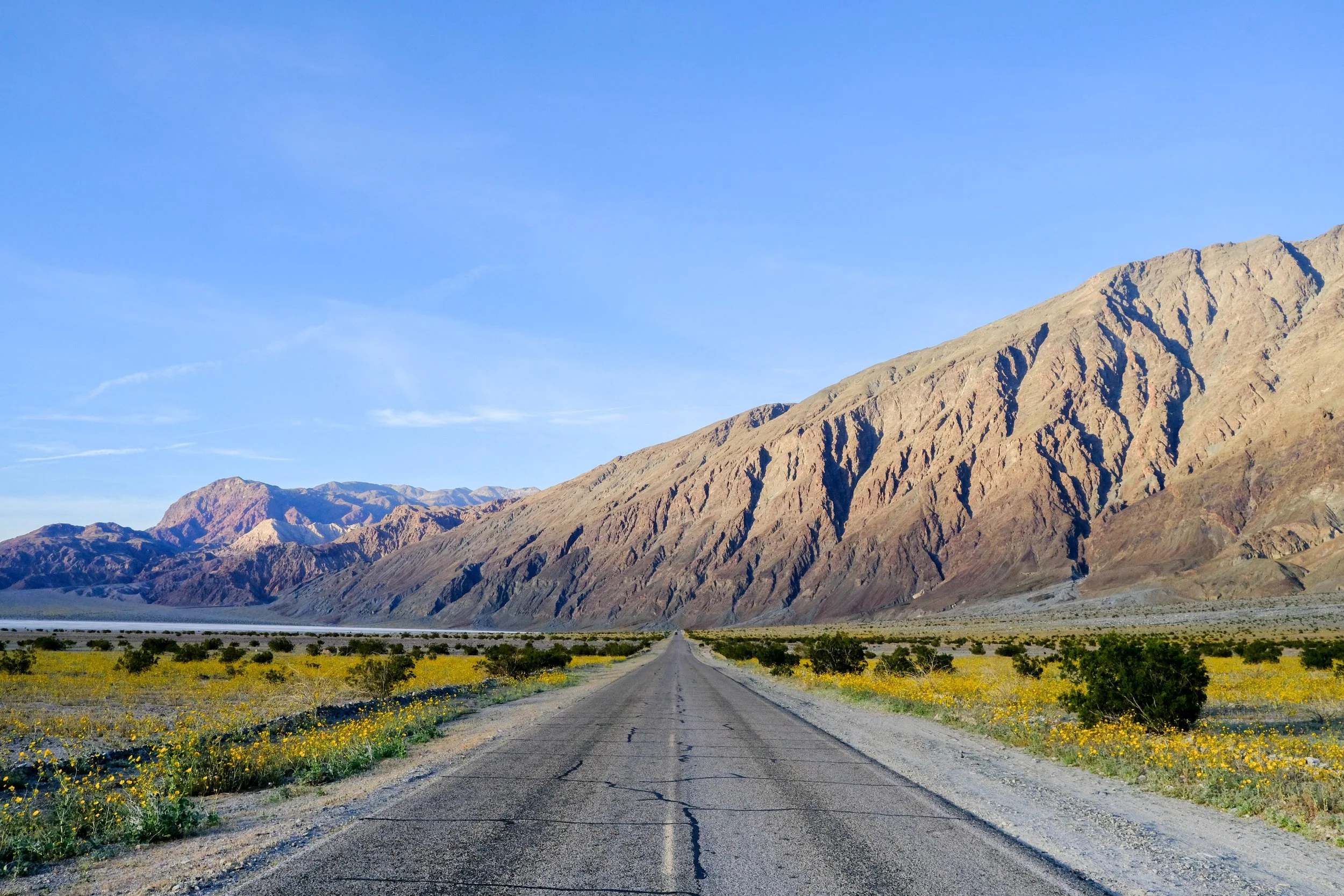
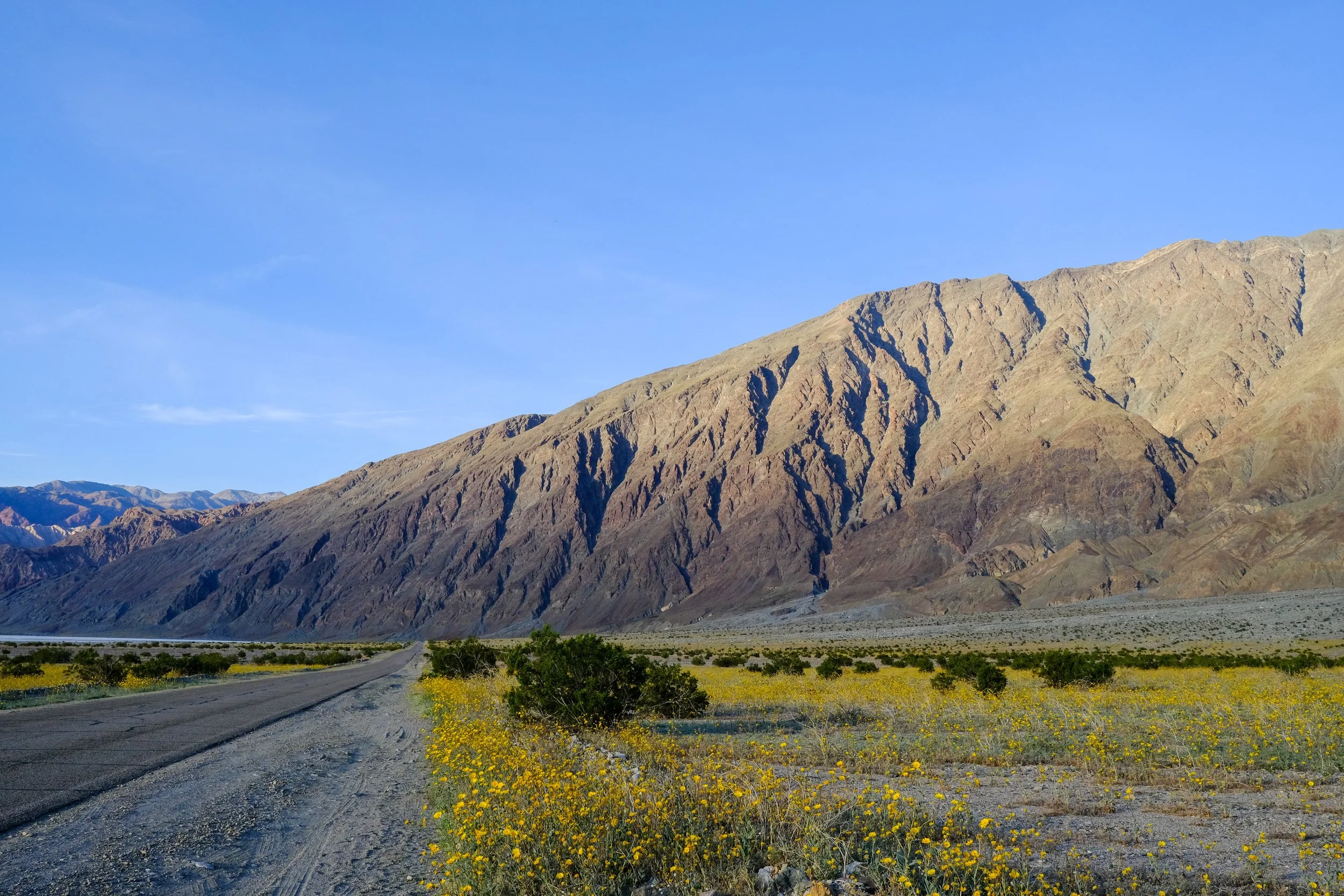
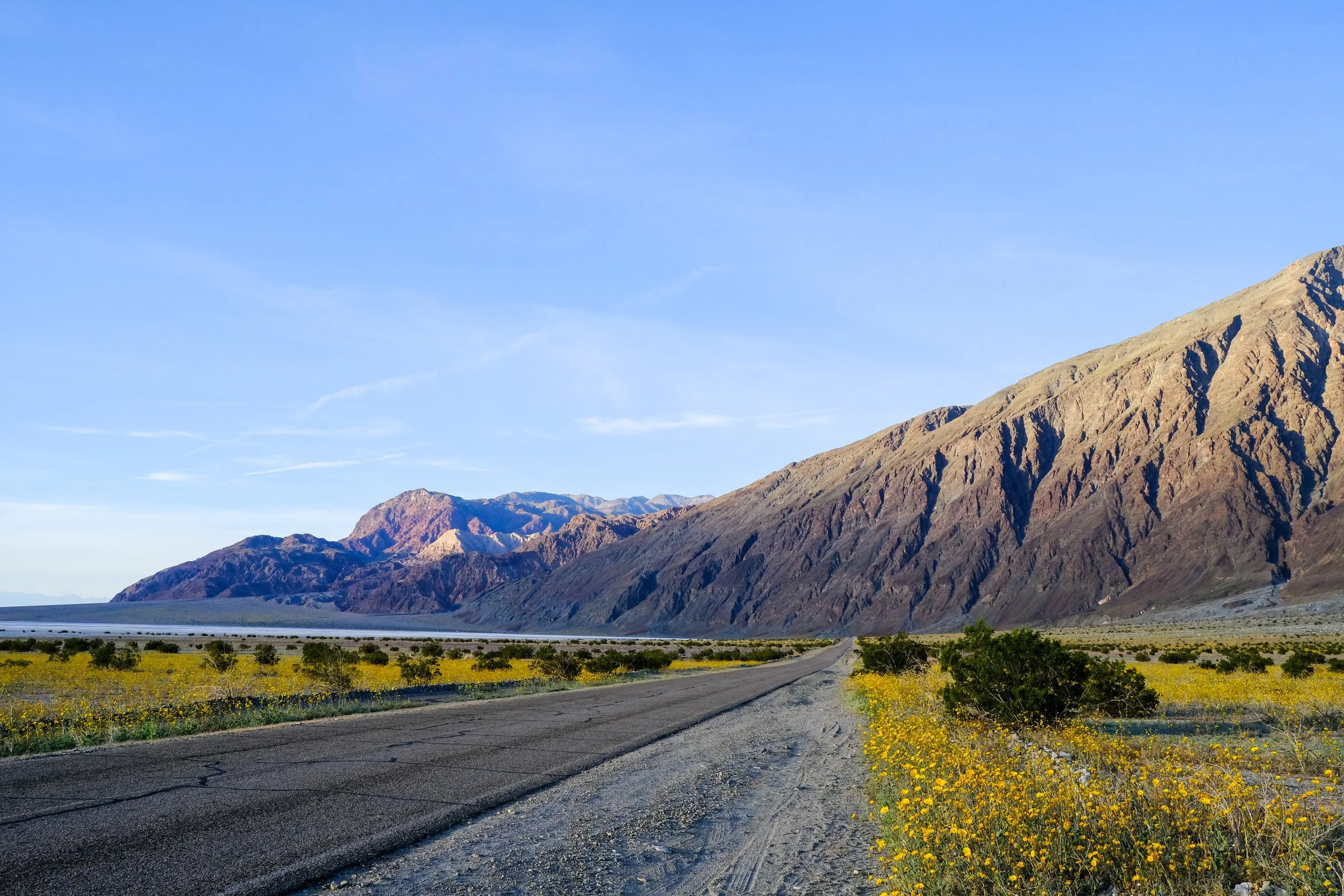
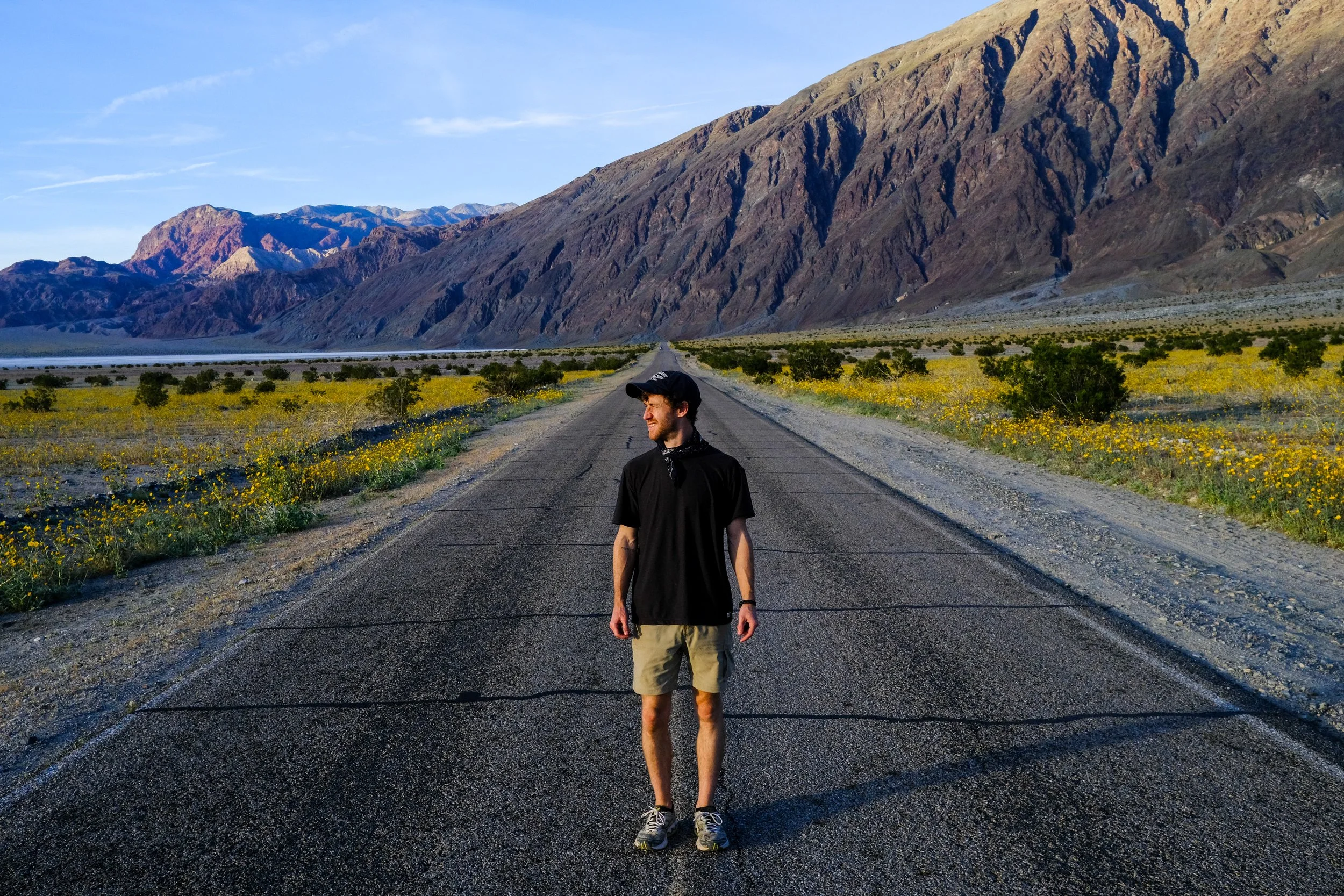
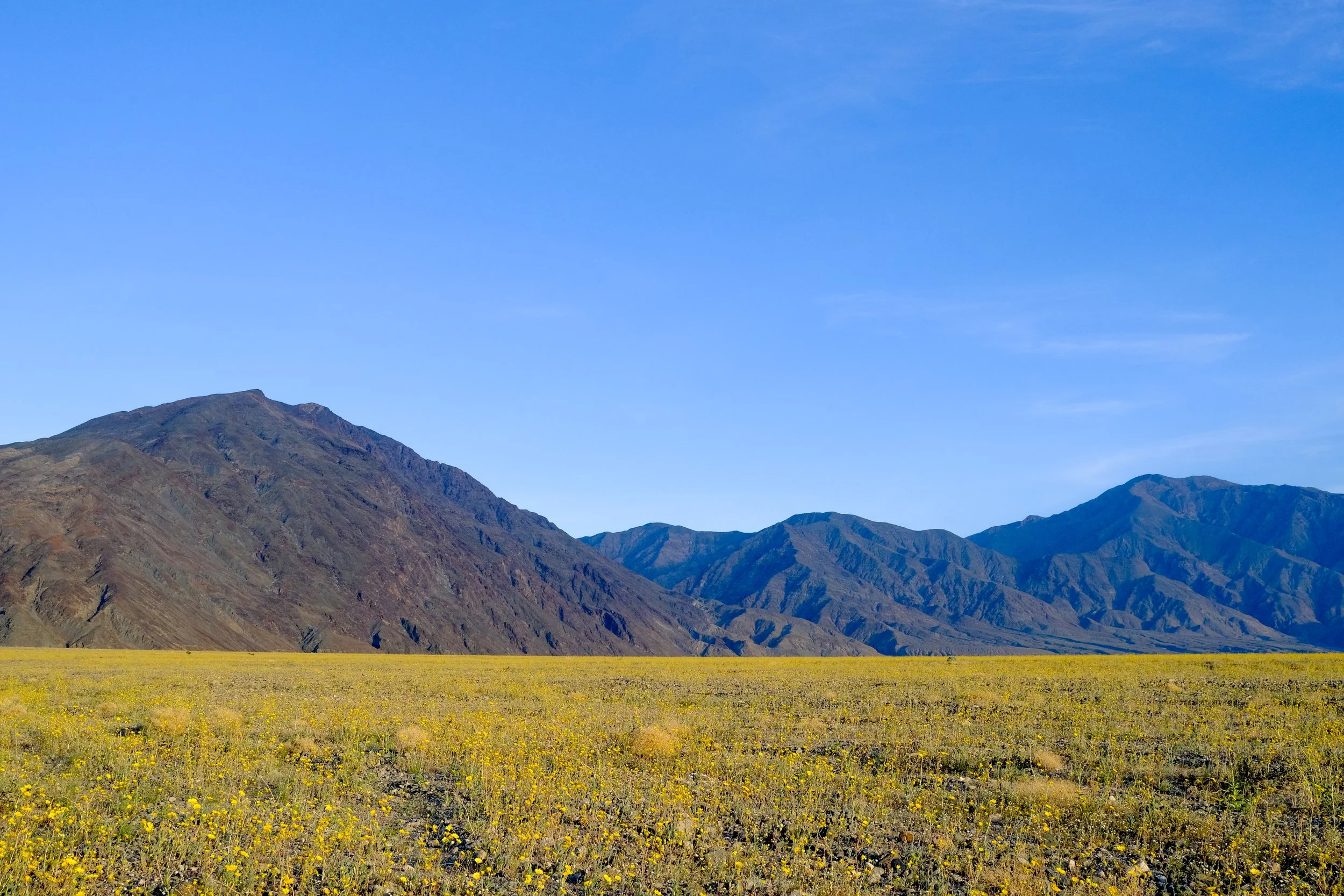
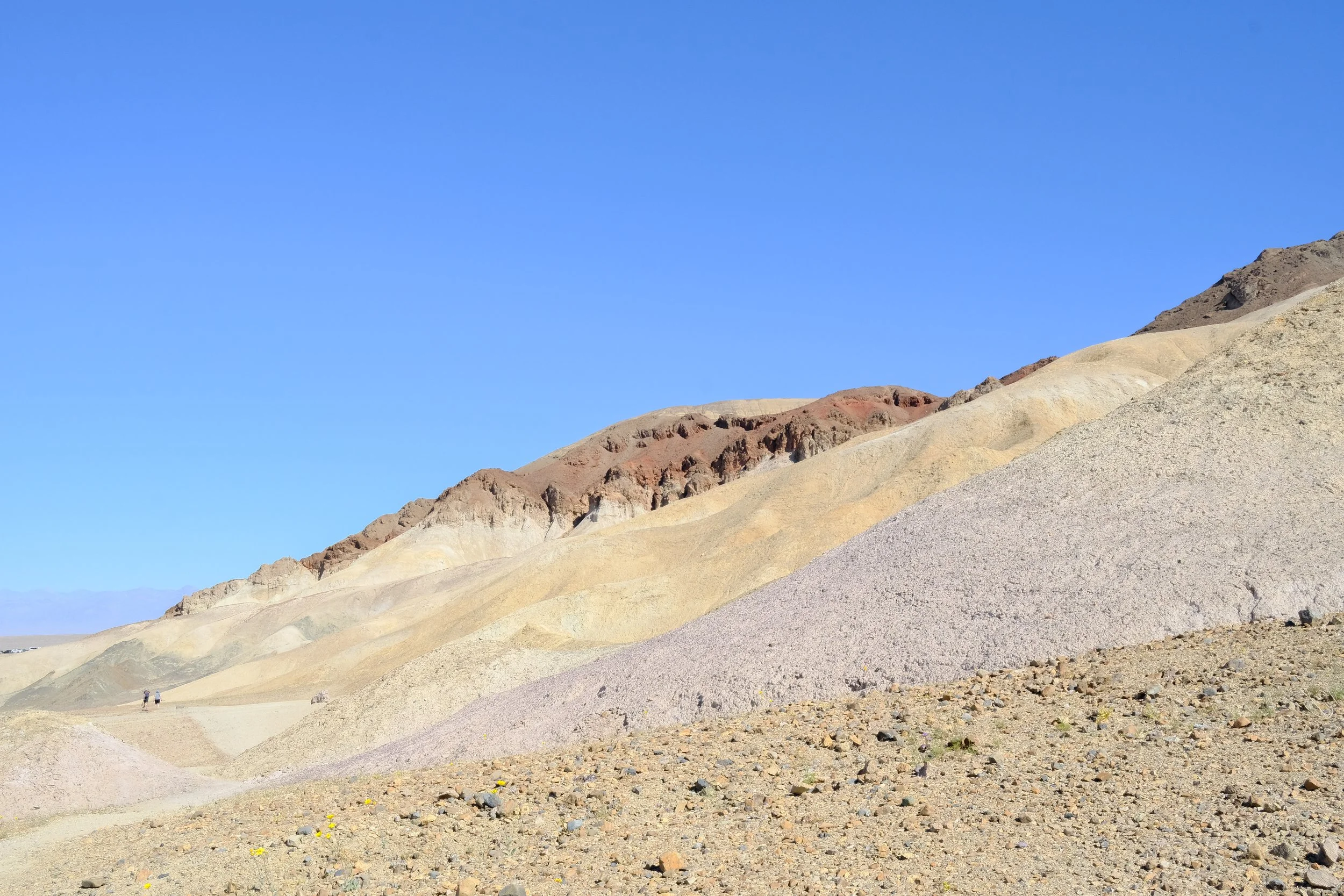
Many hikes we embark on are no more than rocks and sand, gravelly and shadeless arroyos dotted here and there with flowers. On our second day we begin to see wildflowers in great numbers. There are large patches around Badwater Basin above the salt flats, fields of desert gold, though these fields are more sparse than expected. Up close, the bulk of the scenery is still dirt and gravel dotted with flowers several feet apart. The grand illusion, though, is that from a distance, the heads of the flower bushes obscure the sight of the ground. With a good zoom lens, it would be possible to take photos that provide the illusion of those blooming plains, and I’m sure many photographers do exactly that. Chasing sunlight with my camera one evening, I ran as fast as I could through a field of wildflowers, and I never stepped on a one. The problem, I am told much later, is that these flowers hide rattlesnakes and scorpions in great numbers. Running through them is not advised.
Visiting in a season where there are grasses riding up the hillsides, and the nights are warm and comfortable under desert stars, it’s hard not to wonder if the dangers have been overstated. We lie on picnic benches in a forgotten corner of the campsite drinking mezcal from tin mugs and pointing out the constellations we know.
I’ve heard these blooms happen once a decade, and they are less decadent this year than they have been in past seasons. That my relatively brief lifespan should happen to intersect with the far briefer lifespan of these just-awakened flowers is somewhat miraculous. It is a strange thing, to live so much longer than the flowers, so much briefer than the mountains, to know that the next time the cycle of the flowers occurs, I may no longer be of this earth. In ten years, many things may happen. We happen to have intersected in this world, me and the mountains and the flowers, and that’s all there is.
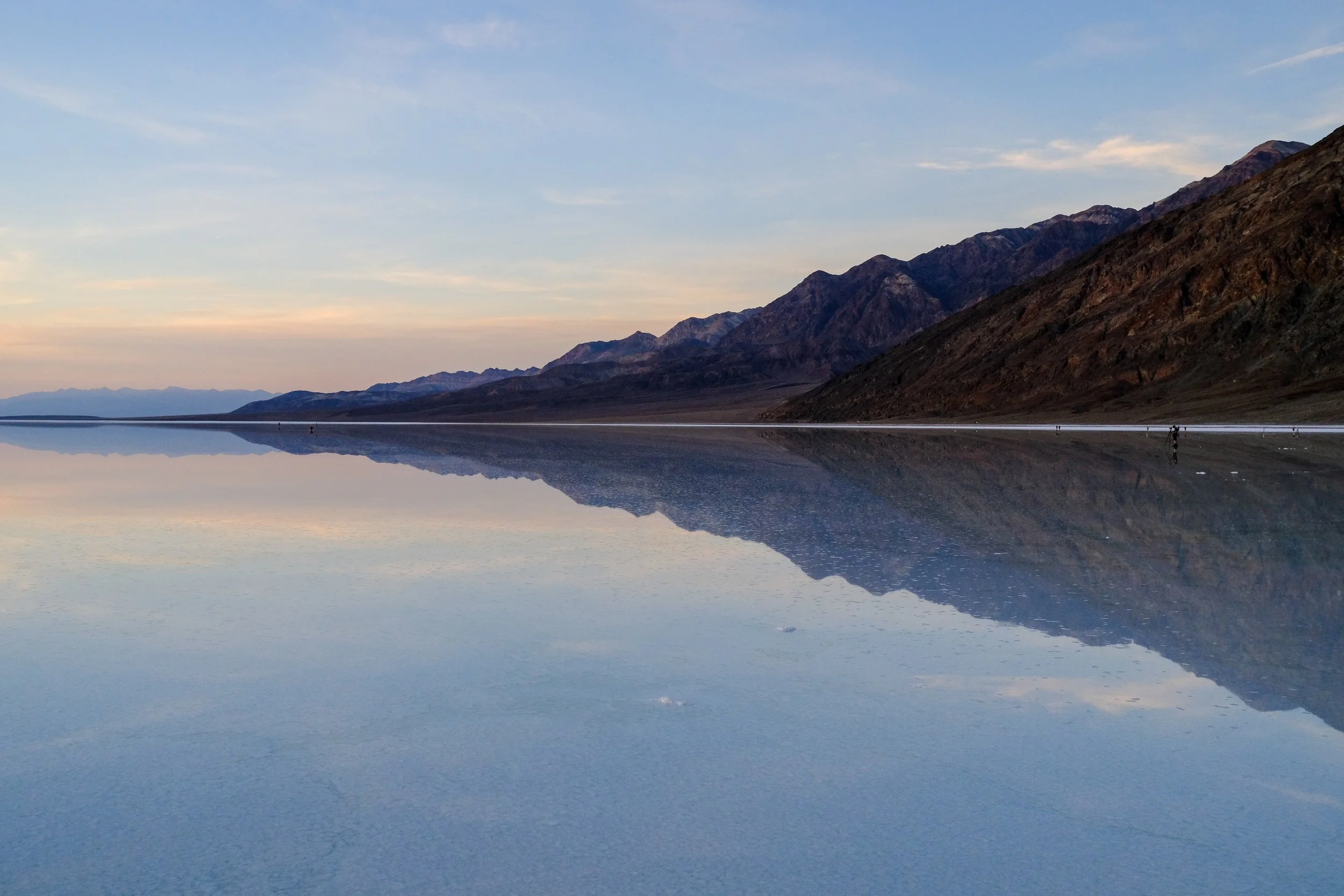
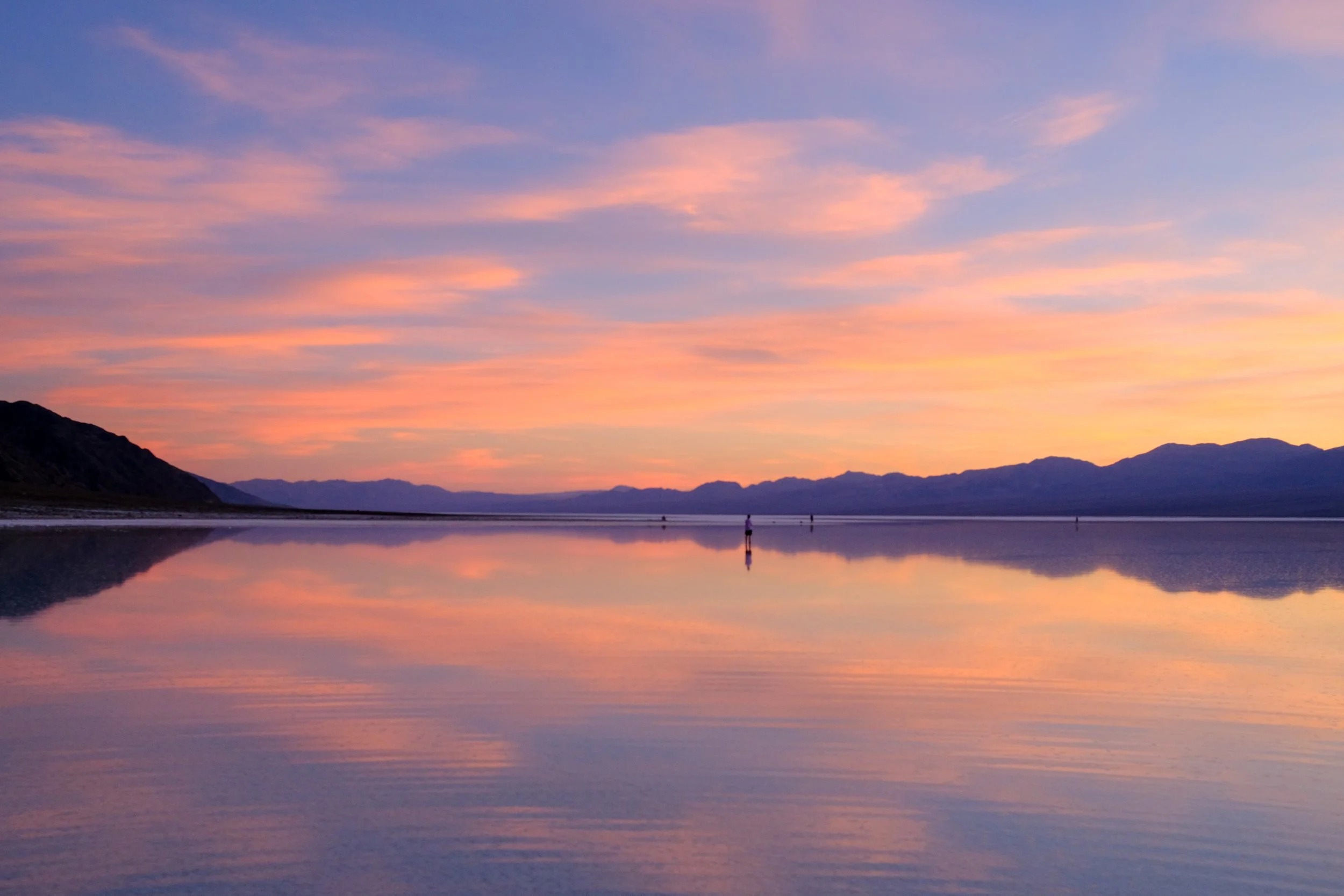
In Badwater Basin there is a lake that occurs once every few decades. Ten thousand years ago the lake was as deep as 600 feet. Today it’s a dry salt flat, but it will fill with shallow water after extraordinarily wet winters and form a rare ephemeral lake. The earth below the lake is salt and sand and dirt, a place where all the minerals from the surrounding areas seem to collect and harden into jagged and coarse crystals. Walking barefoot here in normal months would leave you with bloodied feet. Today it is still water, and we wade through one day, our feet cracking through the softened salt into the mud below at times, like breaking through thin ice in winter, and we walk out to where the stillness of the water and the calm of the vernal sky are mirrors to each other, and we are merely standing in between them. And a sun that has spent ages drying the water from this place sinks below the silhouettes of mountains, and the earth and sky open up like a clamshell, identical above and below, hinged upon a horizon of purple mountains. Water in the desert - the remnants of winter floods - this is what we came for.
A few days after we leave, a heatwave sweeps through Southern California. At the gas station on the way out of the park, the clerk says we are lucky to be leaving. He looks antsy behind the counter, his eyes darting left and right, from the sand outside the thin window to the shot glasses beside the scorpion ephemera. “It’s getting to be too hot today,” he tells us. “I don’t like it when it gets so hot.” We wait a long while in traffic at the edge of the park as an emergency helicopter airlifts someone to a hospital. All along the side of the road are the bent fragments of a red ford truck that’s rolled several times through the desert, camping gear scattered through the sand and brush, and EMTs and rangers are standing around in the rubble on comms, each looking off towards a different horizon.
At home I receive a news alert that the wildflowers are unlikely to survive the sudden temperature swing into the triple digits. Days later I see pictures of the brown stalks of dead plants in the valley. Several people curse when I tell them they’ve missed it. It wasn’t beautiful in the way you imagine, I might say, but they look at me sideways, they say “it wasn’t, huh,” and I know they don’t believe me.