Producing Basic Bliss
Track Breakdown
I started this song with a random chord generator. Essentially, you go to this site and hit the “generate” button until it comes up with something you like. At the time, I was really excited about introducing randomness into my process. I had a deck of flash cards that had keys and chord progressions written on them, and I would pull a key from one stack, and four cards that named chords in the key from another. I built a bunch of strange and wonky chord progressions doing this. It was a fun exercise, and led to a lot of ugly progressions. But what happened, too, was that I would hear something wrong and fix it. As in, I would listen to the chord progression and change one chord, two chords, a few notes, and come up with something that sounded exciting and new. This randomness, to me, was essential to coming up with new ideas that I, in my habits, would have never discovered otherwise.
This whole groove, the whole progression that this song is based on, came from a site called “chordchord.” I copied the piano chords from the sequence, played them on my keyboard, and recorded those into my elektron digitakt sampler. Inspired by Spoon’s “Inside Out,” I chopped the samples up and played them through a set of effects pedals into 1970s Fender Twin Reverb, recording them back into the computer through my Sennheiser amp microphone. The Boss RE-20 pedal did a lot of work in making this keyboard loop, adding in the riser sounds that take place throughout the song. I did the same with the kick and snare samples on this, playing with the speed on the delay until it felt like it grooved, and added a ton of Spring Reverb from the amp.
Here’s a picture of my keyboard setup from the time. I usually kept as much of this setup as possible plugged into my fender twin, just out of frame on the left. I found that running audio through the tubes and the old speakers, and getting air moving in the room was a great way to add life, color, and texture to any recording I made.
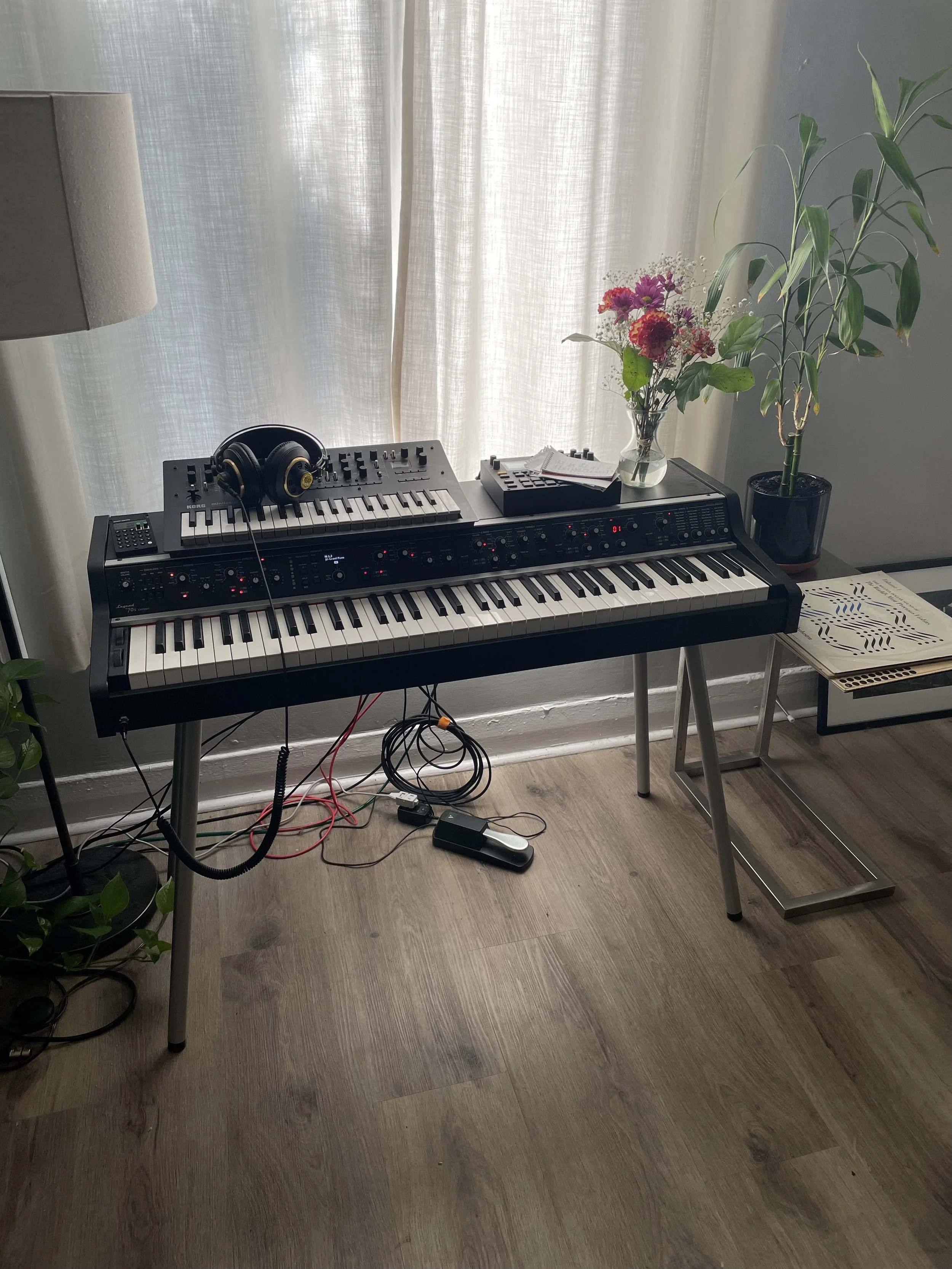
I’d been listening a lot to Queen’s song “Cool Cat,” and I love the way that song feels like it sweats. It is the perfect late in the day at the beach song. It makes me think of sunscreen and saltwater and sweat, and the way your eyelids start to sag from spending all afternoon in the sun. I played the funky guitar sounds with that inspiration in mind, and played the opening guitar licks with America’s “Sister Golden Hair” as a reference. I’ve gotten a lot of questions about how I hit that guitar tone on there, and the truth is, I played it on a keyboard. It’s a cheap sounding sampled guitar sound that I love. It sounds cleaner and crisper than any guitar I could have recorded at home, with a percussive kind of chime to it.
It took me about a day to write it and record a solid demo, and then another year to get the song to a place where I wanted to put it out. I had a telefunken dynamic mic plugged in all the time to record demos that summer, and the lead vocals all came out of that first day of recording. Later, I re-recorded the backup vocals on a different mic, with a crooner approach in mind. I brought in Rafael Vidal (drummer for Almost Monday) to record real drums do support the sampled drums and add in the fills that define so many of these sections. Much later, I added in some synth sounds to bring up the energy in the late choruses, using some patches I designed on the Korg Minilogue XD.
I mixed and mastered the song myself. Ultimately, I wanted it finished and out, and I thought the difference between having a great mix engineer polish up this demo and me doing it wouldn’t make a huge difference in the song’s success. Submitting it to blogs and playlisters, I didn’t get a ton of feedback about the mix, which they tend to give even if the mix is done well. I think the lo-fi elements of this song are part of the charm, rather than a drawback.